
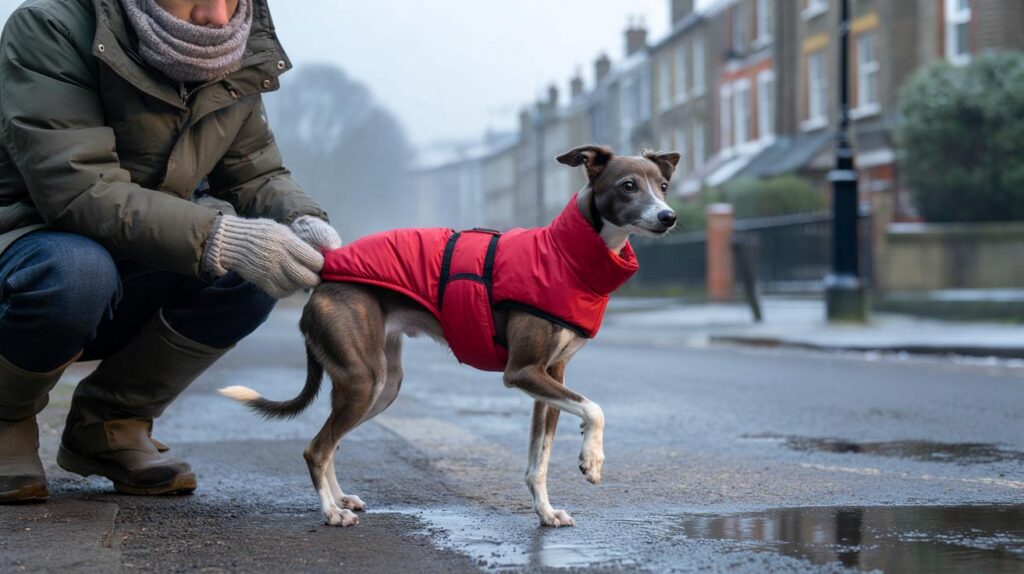
Cold snaps are back, pavements glitter, and dog walks turn tricky. Your pet feels it first. Are you reading the signs?
As temperatures dip and mornings turn foggy, vets urge owners to think beyond fashion and focus on function. Coats can prevent pain, not just shivers. Here’s how to judge when a jacket is a must, which models actually help, and why 5°C marks a real turning point for thousands of dogs.
What the first cold snap means for your dog
Dogs regulate heat differently from us. A thick double coat traps warm air. A sleek coat does not. Wind and damp strip warmth fast, even on short walks. Standing still in a car park chills a pet quicker than a brisk loop around the block. Age, illness and body size shift the risk. Small dogs lose heat to the ground. Seniors stiffen up. A wet coat cancels natural insulation.
The simple rule: short-coated, senior or unwell dogs should wear a coat once the air falls to 5°C or below.
Reading the signs: 7 red flags your dog is too cold
Most dogs “tell” you long before they suffer. Look for clear changes in behaviour and body language.
- Shivering or tense muscles, sometimes with raised hackles.
- Turning back to the door, reluctance to leave the house, or dragging on the lead to go home.
- Slower pace, shortened stride, or sitting down during the walk.
- Paw lifting or licking paws more than usual on cold pavements.
- Hunched posture with tail tucked, seeking shelter behind you or near walls.
- Low mood outdoors, less interest in sniffing or play.
- After the walk: prolonged sleep, stiffness, or coughs that repeat through the week.
Dogs do not need to vocalise to ask for warmth. Once you see two or more of the above below 5–7°C, a coat shifts from optional to protective gear.
Age, breed and coat length: who needs help first
Short-coated and thin-skinned breeds feel the chill earliest. That includes greyhounds, whippets, boxers, French bulldogs and many terriers. Toy breeds and lean athletes shed heat fast. Seniors with arthritis seize up in cold air. Dogs with illness or on immune-suppressing medicines struggle too. In contrast, northern breeds with dense undercoats often cope without extra layers.
| Dog profile | Likely need for a coat | Start using at | Suggested fabric |
|---|---|---|---|
| Short coat, small size (e.g., Italian greyhound) | High | 7–8°C in wind or rain; 5°C in dry cold | Insulated, windproof, belly coverage |
| Short coat, medium/large (e.g., boxer, staffie) | High | 5°C; earlier if standing around | Fleece-lined, water-resistant |
| Senior dog, any coat | High | 7°C; lower if moving steadily | Light, warm, easy to fasten |
| Puppy, still growing | Moderate | 5–7°C; avoid overheating indoors | Breathable shell with soft lining |
| Double-coated (e.g., malamute, newfoundland) | Low | Below 0°C or in long wet waits | Waterproof shell only, if needed |
Choosing the right coat: fit, fabric and freedom to move
Measure, then check belly coverage
Measure neck, chest and back length from withers to tail base. A correct fit sits snug without pinching. The coat should cover the chest and belly, where heat pours out fastest. Gaps at the sternum or flank leak warmth in wind.
Pick materials that handle British weather
- Outer: windproof and water-resistant or waterproof for sleet and drizzle.
- Inner: fleece or padded lining for insulation, but not so bulky that it impedes gait.
- Fastenings: wide Velcro or robust buckles that sit away from armpits to prevent rubbing.
- Weight: light enough for free shoulder movement and normal stride length.
- Care: machine washable fabrics that dry overnight.
Wet plus wind multiplies heat loss. A waterproof shell over a light fleece beats a soggy thick knit every time.
Daily routines that cut risk during cold spells
Warm up, split outings, dry down
Swap one long walk for two or three shorter loops when the wind bites. Start with a gentle warm-up indoors or in a sheltered spot, then pick up pace once muscles loosen. Towel-dry thoroughly after rain or snow, including the belly and armpits. If the coat gets soaked, swap it before the next outing.
Manage high-risk moments
- Car parks and sidelines: low movement equals fast chilling. Keep the coat on while waiting.
- Post-bath or swim: no outdoor time until fully dry, even for hardy breeds.
- Night walks: add reflective strips or a light for visibility on short winter days.
- Pavement grit and salt: rinse and dry paws to protect pads and stop licking.
The 5°C line: why that number matters to owners
At about 5°C, many short-coated or small dogs begin to lose heat faster than they can generate it at a walking pace, especially with moisture and wind. That raises the chance of chest infections in vulnerable pets and flares of joint pain in seniors. A coat shifts the balance back in their favour by trapping a layer of warm air and blocking wind chill. The difference shows in steadier movement, better mood outdoors and fewer next-day aches.
Common mistakes and how to avoid them
- Buying by breed label, not by measurements: always measure, as brands vary by several centimetres.
- Choosing warmth over movement: a thick, rigid jacket can alter gait and strain hips or shoulders.
- Leaving the belly exposed: chest and belly coverage matters more than an oversized collar.
- Forcing the first fit: pair the coat with treats and calm handling to build a positive link.
- Using one coat for every scenario: keep a waterproof shell for wet days and a lighter layer for dry cold.
- Overheating indoors: remove the coat once back home and the dog is dry.
A quick fitting guide you can try today
Lay the coat flat and let your dog sniff it. Reward with food. Touch the coat to the shoulders, reward again. Fasten loosely, walk a few steps, then adjust. Check two-finger room at the neck. Make sure the armpits clear the straps, and watch the first few strides for any shortened step or side sway. If your dog scratches at the coat, pause and reset with smaller steps.
When to speak to your vet
Book advice if your dog coughs after winter walks, shows new stiffness, or struggles with breathing in cold air. Ask about arthritis management for seniors, and whether a mild anti-slip paw balm or joint supplement might help during icy months. For flat-faced breeds, reduce time in biting winds and plan toilet breaks close to home on harsh days.
Extra ideas to keep walks safe and enjoyable
Build a five-minute indoor warm-up with trick training or scent games before heading out. Switch to routes with wind breaks such as hedges or terraced streets. Pair a coat with a snug jumper only on the coldest, dry days to avoid moisture trapped against the skin. If you run with your dog, carry a spare dry layer and a small towel in a rucksack. Aim for steady trotting rather than stop–start sprints, which chill dogs during rests.
Thinking ahead pays off. A well-fitted coat, split outings and quick dry-downs keep muscles comfortable and energy high through winter. Use the 5°C line as your prompt, then watch your dog’s signals. Comfort guides the call, and small adjustments today prevent bigger health problems as the season hardens.



Really appreicate the clear 5°C rule and the breed examples. Quick question: for a fit 2‑year‑old whippet, would you start the coat at 7°C in wind or wait for 5°C on dry mornigs?