
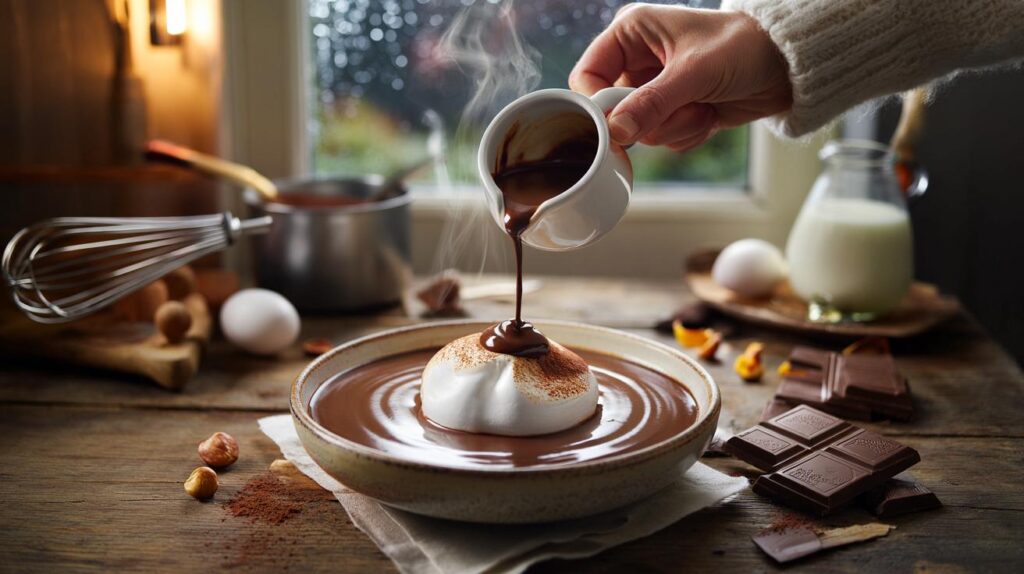
As evenings draw in, Britain reaches for comfort: soft textures, slow heat and a pudding that whispers of cocoa.
A chef-driven twist is pushing one of France’s gentlest sweets back into conversation. Alain Ducasse’s chocolate take on île flottante pairs silk with shadow, giving home cooks a new way to serve warmth without turning on the oven for hours.
A classic gets a darker coat
Île flottante—meringue islands afloat on custard—rarely strays far from vanilla. Ducasse nudges it towards autumn: a chocolate custard in place of the usual crème anglaise, snow-light poached meringues, and a warm ganache that slides over the top. The effect feels grown‑up yet nostalgic, and it asks for little more than a saucepan, a whisk and a steady hand.
Three components, one bowl per element, and a bar of 70% cocoa: the method is simple, the result layered.
The appeal sits in contrast. Cold, glossy custard supports meringues poached for a minute per side, while a thin stream of hot ganache restores warmth. The spoon meets soft resistance, then cream, then a faint snap from grated chocolate or toasted nuts.
How the method works
Custard that carries chocolate, not just sugar
Start as you would a classic crème anglaise, only the milk-and-cream base meets chopped dark chocolate at the finish. Warm the dairy with a split vanilla pod for perfume, whisk egg yolks with sugar until pale, then temper and cook gently until it coats the back of a spoon. Pour the hot custard over 70% chocolate and stir from the centre to form a smooth emulsion. Chill for body and shine.
Meringue that floats instead of sinks
Whites whip faster at room temperature. Add a pinch of fine salt, beat to soft peaks, then tighten with icing sugar so the foam holds. Shape with two spoons and poach in barely simmering water—never a rolling boil—to avoid bubbles and rubbery edges. One minute on each side, then drain. You want set clouds, not marshmallow.
Ganache that glazes, not smothers
Bring cream to the edge of a boil and add in stages to chopped chocolate, stirring until glossy. A small knob of cold butter softens the finish. Keep it pourable; a heavy sauce will flatten the meringue and mask the custard.
Temperature contrast drives flavour: chilled custard below, warm ganache above, meringue just off the poach.
At a glance
| Metric | Figure |
|---|---|
| Chocolate strength | 70% cocoa for depth without harshness |
| Active time | 35–45 minutes for all three elements |
| Resting | Custard chills 1–2 hours for best texture |
| Budget guide | £6–£8 serves four, depending on chocolate brand |
| Skill level | Intermediate: focus on gentle heat and timing |
What changes when chocolate leads
Chocolate shifts the balance in three ways: bitterness lines up against milk sweetness; vanilla becomes background; and texture feels fuller because cocoa butter thickens the custard as it cools. That means the dish tolerates less sugar and rewards a pinch of salt. It also invites bolder finishes—orange zest, toasted hazelnuts, or a crack of cocoa nib for bite.
- Use 70% bars from a single origin if you like fruit or spice notes.
- Reduce sugar by 10–15 g compared with a vanilla custard to avoid cloying.
- Add a teaspoon of instant espresso to the custard to lift aroma.
- Grate chocolate over the meringue just before serving for a dry contrast.
Why this speaks to 2025 pudding habits
Britons report cooking more at home while watching spend, yet they still want a weekend treat with ceremony. This dessert fits the gap: no oven, low energy draw, and a finish at the table that feels special. It also scales well. Double the custard for eight; poach meringues in batches; keep ganache warm in a small flask.
Four ingredients do the heavy lifting: eggs, milk, sugar, chocolate. Technique—not fancy kit—decides the outcome.
Technique watch‑outs
Heat control saves the custard
Keep the pan on low and stir constantly. If you see steam surging or tiny bubbles at the edge, pull it off the heat and whisk. Strain through a fine sieve to remove any cooked specks and to polish the texture.
Meringue stability comes from sugar, not overbeating
Beat to soft peaks, add icing sugar gradually, and stop once peaks hold. Overbeating forces out moisture and causes weeping in the pan. A bare simmer—little tremors, no roar—prevents the meringue from blowing out.
Ganache consistency sets the mood
Too thick and it domes; too thin and it runs off. Aim for single cream thickness. If it seizes, warm gently and add a teaspoon of hot water to loosen the emulsion.
Serving ideas that add crunch and lift aroma
Texture is currency here. A spoon of vanilla‑scented whipped cream under each meringue adds cushion. Toasted nuts bring chew and fragrance. Citrus zest brightens the chocolate’s bass notes without raising sweetness. A dusting of cocoa powder defines the island’s edge on the plate.
Make‑ahead, storage and swaps
Prepare the chocolate custard the day before; press baking parchment onto the surface to prevent a skin. Chill the bowl so it thickens evenly. Poached meringues sit happily for a few hours on kitchen paper, but the best lift comes when they’re fresh from the water. Ganache holds in a sealed jar for two days; rewarm very gently.
Dairy‑free guests can still join in. Use a bar with no milk solids and switch to oat or almond “milk” enriched with a splash of coconut cream for body. For nut allergies, choose seeds for crunch: pumpkin seeds toasted with a pinch of salt add a clean snap.
Where cost and quality meet
Chocolate drives price. A supermarket 70% bar keeps the bill under £6 for four; a bean‑to‑bar option nudges it to £8–£10 but brings cherry, citrus or spice notes that lift the custard. Vanilla remains optional. If you skip the pod, swap in a small amount of vanilla extract and spend the savings on better chocolate.
The chef’s fingerprint, translated for home kitchens
Ducasse’s restaurants often frame chocolate as an ingredient with structure, not a sweetener. That approach shows here: restrained sugar, precise temperatures, and a finish that respects contrast. Home cooks can follow the spirit without chasing perfection: keep the custard thin enough to pour, the meringue light enough to wobble, and the ganache warm enough to gloss.
Extra help for timing, tasting and plating
Build a timeline. Make custard in the morning, chill by lunch, poach meringues just before guests sit, pour ganache at the table. Taste at every step: a pinch of salt in the custard sharpens chocolate; a whisper of orange zest over the meringue opens the nose; a teaspoon of rum or whisky folded into the ganache adds warmth for adults.
Two temperatures, three textures, five minutes of theatre at the table: that’s the promise in a single bowl.
Further notes to widen your options
For a lighter plate, switch to a 64–66% bar and reduce cream by 20 ml; the custard will read silkier and slightly sweeter. For more punch, go 75% and add a tablespoon of golden syrup in the ganache to keep the flow. If you fancy a savoury echo, crush roasted buckwheat or sprinkle a few cocoa nibs; both bring a nutty edge without added sugar.
Nutritionally, this sits closer to a restaurant dessert than a weeknight pud. Portion control matters. Serve smaller islands and more custard if you want to spread richness, or set the meringue on stewed pears to add fruit and lighten the plate. The method also teaches transferable skills: custard for ice cream bases, meringue for pavlova, ganache for glazing cakes. Master the temperatures here and your winter puddings gain new range.



No oven, real chocolate, adult nostalgia—this might be the winter pud we actually make.