
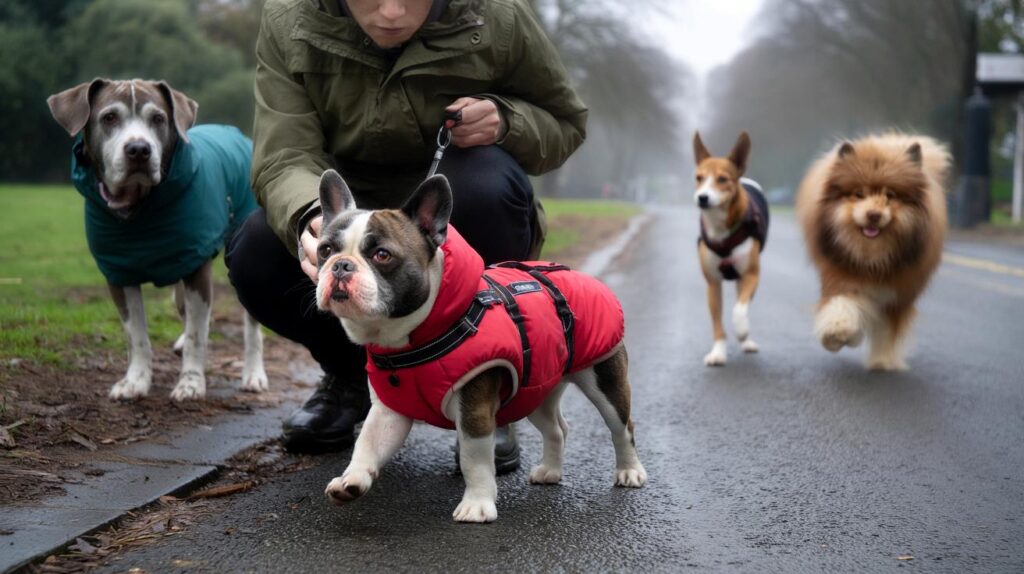
First frosts, wet winds and darker mornings unsettle even seasoned dog walkers. Owners watch the forecast, dogs watch the door.
Across the UK, the first cold snap of the season raises a familiar dilemma: when does a dog actually need a coat? Vets point to simple signs, clear temperature cues and a few high‑risk groups. Breed, age and health shift the answer more than fashion does.
Reading the cold: the signs your dog struggles outside
Dogs speak with their bodies. You can spot chill long before a cough or a limp appears. Look for behaviour shifts and small posture changes. Pair those signals with the day’s conditions, not just the number on your phone.
- Shivering, raised hackles or tucked tail after a few minutes outdoors.
- Refusing to leave the doorway or rushing back to it mid‑walk.
- Slowing pace, curled posture, lifted paws on cold or wet ground.
- Reluctance to sit or lie on frosty grass or damp benches.
- Low mood on walks, less sniffing, shorter stride.
- Vocalising when the wind gusts or when sleet hits.
- Warm ears but cold chest and belly on touch after a short outing.
Cold bites harder when wind and wet combine. A damp coat plus a northerly breeze halves a dog’s tolerance time.
Static moments chill faster than brisk movement. Waiting on the school run, sitting pitch‑side, standing at a bus stop or resting in an unheated car all drain heat quickly.
Who needs a coat: age, size and coat type matter most
By age and health
Puppies regulate heat poorly. They burn energy fast and tire quickly, so a light, snug layer helps them stay comfortable on short outings. Senior dogs feel cold sooner, especially with arthritis. Warmth preserves joint comfort and keeps muscles loose at the start of a walk.
By breed and coat
Short‑haired and smooth‑coated breeds shed heat rapidly. Think French Bulldogs, Boxers, Whippets and Greyhounds. Small dogs sit closer to ground chill and wet splashback. Conversely, northern breeds with double coats, like Alaskan Malamutes or Newfoundlands, manage low temperatures well and rarely benefit from extra layers during routine walks.
Under 5°C, short‑haired dogs, elderly dogs, small breeds and pets with chronic illness should wear a coat for outdoor time.
Recent grooming can also tip the balance. Dogs clipped tight or bathed the same day lose insulation and need extra protection until fully dry and warm.
Choosing the right coat: coverage, fabric and fit
Think function first. A good coat traps heat, blocks wind and sheds rain without restricting movement. It should secure firmly, avoid rub points and clean easily.
- Coverage: chest and belly panels reduce heat loss from the thinnest fur zones.
- Fabric: insulated but breathable outer with water‑resistant finish; soft lining that dries fast.
- Fit: snug at the chest and shoulders, free at the elbows and hips; no pressure on the throat.
- Fastenings: strong Velcro or buckles that hold during pulling or play.
- Handling: easy on/off design that works with a harness and lead clips.
- Care: machine‑washable fabric that resists mud and salt stains.
Match the garment to your dog’s build, not to a label. A Jack Russell needs a shorter back and closer chest fit than a Labrador model offers. Weight alone won’t guide you; measure neck, chest and back length.
How long outside: practical time limits in winter weather
| Group | Conditions | Suggested limit without coat | With coat |
|---|---|---|---|
| Puppies, seniors, chronically ill | 0 to 5°C, light wind | 10–15 minutes | 20–30 minutes |
| Short‑haired small/medium breeds | 0 to 5°C, dry | 15–20 minutes | 30–40 minutes |
| Double‑coated large breeds | −2 to 5°C, dry | 30–45 minutes | 45–60 minutes |
| Any dog soaked by rain or bath | 5 to 8°C, windy and wet | 5–10 minutes | 15–20 minutes |
These are conservative ranges. Watch your dog’s behaviour and cut sessions sooner if you spot the signs listed above.
Training the coat: make it calm, quick and positive
Introduce the garment indoors first. Let your dog sniff it. Reward calm interest. Clip or fasten for a few seconds, then offer a treat and remove it. Repeat until your dog stands relaxed.
- Pair the coat with good things: mealtime, a favourite toy, a short garden walk.
- Keep the first outdoor use brief and upbeat.
- Avoid wrestling. If your dog resists, step back a stage and reward small wins.
During walks, check for rubbing at the armpits, chest and belly. Adjust straps so you can slide two fingers under every contact point.
When weather multiplies risk: cold, wet and wind
Humidity strips heat fast, even at middling temperatures. A soggy dog in a sharp breeze chills in minutes. Dry your dog thoroughly after rain, river dips or baths. Use a towel first, then a short spell under gentle warm air if your dog tolerates it, keeping the dryer moving.
Swap one long winter walk for two or three shorter outings during cold snaps. Warmth returns faster between sessions than it does mid‑trudge.
Pavement salt and grit add another hazard. Rinse paws after walks and check between toes for cracks or redness. A thin paw balm layer before walks helps repel salty slush.
What not to do: common winter mistakes
- Skipping the coat after a bath or clip because the temperature looks “mild”. Damp plus breeze still chills.
- Using a thick parka on a hard‑running dog during sprints. Overheating can follow, even in cold air.
- Covering a dense double‑coated breed on a gentle dry day. Their natural insulation works well and can trap excess heat.
- Leaving a coat on indoors for hours. Dogs need to dry and regulate body heat freely.
Extra winter gains: joint care and smart layering
Warm muscles perform better. A coat during warm‑up reduces stiffness in ageing dogs and eases arthritis flare‑ups on frosty mornings. Add a non‑slip mat at home so joints get a break from cold floors. For sprinters or lean sighthounds, a thin base layer under a wind shell helps keep the back loose without bulk.
Practical add‑ons: measuring, harness pairing and a quick checklist
Measure with a soft tape: neck where a flat collar sits; chest at the widest point behind the front legs; back from collar base to tail set. If between sizes, choose the larger and use adjustments to snug it down.
Use the harness under the coat if the design includes lead portals. If not, route the lead above and check for rubbing at the shoulders. Before every outing, run a 30‑second check:
- Forecast and wind speed.
- Ground state: dry, wet, salted, icy.
- Dog’s status: age, health, dampness, energy level.
- Plan: two shorter walks instead of one long if temperatures sit near freezing.
For owners who like numbers, set a simple rule: coat on below 5°C for short‑haired, small or senior dogs; coat on at any temperature if the dog is wet and there’s wind; coat optional above 5–7°C on dry, wind‑sheltered routes for healthy, active dogs with fair insulation. Adjust based on your dog’s signals. Your dog’s pace and posture will tell you more than the thermometer alone.



Do greyhounds really need layers at just 5°C?