
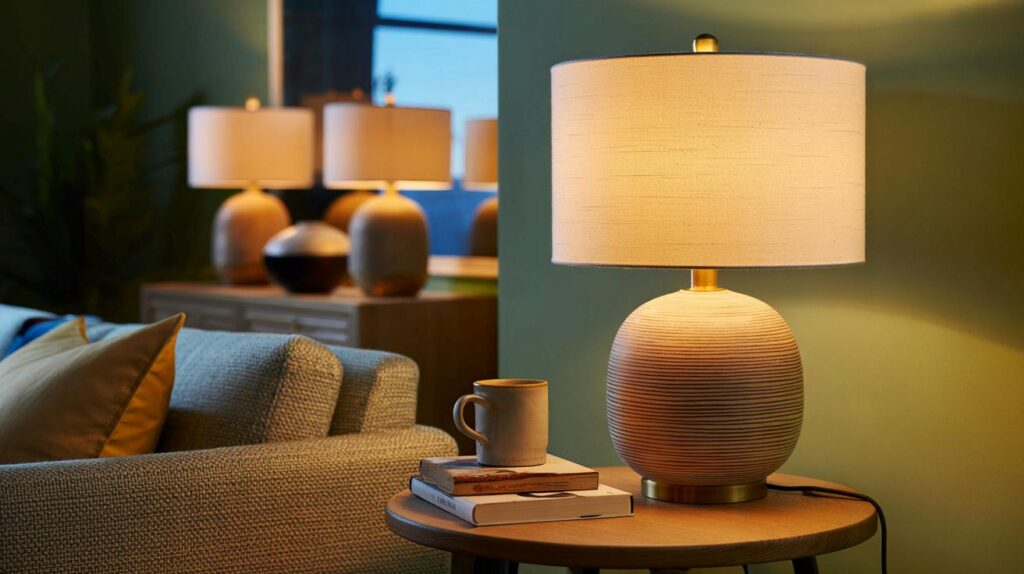
A small shift in lighting can change how a room feels, how you relax, and even how late nights play out.
Across the country, households are swapping harsh overhead glare for softer pools of light that flatter rooms and routines. One budget-friendly table lamp from M&S has become the go-to upgrade, bringing a designer mood without the designer tax.
Why this £48 lamp is suddenly everywhere
Marks & Spencer’s Marlowe table lamp has tapped into the sweet spot: a warm, modern look at a price that doesn’t ambush your monthly budget. It’s compact enough for a side table, tidy enough for a hallway console, and subtle enough to sit beside the telly without stealing the show.
Now £48.30, down from £69 — a straight 30% saving on a piece that reads like a pricier designer buy.
Shoppers point to two things: it elevates a corner instantly, and it looks more expensive than it is. The base has a striped wood-effect pattern that feels crafted, while the neutral shade diffuses light gently instead of blasting it.
Design that looks pricier than it is
The visual trick is simple. The base brings a refined, linear grain effect; the shade keeps everything calm and adaptable. That pairing works with coastal whites, Scandi greys, rich heritage greens, and the real-life mix most homes collect over years of hand-me-downs and quick fixes.
Switch it on and it throws a soft, welcoming glow — the sort that makes weeknight chores feel less like a slog. Place it at shoulder height to avoid glare and you’ll get flattering, shadow-free light for reading, board games or a quiet scroll.
For cosy evenings, choose a warm-white LED between 2700K and 3000K, around 400–600 lumens for ambient light.
The price story and what you actually save
M&S has trimmed the price from £69 to £48.30. That’s £20.70 saved, or 30% back in your pocket. For many families juggling school kit, club fees and the weekly shop, that gap matters.
- Get the “designer” silhouette without the boutique mark-up.
- Compact footprint suits sideboards, bedside tables and narrow consoles.
- Neutral shade works across seasons and redecorations.
- Warm, diffused light that flatters paint colours and faces.
Running costs are tiny with the right bulb
Pair it with an LED and the energy bill barely flinches. Here’s what typical use looks like at an electricity price of 28p per kWh.
| Scenario | Hours per day | LED wattage | Estimated annual energy cost |
|---|---|---|---|
| Evening reading and wind-down | 4 | 6W | About £2.45 per year |
| All-night nursery comfort light | 10 | 4W | About £4.09 per year |
As a rough check, 3 hours a day with a 6W bulb costs around £1.84 per year. Swap older halogens for LEDs and you reduce heat and cost, while keeping the same brightness.
Where it works best in real homes
This lamp is a quiet finisher, not a shouty centrepiece. It shines in places where you want warmth without fuss.
- Living room corners: layer it with a floor lamp to avoid dead zones.
- Bedside tables: set at or just below shoulder height to prevent glare.
- Hall consoles: create a welcoming pool of light that softens shadowy corridors.
- Shelves and sideboards: tuck the base near books or ceramics for texture and depth.
Use it to balance strong daylight in south-facing rooms, or to bring life to north-facing spaces that read a bit grey after 4pm in winter.
How it stacks against designer pieces
Look-alike designer lamps with a striped wood base and neutral shade typically sit between £120 and £200. Those often swap veneers for solid timber or add hand-finished details, but the visual effect from across the room is remarkably similar. If you care about the mood more than provenance, the M&S route keeps you on budget while still delivering the elevated look.
For many households, the difference you see is the glow, not the logo.
What buyers keep saying about it
Feedback clusters around three themes: it feels “different” to the usual high-street options, the mix of textures makes rooms feel more considered, and the price-to-impact ratio is strong. Several note the lamp completes a space without demanding attention — a sign the design is doing its job.
Possible drawbacks to consider
It’s compact, which is great for tight surfaces, but do check proportions. As a rule of thumb, aim for a shade that’s roughly one-third the width of the table top and sits below eye level when seated. If you want on-the-dial dimming, you’ll need a dimmable bulb and a compatible plug-in dimmer, or a smart bulb you can control from your phone.
Buying checklist and quick setup
- Measure your surface. Leave a palm’s width either side of the shade.
- Pick a warm-white LED (2700–3000K). For ambience, aim for 400–600 lumens.
- For reading, add a second task light or use a brighter bulb with a dimmer.
- Hide cables by running them along the back edge and fixing with discreet clips.
- Place beside soft furnishings to bounce light and soften shadows.
- Use a smart plug or routine so the lamp comes on at dusk automatically.
Why small lamps change how a room feels
Good lighting works in layers. Overheads give general brightness. Table lamps deliver intimacy and direction. Wall lights add depth. When you switch from a single ceiling light to three smaller sources, you reduce glare and increase control. Colours read richer, wood grain looks fuller, and faces look calmer on camera during evening calls.
Colour temperature matters. Warm bulbs at 2700K help you relax before bed. Neutral white around 3000–3500K suits kitchens and desks. Stick to one temperature per room to avoid visual clash. If you want flexibility, a tunable smart bulb can shift between warm and cool while keeping energy use low.
A quick brightness guide for typical rooms
- Living room ambience: two to three lamps at 400–600 lumens each.
- Reading corner: add a focused light at 700–900 lumens beside the chair.
- Hallway or landing: one lamp at 300–500 lumens to keep the route safe at night.
Most of the “designer” feeling at home comes from consistent colour temperature, layered light, and well-placed lamps.
Stretching value even further
Pair the lamp with a low-wattage smart bulb and set a sunset routine. That builds a cue for winding down, helps children shift into evening mode, and trims wasted energy. If you have a darker corner, place the lamp near a pale wall so the shade’s glow reflects back into the room, effectively doubling the perceived brightness.
If you’re weighing this against a full room refresh, try a simple simulation: swap your harsh ceiling light for three warm lamps, each on a timer. Give it a week. Note how the space feels at 7pm, whether homework goes more smoothly, and if the TV glare eases. Most households report the room reading calmer with no paint roller required — and a sub-£50 table lamp is the easiest place to start.



Cool piece, but wheres the source for “1 in 3 choose this”? 1 in 3 of M&S shoppers, UK households, or just survey respondents? Without the base rate, the overpaying angle feels a bit wobbly.