
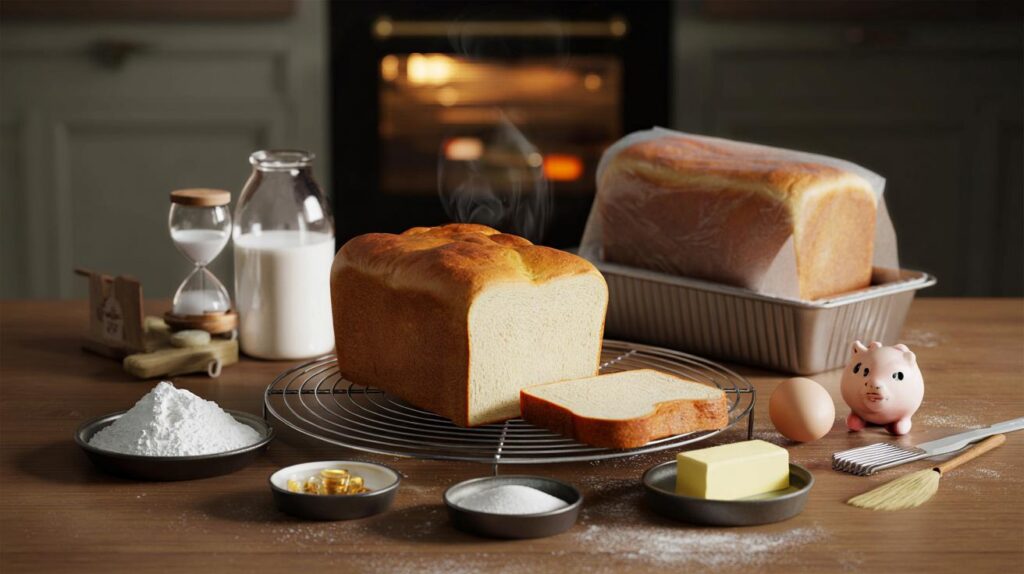
As mornings turn colder, kitchens across the UK hum again with simple rituals, warm tins, and the scent of buttered dough.
Pressed by prices and craving comfort, more households are swapping factory loaves for a soft, home-baked alternative that needs only a bowl, two hands and a standard oven.
What’s behind the home loaf revival
Supermarket sliced bread remains a staple, yet its price, additives and short shelf-life frustrate shoppers. A modest shift is taking hold: people are returning to a straightforward, no-machine loaf that delivers tenderness, control over ingredients and a dependable saving per bake. The method is simple, the kit is minimal, and the timing fits an ordinary evening.
Hands-on time: about 15 minutes. First rise: 60 minutes. Second rise: 30–40 minutes. Bake: 25–30 minutes at 180°C.
The 7-ingredient formula
The shopping list
- 500 g strong white flour (similar to T45/T55)
- 7 g fast-action yeast (one sachet)
- 250 ml whole milk, lukewarm
- 50 g unsalted butter, soft
- 30 g caster sugar
- 8 g fine salt
- 1 medium egg, beaten (optional glaze)
Method by hand: from bowl to tin
Tip the flour into a large bowl. Add sugar and salt to one side. Sprinkle yeast on the other side so it doesn’t touch the salt. Rub in the soft butter. Pour in the warm milk gradually, stirring with a spoon, then switch to your hand and bring the dough together.
Knead on a lightly greased worktop for 8–10 minutes until smooth and elastic. The dough should feel supple and slightly tacky, not wet. Shape it into a ball and set it in a lightly oiled bowl. Cover with a damp tea towel or cling film.
Leave to rise in a warm spot until doubled in size, roughly 60 minutes, depending on your room temperature. Knock the air out, flatten gently, roll into a snug log, and place seam-side down in a well-buttered 900 g loaf tin. Cover again and proof until the dough crowns just above the rim, about 30–40 minutes.
Brush with beaten egg for a glossy top, or with milk for a softer finish. Bake at 180°C for 25–30 minutes until the top is golden and the base sounds hollow when tapped. Cool in the tin for 5 minutes, then transfer to a rack for a tender, steam-finished crumb.
Yield: one tin loaf, around 12 slices. Texture: soft crumb, thin golden crust. Equipment: mixing bowl, loaf tin, oven.
Times and temperatures that suit a British kitchen
Cooler rooms slow yeast. If your kitchen sits near 18°C in autumn, extend the first rise by 10–20 minutes. Aim for dough that doubles, not a fixed clock time. Milk should be warm to the touch, around 30–35°C, to wake the yeast without damaging it. A fan oven at 170–180°C gives even colour and keeps the crumb moist. For a denser, toast-friendly slice, bake towards the longer end of the window.
What you could save per loaf
Against a mid-range branded loaf at roughly £2.50, a home-baked tin comes in near £1.30–£1.40 before energy, delivering a saving close to £1.18. Even with electricity for a 30-minute bake and a short preheat (around 0.8 kWh, roughly 20p at typical tariffs), most households still come out ahead.
| Ingredient | Amount | Typical UK price | Cost in loaf |
|---|---|---|---|
| Strong white flour | 500 g | £1.50 per 1.5 kg | £0.50 |
| Whole milk | 250 ml | £0.95 per litre | £0.24 |
| Butter | 50 g | £2.29 per 250 g | £0.46 |
| Fast-action yeast | 7 g | £1.00 per 8 sachets | £0.12 |
| Sugar + salt | 38 g | pantry staples | £0.04 |
| Egg glaze (optional) | 1 medium | £0.20 each | £0.20 |
| Total ingredients (without egg) | ~£1.36 | ||
Energy adds roughly £0.15–£0.25 depending on your oven. Households using an air fryer-style countertop oven often cut that figure further, provided the loaf tin fits.
Texture tactics for a softer slice
- Use whole milk for tenderness; semi-skimmed works, but the crumb will feel lighter and less velvety.
- Knead to the “windowpane”: a thin, stretchy membrane signals enough gluten for a lofty rise.
- Keep salt and yeast apart until you mix; direct contact slows fermentation.
- Grease the tin generously for clean edges and easy release.
- Brush with milk if you prefer a soft, pale top; egg gives a deeper sheen and colour.
Flavour twists that travel well in lunchboxes
For a gentle sweetness at breakfast, fold in 60 g raisins or 80 g chocolate chips during shaping. For savoury sandwiches, stir in two tablespoons of mixed seeds or a teaspoon of dried herbs. Sesame adds nuttiness; pumpkin seeds bring crunch. Keep additions below 15% of the flour weight so the structure stays light.
Add-ins rule of thumb: no more than 75 g extras per 500 g flour for a soft, sliceable loaf.
Storage and batch planning
Cool completely before slicing to protect the crumb. Keep the loaf in a bread bin or wrap in a clean tea towel for two to three days of softness. For longer keeping, slice, then freeze portions in a bag with the air pressed out. Frozen slices go straight into the toaster and return fluffy in minutes. If you bake two loaves, freeze one whole; it thaws evenly and tastes freshly made when rewarmed at 150°C for 8–10 minutes.
Troubleshooting: quick fixes for common snags
- Dense crumb: your dough was under‑proved or under‑kneaded. Extend the first rise until doubled or add 2–3 minutes of kneading.
- Split crust: the surface dried during proofing. Cover the tin and avoid draughts; a light milk wash helps.
- Yeasty aroma: the dough went too far. Bake as soon as it rises slightly over the tin lip.
- Gummy slices: let the loaf cool longer; steam needs to escape for a clean cut.
Going deeper for frequent bakers
For extra plushness, try a quick “water roux” (tangzhong): cook 25 g flour with 125 ml milk over low heat until thick, cool, then add to the dough while reducing the milk accordingly. This traps moisture and keeps slices soft for days. If you struggle with hand-kneading, a simple stretch-and-fold routine every 10 minutes over half an hour builds gluten gently and fits around other tasks.
Those tracking costs can batch ingredients: flour and yeast are markedly cheaper in larger packs, and baking two loaves back-to-back makes better use of a hot oven. For a nutrition tweak, swap 20% of the flour for wholemeal and add a teaspoon of honey; you retain softness while boosting fibre and flavour.



Made this after work and it was a win: 15 mins hands-on, then rises while I tidy. The crumb was super soft, and the crust thin—exactly as described. I spent about £1.50 incl. energy, so still cheaper than my usual loaf. Definitley keeping this in the weekly rota.
Honest question: with butter at £2.29/250g and electric at ~30p/kWh, are the savings still £1.18 right now? My calcuations come closer to 80–90p per loaf. Not knocking the method, just trying to budget accurately before I buy flour in bulk.