
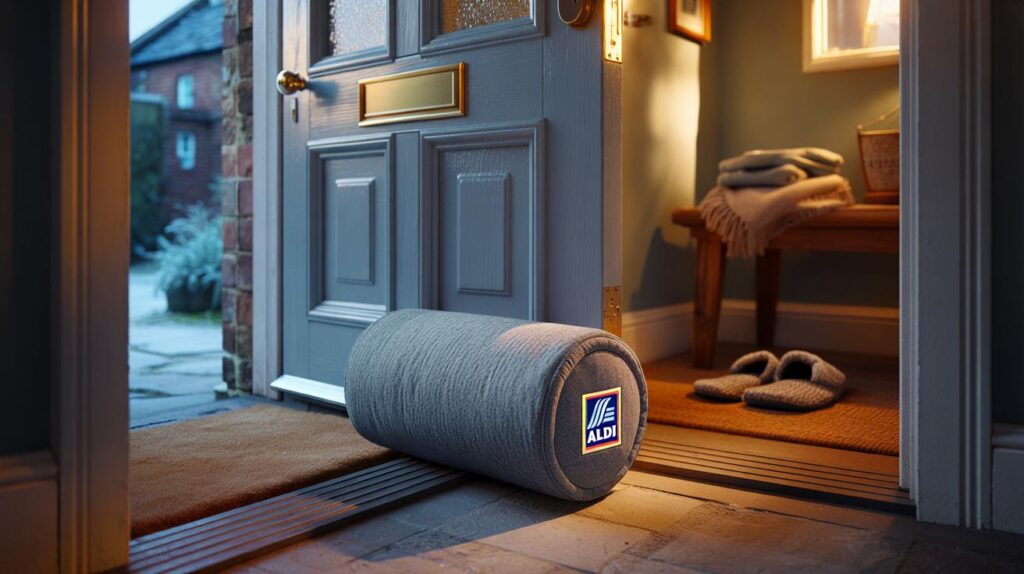
A tiny tweak at ground level could stop heat sneaking out of your home and keep bills from creeping up.
As cooler nights return, small gaps around doors start to matter again. A low-cost draught excluder can shut out the chill, lift comfort and trim energy use before the heating even clicks on.
Why a £6 draught blocker matters
Warm air escapes wherever it finds a gap. Door thresholds, letterboxes and uneven floors create a steady leak that forces boilers to work harder. That extra burn shows up on your bill.
Analysts at Carbon Commentary say around a quarter of household warmth can be lost through draughts. Blocking the worst gaps yields quick wins.
That’s why a simple door sausage sits high on many winter shopping lists. Aldi has one on shelves from 14 September for £5.99, pitched at families who want immediate results without touching the thermostat.
Heat loss adds up fast
Set a room to a comfortable temperature and an invisible tug-of-war begins. Cold air slips in at the floor, warm air escapes at the top, and your boiler cycles to keep pace. Each uncontrolled gap is a little chimney. Cut those pathways and your home holds steady for longer between boiler runs.
The Energy Saving Trust advises keeping living spaces between 18°C and 21°C in winter. The World Health Organization suggests around 20°C for homes with young children.
What you get for £5.99 at Aldi
The supermarket’s draught excluder is designed as a simple, moveable barrier for the base of interior doors. It’s meant for instant deployment—no tools, no drilling, no fuss.
- Price: £5.99 in store from 14 September
- Size: approximately 80 x 20 cm
- Fabric: 100% polyester
- Placement: push snugly against the door threshold to block the gap
- Care: wipe-clean fabric; light spot-wash as needed
Sizes, fabrics and styles
Households can choose playful or pared-back looks. The range includes character designs such as Sausage Dog and Pumpkin, plus four calmer options—Cord, Velvet, Bouclé Grey and Bouclé Cream. That spread lets you match kid-friendly rooms and more understated spaces without clashing with existing decor.
From 14 September: £5.99, 80 x 20 cm, in six looks including Sausage Dog and Pumpkin.
How much could you save with one strip of fabric?
No two homes are alike, and savings depend on how draughty your doors are. But a quick model shows why a small barrier can pay its way within weeks.
A quick bill-side scenario
Assume a typical medium-use gas household (about 12,000 kWh a year) paying roughly 7–9p per kWh for gas under current caps. If uncontrolled draughts account for up to 25% of space-heating loss and the worst culprit is a leaky hallway door, a single excluder could trim a slice of that burden.
| Assumption | Value |
|---|---|
| Annual gas use for heating | 12,000 kWh |
| Share of heat loss from draughts | Up to 25% |
| Share tackled by one bad door gap | Around 5% of total heating use (illustrative) |
| Effectiveness of a snug excluder | Cuts that door’s loss by about half |
| Annual energy saved | ≈ 300 kWh |
| Pound saving at 8p/kWh | ≈ £24 per year |
That is a conservative, example-only calculation. Many homes will see less; some, with glaring gaps, will see more. The point stands: a £5.99 purchase can pay back rapidly when placed in the right spot.
Where to place it for best effect
Start where cold air streams in and where people sit still for long periods. Use sight and touch—kneel at dusk and run the back of your hand along the threshold to feel movement. You can also watch for moving candle smoke, but keep flames well away from fabrics and out of reach of children.
- Prioritise the front door if it opens directly into a living space or hallway.
- Shield children’s bedrooms and rooms used by older relatives for extra comfort.
- Block internal doors between cooler spaces and warm rooms to cut air exchange.
- Pair with letterbox brushes and keyhole covers if you feel separate, focused leaks.
- Check the fit after each door opening to keep the excluder tight against the gap.
Place the excluder where you can feel a steady draught by hand—those spots give the fastest returns.
Other seasonal picks under a tenner
Aldi tends to bundle cold-weather bits when the temperature dips. That includes soft furnishings that add perceived warmth and a hint of seasonal scent.
Wrap up and set the mood
The retailer lists Cuddly Blankets at £8.99 in Purple Jacquard, White Check, Pumpkin and Ghost motifs. For ambience, Wooden Lid Candles are tagged at £3.99 with fragrances such as Fallen Leaves, Pecan and Cinnamon Waffle, and Vanilla Pumpkin. Keep flames supervised and away from draughts and door fabrics.
Simple alternatives if the store sells out
Door gaps vary, so a different tool may suit your threshold or budget. Mix and match to plug the worst offenders.
- Self-adhesive foam or rubber strips: cheap, quick, ideal for irregular frames.
- Brush seals screwed to the door bottom: durable, good for heavy-use doors.
- Letterbox brushes and flaps: stop a surprising gush of cold air in hallways.
- Keyhole covers: tiny parts, but they close a direct route for draughts.
- Thermal curtains or door curtains: slow cold air in porches and north-facing entries.
- Chimney balloons for unused fireplaces: block the stack while allowing slight ventilation.
Make the most of a £6 door stop
Fit first, then test. If the excluder skates on polished floors, add a discreet anti-slip pad beneath. For wide doors, you may need two units end-to-end, or a longer alternative. If pets push it aside, consider a brush seal fixed to the door for a permanent barrier.
Think of comfort as a bundle. Combine a door sausage with timed heating, a few degrees of zoning (cooler halls, warmer living rooms), and regular radiator bleeding. Check that radiators are not blocked by sofas, and keep thermostatic valves clear for accurate sensing.
A short note on warmth and health
Low indoor temperatures can aggravate respiratory and cardiovascular issues. Aim for the recommended ranges, but keep ventilation in mind. Trapped moisture leads to condensation and mould, which undercuts health and insulation performance. Crack trickle vents, use extractor fans during cooking and showers, and avoid blocking air bricks.
When a quick fix isn’t enough
If rooms still feel draughty after plugging door gaps, widen the search. Look under skirting boards for gaps, around loft hatches, and at old window frames. A tube of decorator’s caulk and a roll of foam strip often tame those leaks for a few pounds. For sash windows, add a temporary secondary glaze film during the coldest months.
Small, targeted steps often reduce boiler cycling more than a single notch on the thermostat—and they cost far less.
For households watching every penny, a £5.99 blocker deployed in the right place can bring a noticeable change in comfort. Pair it with sensible room temperatures and basic sealing jobs, and you may keep more heat indoors while the worst weather passes.



Picked up the Sausage Dog one last year—honestly cut the chill in our hallway. For six quid, no brainer.
25% heat loss through draughts feels high. Any soures beyond Carbon Commentary? Also, does an 80x20cm roll realy seal uneven Victorian floors, or do I need brush strips too?