
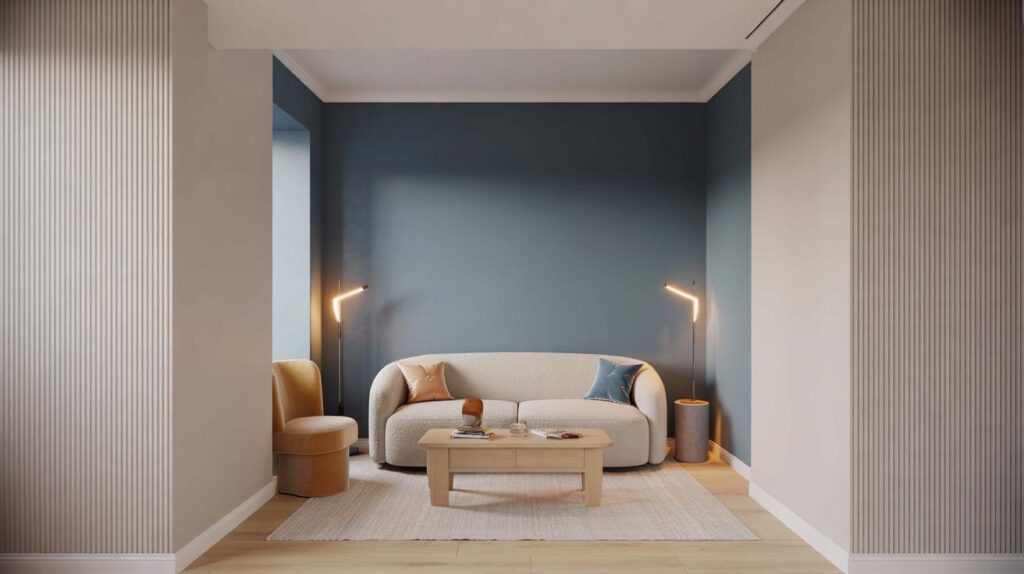
With winter closing in and daylight fading, many lounges feel cramped. A quiet design shift can lift space, mood and light.
Designers across 2025 keep pointing to a single, striking move with outsized impact. Instead of repainting everything white or buying more mirrors, they are guiding clients towards one deliberate wall that does the visual heavy lifting. It changes how your room reads, not just how it looks.
Why one wall changes how big your lounge feels
A room feels larger when the eye has a strong, clear destination. A single accent wall creates that destination. It draws focus, stretches perspective and clarifies the layout. With the right contrast, edges blur and depth appears where none existed.
One feature wall can make a modest lounge read as 20–30% larger by redirecting attention and stacking depth.
The effect relies on perception, not square metres. A calm envelope of lighter tones recedes; the feature advances just enough to anchor the view. Place it where you naturally look on entry or when seated. Behind the sofa works for most homes. The wall opposite the doorway works in narrow rooms that need a sense of length.
Choose the right wall
Pick a wide, uninterrupted surface. Steer clear of slivers, alcoves and busy media walls. A broad span gives colour or pattern space to breathe. Aim for a wall you can see from two key positions: the entrance and your favourite seat.
In rooms that feel too long, accent a shorter end wall to pull it visually closer and balance proportions. In squat rooms, accent a longer wall to amplify width. In low rooms, carry the colour 5–10 cm onto the ceiling as a soft “border” to lift perceived height.
Pick a 2025 palette you can live with
Deep, grounded colours carry the trend this year without swallowing light. Think slate blue, forest green and lifted terracotta. These shades read sophisticated at dusk yet remain gentle by day. If you favour pattern, keep scale moderate and geometry crisp: marbled veining, clean Scandinavian grids, or stylised botanicals.
Check the light reflectance value (LRV) on paint data sheets. An LRV of 15–30 gives depth without deadening a room with limited daylight. Test at three times during the day. If it looks inky at noon, it will feel heavy after 4pm in winter.
Set the stage with lighter surroundings
An accent wall works best when everything around it whispers. Soft off-whites, sand beiges and pearl greys on the other walls quieten visual noise. Keep skirtings and the ceiling neutral to frame the feature. Simple silhouettes and tactile materials finish the scheme without fuss. A bouclé sofa, a pale oak table, a rattan or velvet occasional chair and one distinctive lamp look current without dating.
High-street collections in Britain mirror this balance. AM.PM and Habitat have doubled down on clean lines and natural textures for autumn–winter 2025, which pair well with saturated accents.
Echo the accent with tiny repeats to bind the room:
- Two cushions or a runner that nods, not shouts, to the wall colour
- A ceramic vase or framed print with a single matching tone
- A throw folded across the sofa arm to carry colour through seating
Light it like a set
Layered lighting deepens the illusion. Use warm-white bulbs (2700–3000K) and dimming for evening. Wall washers or slim LED strips aimed up the feature surface add height and texture. A pair of adjustable wall lights at 1.6–1.8 m helps model the surface, avoiding flat glare. Aim for 1,500–2,000 total lumens in a small lounge, split across three to five sources so no single lamp dominates.
Light the wall, not just the room. A lit feature surface pushes boundaries back and keeps winter gloom at bay.
Pitfalls and pro fixes
Common mistakes come from enthusiasm. Two or three feature walls cancel each other out. Dark paint in a north-facing room swallows daylight. A bulky unit jammed against the accent looks heavy. Trinkets multiply and crowd the effect.
Keep one wall bold. Keep three walls quiet. Leave at least 10 cm of breathing space either side of the main furniture piece on the feature wall. Limit “echoes” to two or three small items. Edit shelves nearest the feature so the surface stays legible.
Time, cost and impact
Most households can complete the change in a weekend. Preparation takes the longest and matters most: fill, sand and prime for a crisp edge and even sheen. Here is a quick guide to finishes, costs and outcomes.
| Finish | Typical cost | Skill level | Visual effect | Care |
|---|---|---|---|---|
| Matt paint | £40–£80 for 2.5L + £10 tape/kit | Easy | Clean, solid depth | Wipeable formulations resist marks |
| Textured limewash | £70–£120 + soft brush | Intermediate | Soft movement, artisan feel | Spot-recoat rather than wipe |
| Wallpaper (non-woven) | £120–£350 wall + paste | Intermediate | Pattern, scale, personality | Check lightfastness; avoid steam |
| Timber slats | £180–£500 wall | Advanced | Vertical lines add height, acoustic gain | Dusting; oil yearly if natural |
DIY labour ranges from four to six hours for paint, eight to ten for paper if pattern-matching. Hiring a decorator averages £180–£350 for a single wall, depending on prep and location.
Small-space examples you can copy
Long, narrow lounge, 4.8 m × 2.6 m: accent the short wall opposite the entry in slate blue. Keep the long walls in warm white and install a 160 cm sofa at the centre of the feature. Add two low lamps either side to widen the view.
Low ceiling, 2.3 m: pick a mid-tone green and run it 8 cm onto the ceiling as a soft band. Choose vertical ribbed curtains in an off-white fabric to echo the upward line. The band lifts height without painting the full ceiling.
Rental home: use peel-and-stick wallpaper on one wall behind the sofa. Choose a small-repeat geometric so seams vanish. Keep accessories minimal and store the offcuts; removal takes an hour and leaves paint intact.
How to test before you commit
Paint two A3 samples and tape them side by side on the chosen wall. Move them to the corners and the centre. Watch them at 9am, 1pm and 7pm for a day. If the colour still charms you at night, it will carry through winter. For paper, hang a full drop dry with masking tape and view it from the hallway and sofa position.
Health, sustainability and safety notes
Pick low-VOC paints for winter projects with closed windows. Ventilate while drying and for an hour after. Avoid flammable solvent cleaners near freshly painted surfaces. If using timber or slat panels, confirm fire ratings and keep clearances around sockets. Recycled-content wallpapers and water-based adhesives reduce impact and remove cleanly.
Beyond colour: shaping space with furniture and rugs
Place the main seating on the feature wall to stabilise the layout in a small room. In a square lounge, offset the coffee table by 10–15 cm to break a tight grid. Use a rug that sits under the front legs of seating; 160 × 230 cm fits many British lounges and binds the zone without swallowing floor.
One wall, one story. Keep the rest quiet and your lounge feels calmer, brighter and noticeably larger.
If you want to quantify results, measure eye lines. Sit where you usually relax and note what you see at the edges of vision. After the change, check how far your gaze tracks across the feature surface before meeting clutter. The longer path signals more visual volume, which is what your brain reads as space.
For families, a resilient mid-sheen on the feature wall can be wise. It shrugs off fingerprints yet keeps richness. If you pair a deep tone with young children or pets, add a washable paint and leave a spare 250 ml for quick touch-ups. The wall will keep its punch through heavy use and the darker hue will disguise scuffs between cleans.



Tried a forest green feature wall behind the sofa and ran it 8cm onto the ceiling—wow, the place reads wider and taller. The 2700K bulbs + a pair of wall washers made the colour sing. Spent ~£140 all-in (paint + tape + brushes). Definately doing the cushion ‘echoes’ next. Cheers for the LRV tip! 🙂