
Wind, rain and falling leaves are back, and with them the quiet household headache nobody wants on a Sunday night.
As squally showers push garden debris into gullies, many people face slow-draining patios, standing water and grim odours. A cheap, quick tactic using what you already own is gaining traction, and it targets the real culprit behind autumn blockages.
Storm season puts drains under pressure
Outdoor drains struggle when heavy rain sweeps leaves, twigs and mud into grates. Kitchen waste makes matters worse. Fat, oil and grease cling to cold pipe walls, harden, and trap everything else. Rice and coffee grounds swell and pack tight. The result can be a stubborn choke that returns after every downpour.
Inside the network, these fatty deposits join with wipes and litter to create the notorious “fatbergs” that water firms battle year-round. Across the UK, sewer blockages run into hundreds of thousands each year, costing tens of millions to clear and leaving households with unpleasant backups.
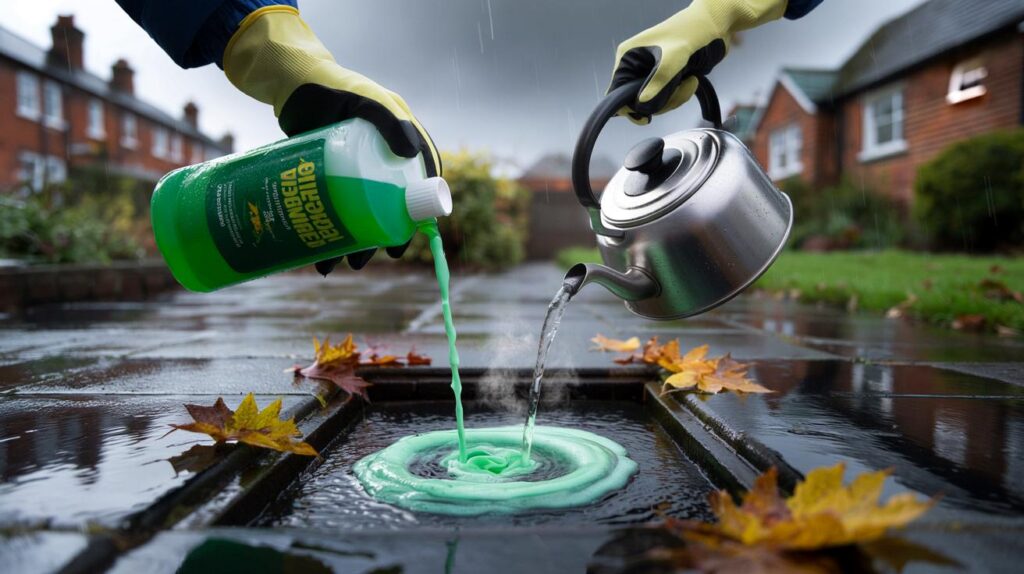
Many autumn blockages start with cooled cooking grease. Heat and detergent can loosen it. A kettle, 50 ml of washing-up liquid and patience often restore flow.
Step-by-step: the £1 washing-up liquid method
This approach targets congealed grease and soap scum in outside drains. It is not a cure-all for collapsed pipes or roots, but it can clear the typical seasonal clog quickly.
- Boil a full kettle (1.5–2 litres). If your pipework is older plastic, let the water stand for 2–3 minutes off the boil.
- Squeeze 50 ml of washing-up liquid into the drain opening or gully trap. Choose a plain detergent, not a bleach gel.
- Pour the hot water slowly and steadily, aiming around the edges to warm the pipe walls.
- Wait 5 minutes to allow heat and surfactants to break up the fatty layer.
- Repeat the hot water pour. Two or three rounds usually shift the blockage.
- Flush with a bucket of warm tap water to carry loosened residue to the sewer.
| Item | Typical amount | Approximate cost |
|---|---|---|
| Washing-up liquid | 50 ml per round | £1–£2 per bottle |
| Kettle of hot water | 1.5–2 litres | ~5–7p in electricity |
| Time | 15–25 minutes | — |
Why this works
Detergent molecules have one end that loves water and another that latches onto fats. Heat softens the grease and increases flow, while the soap breaks big globs into tiny droplets that can be carried away. Pouring slowly helps the hot water warm the pipe wall rather than rushing straight past the obstruction.
A slow pour, short wait, and two repeats give the best chance of dissolving the greasy film that traps leaves and grit.
Safety and limits
- Protect hands and eyes. Hot water and splashback can scald.
- Use hot, not rolling-boil water on very old plastic pipework or fragile seals.
- Do not mix different drain chemicals. Avoid pairing bleach with acidic cleaners.
- Skip this method if a foul smell accompanies gurgling indoors. That suggests a deeper sewer issue.
- If you have a septic tank, use minimal detergent and opt for warm rather than near-boiling water.
Prevention you can start today
Clearing once is not enough if the same waste re-enters the system. Small, regular habits make a big difference during leaf-fall season.
- Never pour fat or cooking oil down the sink. Let it solidify, then bin it.
- Wipe pans and plates with kitchen towel before washing to cut grease by half or more.
- Fit a sink strainer to catch rice, pasta and food scraps.
- Lift drain covers weekly in autumn to remove leaves and silt with a gloved hand.
- If you cook often, consider a small under-sink grease trap.
- Trim back overhanging shrubs that shed directly over gullies.
What if the drain is shared or on the street
Shared drains between properties often fall under your water company’s responsibility beyond the property boundary. If water is backing up in several homes, call the utility. Street gullies are a council matter; report flooding rather than attempting to lift roadside covers yourself.
Costs: what you could save
Typical domestic call-out fees for a blocked outside drain range from £80 to £180 during normal hours, with evening or weekend visits going higher. Mechanical rodding or jetting can add to the bill. By contrast, a bottle of washing-up liquid under £2 and a few kettles of hot water cost pennies.
That gap matters during a winter of rising household bills. Even if you need to repeat the treatment monthly through leaf-fall, you are spending less than the VAT on one emergency visit.
UK water networks face around 300,000 sewer blockages a year, much of it linked to fat and wipes. Keeping grease out of your pipes helps your home and the system beyond your gate.
When the DIY fix isn’t enough
Some clogs won’t budge because the pipe is cracked, intruded by roots, or choked with rubble. Warning signs include repeated backups within a day, overflow from an inspection chamber, or foul water returning indoors when appliances drain. In these cases, a professional with a rod set or jetter is the faster route. Ask for a clear price before work starts, and request a camera survey if the blockage recurs.
Extra tips to stay ahead this autumn
- Keep a cheap leaf guard over gullies beneath downpipes to stop heavy fall entering the trap.
- Rinse with a bucket of hot (not boiling) water and a small squirt of detergent after roasting or frying days.
- Use drain rods gently; pushing too hard can compact a blockage further down the line.
- For odours rather than standing water, a mug of bicarbonate of soda followed by hot water can help freshen traps.
- Note where slow drainage starts. Patios and kitchen sinks that slow together point to the outside gully.
A quick autumn routine you can adopt
Every Sunday during peak leaf-fall: sweep grates, remove loose debris, pour 50 ml of washing-up liquid into the outside drain, then send a kettle of hot water down slowly. The whole routine takes 10 minutes and reduces the risk of a Monday morning pool outside your back door.
For homes with older pipework, a warm-water flush is kinder to seals, and more frequent light maintenance beats one dramatic intervention. If you rent, flag recurring drains issues to your landlord early and keep notes of dates and photos of pooling so action is logged before the weather turns colder.



Pouring detergent down drains to clear grease—good quick fix, but what about downstream river impact? Are standard washing-up liquids OK for septic tanks and watercourses, or should we use eco formulas?