
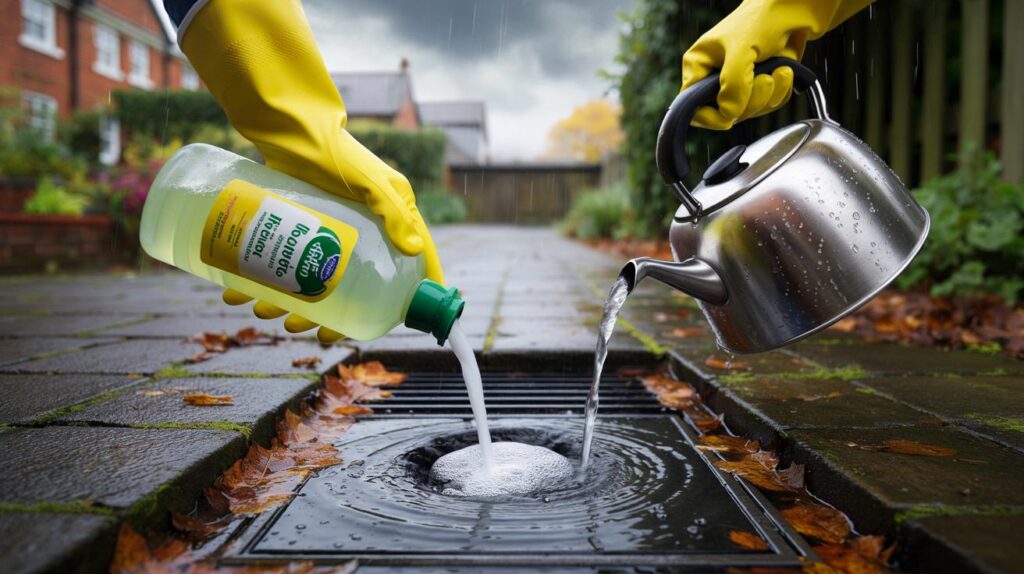
Rain returns, leaves fall, and garden gullies groan. Across the UK, homeowners are facing messy, smelly surprises underfoot.
As gusts and downpours sweep in, outdoor drains take the hit, with fat, leaf litter and grit turning small gullies into sluggish pools. A simple kitchen-cupboard fix is gaining traction, and it costs roughly the price of a loaf of bread.
Why autumn clogs your drains
Fallen leaves, twigs and wind-blown rubbish wash into grates during heavy rain, which reduces the flow area and traps sediment. Kitchen waste adds to the mess when fats, oils and grease cool in pipes and harden against the walls. Once a layer forms, it snares food scraps and soap scum, producing a stubborn plug. Outdoor runs sit colder than indoor pipework, so the congealing happens faster in chilly weather. A single weekend of storms can compact weeks of debris into a cement-like mass.
Cold pipe walls in autumn speed up fat solidification, so small amounts of grease can trigger blockages within days.
Water companies warn that FOG build-ups don’t just cause slow drains at home. Water UK has previously reported around 300,000 sewer blockages a year nationwide, costing more than £100 million, much of it linked to grease and wipes. That downpipe outside your kitchen can be the first domino in a costly chain.
The £1 washing-up liquid method
Plumbing specialists, including maintenance firm Maintracts, say a strong dose of washing-up liquid followed by hot water can loosen greasy clogs quickly. The method relies on heat to soften the fat and detergent to emulsify it, allowing water to carry it away. The materials are already in most homes, and the job takes minutes rather than hours.
Step-by-step: a 15-minute clean-out
- Safety first: wear gloves and non-slip shoes, and keep pets away from the working area.
- Clear the grate: lift the cover and remove visible leaves and silt with a small scoop or old kitchen tongs.
- Measure the mix: add three generous squeezes of washing-up liquid into the drain (around 30–40 ml).
- Heat the water: bring 2 litres to the boil, then let it sit for 60–90 seconds to reduce the risk of splashing.
- Pour slowly: tip the hot water in a steady stream over 60–90 seconds to keep heat in contact with the clog.
- Wait and repeat: pause for 5 minutes, then repeat up to three times for a heavy blockage.
- Flush through: run an outside tap or pour another 2–3 litres of hot (not boiling) water to carry residue away.
Pour hot water and washing-up liquid slowly, wait five minutes, and repeat up to three times for a heavy clog.
If the water immediately backs up and does not recede after two cycles, the obstruction may be further down the line, and rodding or a drain snake will likely be faster.
When the DIY fix is not enough
Not every blockage yields to heat and detergent. Tree roots, collapsed pipe joints, builders’ debris and compacted silt need mechanical clearance. A hand auger or drain rod set costs from £15–£25 and can break through deeper plugs. Persistent foul smells, rising water in multiple outlets, or gurgling from indoor traps point to a broader issue that may require professional jetting. If your property is on a shared run, neighbours may notice the same symptoms at the same time. In these cases, keep records, take photos of standing water, and contact your wastewater provider if a public sewer is suspected.
Prevention that actually works
Grease control and leaf management keep autumn drains moving. Simple habits reduce the risk of a repeat call-out within weeks. A few low-cost items can cut the chance of blockages dramatically.
- Bin the fat: pour used cooking oil into a lidded container and dispose of it with general waste.
- Wipe before washing: scrape and wipe pans with kitchen roll to remove residue before they meet hot water.
- Fit sink strainers: catch rice, pasta and peelings; empty them into the bin or food caddy daily.
- Sweep grates weekly: remove leaves from covers and gullies, especially after storms and on windy days.
- Consider a small grease trap: frequent fryers can add a compact unit under the sink to intercept FOG.
Grease belongs in the bin, not the pipe: wipe pans, catch solids, and keep gully covers leaf-free.
Quick comparison of common unblock options
| Method | Typical cost | Time | Best for | Avoid if |
|---|---|---|---|---|
| Washing-up liquid + hot water | About £1–£2 in supplies | 10–20 minutes | Greasy, light clogs near the gully | Water stands for hours without movement |
| Drain rods or hand auger | £15–£25 one-off | 20–40 minutes | Compact plugs further down the line | No access point or risk of pushing debris into shared pipes |
| Enzyme-based cleaner | £6–£15 per bottle | Several hours | Organic build-up over time | Urgent blockages during heavy rain |
| Professional jetting/CCTV | £80–£180 per visit | 1–2 hours | Recurrent issues, roots, collapsed joints | Minor surface clogs you can see and reach |
Small details that make the fix safer
Use near-boiling water rather than a roiling pour to reduce splash risk on brittle grates. Never mix washing-up liquid with caustic products, as reactions can generate heat and fumes. Protect paving with a bucket under the grate edge to catch any overflow and stop detergent slicks. If your gully feeds a soakaway, keep chemical use to a minimum to protect nearby soil life.
How much washing-up liquid is enough
For a small household gully, 30–40 ml per cycle breaks the surface tension and helps emulsify fat. For a wider channel drain, 50–60 ml may be needed, especially after a barbecue-heavy weekend. Three cycles spaced five minutes apart deliver sustained heat and detergent contact. If you need more than three cycles, switch to rods to avoid pushing softened grease deeper without clearing it.
What this means for your bills and the bigger network
Preventing a single blockage can save a £100–£150 emergency call-out on a Sunday evening. Water providers also benefit when households keep FOG out of sewers, reducing jetting runs and disruption on your street. The infamous fatbergs that make headlines start with pan drippings and wipes from ordinary kitchens. Autumn is peak risk because colder pipes set fat fast and leaves choke grates during intense showers.
Extra tips for different households
Greasy kitchens
If you deep-fry weekly, decant cooled oil into a screw-top bottle and store it in a sturdy bag for bin day. Keep a dedicated scraper by the hob and make wiping part of your clean-down routine. Schedule a monthly enzyme dose overnight for indoor traps to keep odours down.
Renters and sharers
Put a simple poster by the sink reminding flatmates that rice and oil block drains. Photograph the gully after cleaning so you can show your landlord you’re maintaining the area. If you suspect a shared sewer issue, log dates and times of slow drainage to build a clear case for escalation.
Garden-heavy properties
Install a mesh leaf guard over open gullies for under £10 and empty it after windy spells. Trim back shedding plants above drains in late September to cut the leaf load before storms hit. Consider a short strip drain channel to intercept run-off before it reaches the main gully.
If heavy rain is forecast tonight
Lift the cover and clear visible debris before the storm. Dose with washing-up liquid and run 2 litres of hot water now, then another 2 litres after the first burst of rain to keep fat softened. Keep a bucket, gloves and a torch by the back door so you can act between showers without delay.



Sounds too good to be true, tbh.