
Storm-battered weekends and falling leaves create a perfect headache for homeowners, with pipes groaning and patios flooding without warning across Britain.
With wind-driven debris and bursts of heavy rain set to strain outdoor drains, households face the classic seasonal clog: leaves on top and congealed cooking fat beneath. A cheap bottle of washing-up liquid and a kettle of hot water now sit at the centre of a simple plan to keep water moving and avoid a grim, smelly overflow.
Why autumn clogs your outside drains
Outside drains shoulder two problems at once. From above, gusts sweep leaves, twigs and grit into gullies. From within, fat, oil and grease cool inside pipework and harden into a sticky film. That film traps everything else, from rice grains to soil, until wastewater struggles to escape.
When cooking residues head down the sink, the warm liquid looks harmless. Once it hits colder pipe walls, it sets. Add weeks of leaf fall and you get a stubborn plug that resists a quick poke with a stick. Left alone, water pools on patios and driveways, and foul smells creep up through grates.
Grease builds a gluey lining in pipes; autumn debris sticks to it. Break the fat first and the blockage loses its grip.
The £1 washing-up liquid method
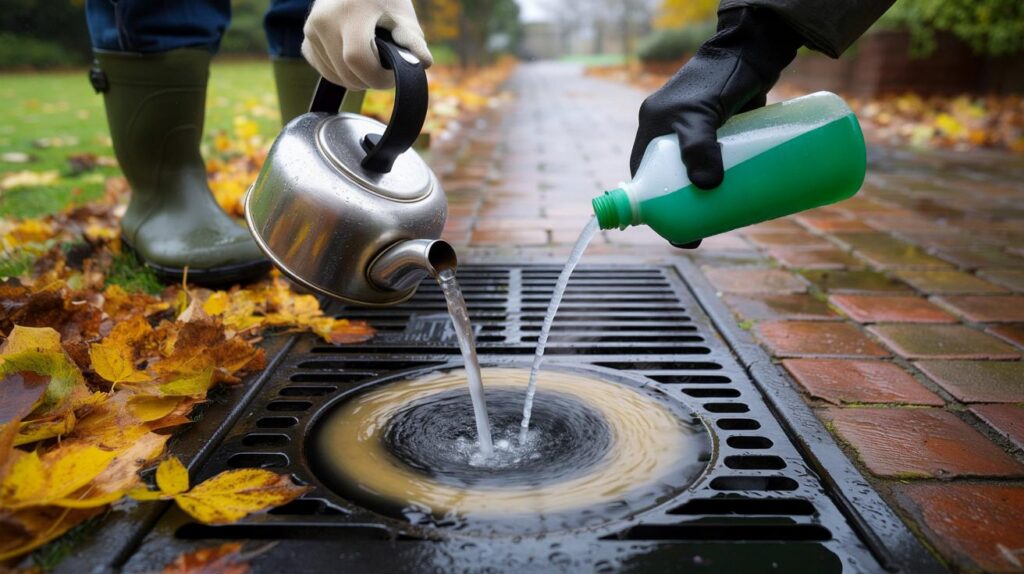
You don’t need caustic chemicals. Washing-up liquid contains surfactants that cut through grease, and hot water softens and shifts congealed fat. Together they create a fast, low-cost flush for minor-to-moderate blockages in outdoor gullies and surface drains.
What you need
- 1 full kettle (1–1.7 litres) of hot water
- 10–20 ml of washing-up liquid (2–4 generous squirts)
- Protective gloves and sturdy footwear
- A bucket or jug for controlled pouring
Step-by-step
- Scoop away visible leaves and silt from the drain cover. Lift the grate if safe to do so.
- Mix the washing-up liquid with hot water in a bucket or pour the liquid directly into the drain first.
- Pour slowly in stages, allowing heat to soften fat and soap to break it up. Aim for 30–45 seconds per pour.
- Wait one minute to let the mixture travel and work down the pipe.
- Repeat the pour two or three times until flow improves and standing water drops.
- Rinse with a minute of cold water from a hose to carry away loosened residue.
Go slow and repeat: two to three hot, soapy pours clear more grease than one hurried deluge.
How to tell if it worked
Watch the water level at the grate. If it falls steadily and no longer gurgles, the blockage has likely broken. If it barely moves, the clog may sit further along the run or include compacted silt or roots that need mechanical clearing.
| Symptom | Likely cause | Fast action | Time |
|---|---|---|---|
| Water pooling around grate | Leaf mat over cover | Remove debris, hose through | 5–10 mins |
| Slow drain, greasy smell | Fat and soap scum lining | Hot water plus washing-up liquid | 3–10 mins |
| Repeated backup after rain | Silt build-up or partial collapse | Rod or seek professional survey | 30–60 mins |
Prevention that saves you money
Small changes in the kitchen and garden cut blockages and keep gullies flowing through the wet months.
- Let cooking fat cool, then scrape it into the bin. Don’t send oil or grease down the sink.
- Wipe pans and plates with kitchen roll before washing to remove residue.
- Use a sink strainer to trap rice, pasta and peels before they enter the pipes.
- Clear leaves from gully grates and driveway channels after windy spells.
- Consider a simple grease trap if you cook regularly with oils or roast meats.
Keep fats out, keep leaves off the grate, and your autumn drain stays clear far longer between downpours.
Safety, environmental and plumbing notes
- Handle hot water carefully. Pour from knee height to reduce splash-back and avoid steam burns.
- Kettle-hot water works well. If you worry about plastic fittings, let just-boiled water sit for a minute before use.
- Never mix washing-up liquid with bleach or drain acid. Different chemicals can react and release harmful fumes.
- Use only what you need. A modest amount of detergent breaks grease; excessive soap creates needless foam downstream.
- If you have a septic tank, use a smaller dose and repeat gently to protect the balance of bacteria.
When to call a professional
Pick up the phone if multiple fixtures back up at once, if water rises from a manhole, or if you smell sewage inside the home. That points to a deeper obstruction that hot water and detergent won’t reach. A drain engineer can rod the line, jet-wash silt, or use a camera to spot breaks and root ingress before winter properly sets in.
Why washing-up liquid works on fat
Grease resists plain water because oil and water do not mix. Washing-up liquid carries molecules that grip both water and oil, breaking large blobs into tiny droplets. Hot water softens the fat so the detergent can surround and lift it. The mix then rides the flow away instead of clinging to pipe walls. This same chemistry helps shift soap scum, which behaves like a sticky film when cold.
A quick kitchen demo you can try
Pour a teaspoon of cooled cooking fat into a bowl and top with a splash of cold water. It sits as a waxy lump. Add two drops of washing-up liquid and stir with warm—not boiling—water. Watch the lump soften and disperse into cloudy swirls. That’s how the method loosens a greasy choke-point in your drain.
Seasonal maintenance checklist
- After windy days, lift the gully cover and remove trapped leaf mats.
- Sweep driveway channels weekly while trees shed.
- Flush outdoor drains monthly with hot water and a small squirt of washing-up liquid to prevent re-build.
- Store a jug by the sink as a reminder to decant waste oil into a container, not the drain.
- If your property sits beneath heavy tree cover, schedule an autumn and late-winter drain health check.
A £1 bottle, a kettle and ten spare minutes can spare you a weekend of mopping and a costly call-out.
Going further: stubborn clogs and simple tools
If the hot, soapy flush only partially improves flow, add mechanical help. A basic drain rod kit can break compacted silt and snagged twigs in straight runs. Feed the rods in gently, twist clockwise to avoid unthreading, and withdraw slowly to avoid pushing the blockage deeper. Follow with another hot-water-and-detergent pour to clear loosened residue. For awkward bends or suspected roots, a professional jetting and camera inspection usually gives faster answers.



Tried this today on my patio drain—two generous squirts + a kettle, slow pours, and the gurgle stopped in minuts. A £1 fix that actually works!