
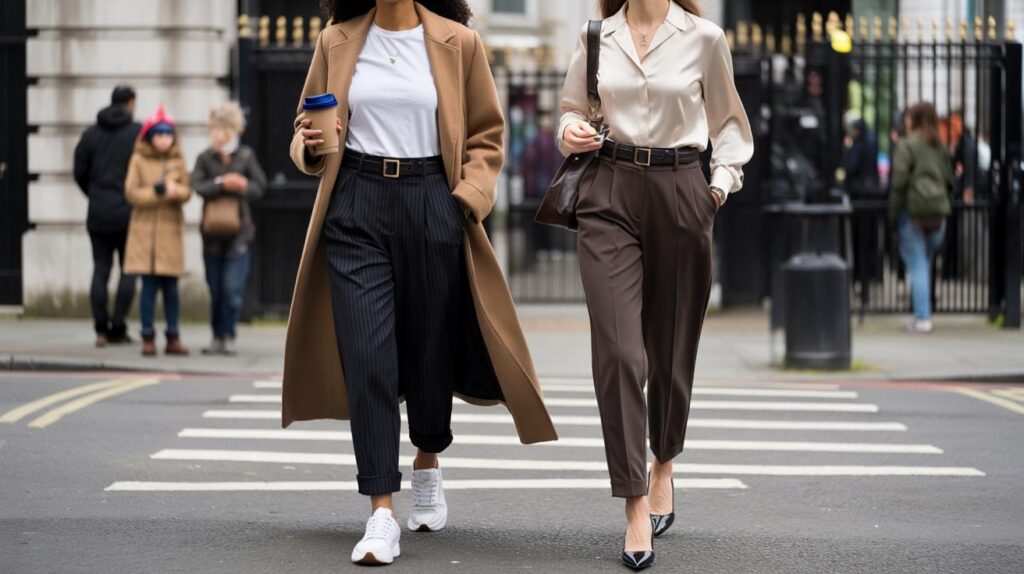
School gates at 8, spreadsheets by 9, sofa by 9pm; your weekday wardrobe must stretch further, look sharper, and still breathe.
That daily juggle asks a lot of a single pair of trousers. You need comfort for miles of steps, a clean line for meetings, and a price that doesn’t ambush the food shop. A quietly popular high-street option is doing the rounds for precisely those reasons, and it’s well under twenty quid.
What you get for £14.99
H&M’s belted trousers sit in that rare sweet spot between polish and ease. They use a soft jersey with gentle structure, so the fabric drapes rather than clings. A high waist holds the midsection comfortably, while hidden elastication flexes through commutes and coffee runs. Tapered legs sharpen the silhouette and keep the hem away from wet pavements. A neat, sewn-in belt with D-rings finishes the look without the faff of threading a separate accessory.
Price point, polish, and practical details line up: £14.99, high waist with hidden stretch, tapered leg, and a built-in belt.
That specification matters on a Tuesday when the school run fades into a mid-morning catch‑up and a late train home. Trousers that move with you save stress. Trousers that look considered save time. Trousers that cost less than a takeaway save cash.
Fabric and feel
Jersey tailoring sits differently to rigid suiting. The hand-feel is soft against the skin, with enough weight to hang cleanly from the hip. A modest sheen lifts the finish under office lighting, yet the knit structure keeps things relaxed. That duality is why people report wearing them three ways in a single day without changing shoes.
Fit that works all day
The tapered cut narrows gradually to the ankle. This lengthens the leg line, especially when paired with low-profile trainers or loafers. Front pleats add ease through the thigh, which helps when sitting, cycling, or crouching for a dropped water bottle. The high waist stays put as you move, so tops lie flat and jackets button cleanly.
Colours that pull double duty
The current run includes black, cream, white, brown and dark brown. Darker shades play well with office dress codes and hide the odd splash of latte. Lighter tones work with knitwear at the weekend and brighten a trench coat on grey mornings. Because the silhouette is pared‑back, colour does the talking without noise.
- Errand-ready: black trousers + white tee + trainers + longline coat.
- Office-sharp: dark brown trousers + cream blouse + loafers + simple studs.
- Park stop: cream trousers + chunky knit + waterproof anorak + trail‑style trainers.
One shape, five colours, dozens of combinations. Fewer decisions, faster mornings.
The cost-per-wear maths
Price is only half the story; frequency tallies the value. At £14.99, wearing these twice a week for a term can bring the effective cost below the price of a bus fare. The numbers stack quickly if you rotate two colours across work and weekend.
| Wears | Effective cost per wear |
|---|---|
| 10 | £1.50 |
| 25 | £0.60 |
| 50 | £0.30 |
| 75 | £0.20 |
That is before you factor in reduced dry‑cleaning spend. Knit‑based trousers typically wash at home, which trims weekly expenses and saves time waiting at a counter.
Sustainability notes
The fabric content includes at least 50% recycled polyester. That means a significant portion of the fibres come from post‑consumer or post‑industrial sources rather than virgin feedstock. Recycled yarns cut demand for new petroleum, use less energy in production, and often reduce water use compared with conventional polyester processing. While polyester remains a plastic, keeping existing material in circulation nudges the footprint in a better direction.
At least half the polyester is recycled, giving waste textiles a second life in an everyday staple.
Practical buying tips
Fit varies with body shape, so try your usual size and one either side. A high waist should hug without digging. If you are between lengths, a small turn‑up on tapered legs reads intentional. Look for a smooth line over the hip; pleats should fall vertically, not bow out.
- Check the rise: sit down in the fitting room to confirm comfort and coverage.
- Test the belt: cinch the D‑rings, then twist at the torso; the belt should hold without slipping.
- Do the shoe test: bring the footwear you wear most to check hem break and proportions.
- Care routine: a cool machine wash and line dry usually preserve shape; press lightly with a warm iron if required.
Who will love them, who might not
These shine for anyone who needs sharp‑ish trousers that behave like loungewear from the waist down. Parents doing back‑to‑back school runs and Teams calls will appreciate the quick change from trainers to loafers. Students and shift workers get a smart uniform piece that does not nag the overdraft. If you prefer heavy wool or crisp cotton twill, the jersey’s fluidity may feel too relaxed. Hot‑weather commuters might also prefer natural fibres on peak summer days.
How to stretch their use across seasons
Cold months favour dark brown with ribbed knits, long wool coats and structured boots. Spring suits cream or white with Breton stripes and a light mac. In summer, swap to a sleeveless top and leather sandals; the tapered leg keeps the silhouette neat. For autumn, black trousers under an oversized shirt and trench look pulled‑together with almost no effort.
A capsule approach that saves time
Choose two colours that complement what you already own. Anchor them with three tops (tee, blouse, knit), two pairs of shoes (trainers, loafers), and one coat. That seven‑piece mini‑capsule builds over a dozen outfits that slide between school gates, desk time and early dinners. Less choice paralysis, more consistency.
Real‑world stress tests you can try
Before committing, run three quick checks in‑store or at home. First, the pocket test: load your phone, keys and a small purse; check the drape and whether the waistband stays flat. Second, the stride test: take twenty long steps and one flight of stairs; the taper should not tug at the calf. Third, the sit test: five minutes on a hard chair; the fabric should not crease sharply across the lap.
A note on longevity and care
Jersey blends hold up well when washed cool, turned inside out, and dried flat. Skip fabric softener to reduce pilling. If you commute on a bike, consider a quick once‑over with a fabric shaver every few months to keep the seat area tidy. Stash a spare belt in your bag only if you plan to remove the sewn‑in one; otherwise, the integrated detail keeps mornings simple.
If budgeting, a straightforward plan helps: set aside £15 from the grocery envelope this week, then add a second colour next payday. Rotate both pairs, and you halve wear on each, which keeps the knees smooth for longer. If your workplace runs formal, pair with a structured blazer; if casual, a boxy cardigan softens the look while keeping the leg line clean.



£14.99 and tapered? I’m listening.