
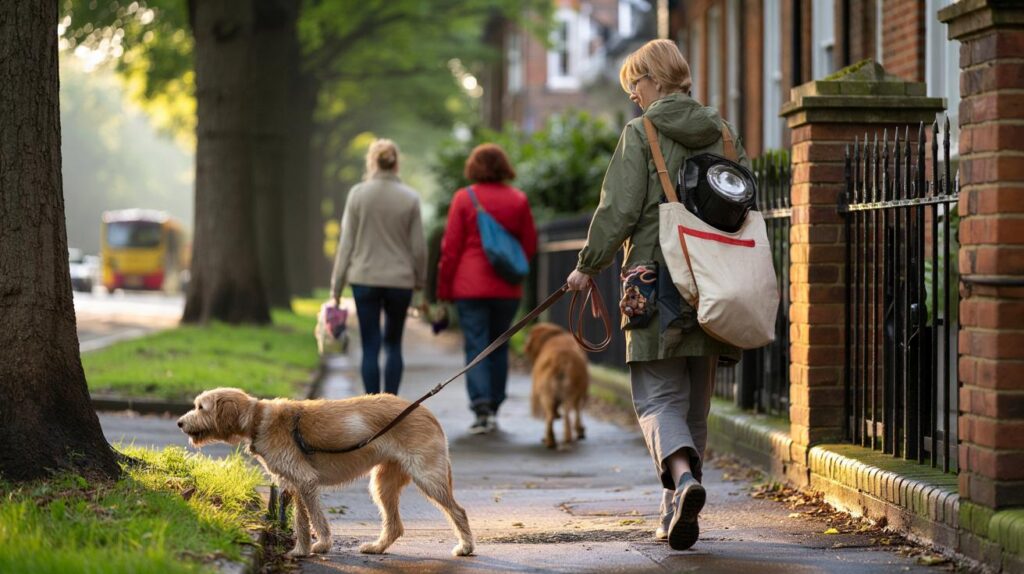
Chewed skirting boards, midnight barking and anxious pacing often begin weeks before you realise the pattern: short, rushed, skipped walks.
Across the UK, owners ask the same question every winter school run and summer heatwave: how often should a healthy dog be walked to keep behaviour on track. New advice from trainers and vets points to a simple, repeatable plan that saves both stress and money.
The fresh reality: how often should you walk a dog in 2025
Most healthy adult dogs thrive on three to four outings a day. One should be a purposeful 30 to 45 minute walk, with unhurried sniffing and time off the pavement. The other trips handle toilet breaks, short training games and light movement.
For many homes, the low-drama formula is 3 to 4 walks daily, including one 30 to 45 minute sniff-led session.
- Morning: 20 to 30 minutes of steady walking with five minutes of nose-led sniffing at each stop.
- Midday: 10 to 20 minutes for toilet, simple training and calm exposure to streets or park edges.
- Late afternoon or evening: 30 to 45 minutes, varied route, with play or recall practice where safe.
- Pre-bed: 5 to 10 minutes, quiet loop to settle, especially for younger or anxious dogs.
This cadence fits most urban schedules. It also matches what behaviourists report in cases with fewer complaints about chewing, barking and house-soiling.
Age, breed and health change the maths
Puppies need many short chances to toilet and learn the world. Adults need sustained movement and mental work. Seniors need comfort and routine with short, frequent strolls.
| Dog profile | Daily outings | Key duration target | Notes |
|---|---|---|---|
| Puppy (8–20 weeks) | 6–8 short trips | 5–10 minutes each, plus one 15–20 minute explore | Use a rule of thumb: up to 5 minutes per month of age per session, watch joints. |
| Adolescent (5–18 months) | 4–5 outings | One 30–45 minute walk, others 10–20 minutes | Brains go faster than brakes; keep training micro-sessions fun and brief. |
| Adult (healthy) | 3–4 outings | One 30–60 minute walk, others 10–20 minutes | Mix terrain and tasks to burn both energy and stress. |
| Senior or dog with chronic pain | 4–6 gentle trips | 5–15 minutes each, with warm-up and cool-down | Swap ball-chasing for scent games; check footing and temperature. |
Flat life versus garden life
A balcony or small flat means the lead goes on more often. A large garden does not replace the walk. A dog still needs novelty, social information and scents beyond the fence.
A garden is not a walk. New smells, new surfaces and soft social contact switch the brain on.
- In a flat: plan at least three trips, with one longer session daily and two extended routes each week.
- In a house with a garden: keep the 3 to 4 walk rhythm. Use the garden for toilet, not as the only outlet.
- Mix venues: rotate park, quiet streets, woodland edges and retail parks to build confidence.
What happens when dogs are under-walked
Behaviour problems often track under-stimulation and unmet toilet needs. Health issues follow long periods of inactivity. Home budgets also take a hit when stress behaviours escalate.
- Chewing and destruction: doors, skirting and shoes become targets when energy has nowhere to go.
- House-soiling: restricted access outdoors drives accidents and anxiety around holding on.
- Noise complaints: pent-up stress fuels barking, howling and reactivity on lead.
- Weight gain and joint pain: low movement and rich treats push dogs into discomfort.
- Hidden costs: carpet cleaning, door repairs and vet checks can add £200–£600 in weeks.
Under-walked dogs show stress with their mouths, feet and voice. Your schedule shapes those choices.
Quality beats mileage: make each walk count
Not every minute needs to be brisk. Dogs learn through their nose and short bursts of easy tasks. Variety keeps the head and body busy without overdoing impact.
- Let them sniff: add “free sniff” zones for two to three minutes per stop.
- Vary routes: switch between three to five circuits to reduce predictability and boredom.
- Train on the move: one-minute sits, hand targets and loose-lead turns build focus.
- Use play wisely: swap endless ball throws for tug or hide-and-seek to protect joints.
- Pick calm times: avoid midday heat and busy school gates if your dog struggles.
- Carry basics: poo bags, water, a spare lead and high-value treats for recalls.
Sniffing is work. Thirty seconds of nose-led foraging can drain as much tension as five minutes of trotting.
A sample week you can actually follow
- Mon: 30-minute town loop with four “sniff stops”, 15-minute midday, 10-minute pre-bed.
- Tue: 40-minute park path with recall practice, two 10–15 minute loosening walks.
- Wed: 35-minute woodland edge, food scatters in grass, short afternoon street stroll.
- Thu: 30-minute mixed streets, one quiet retail park visit for confidence-building.
- Fri: 45-minute canal towpath, “find it” games every 10 minutes.
- Sat: 60-minute country walk if joints allow, otherwise two 30-minute varied routes.
- Sun: Recovery day with three 15–20 minute gentle walks and longer sniff allowance.
Heat, rain and winter darkness
Hot pavements, heavy rain and black ice change plans. Shift main walks to early morning or late evening in heat. Test tarmac with your palm for five seconds before paws touch down. In rain and wind, shorten sessions and add indoor scent games. In darkness, choose lit routes, reflective gear and calm exposure to noises.
- Heat: carry water, pick shade, reduce pace, prioritise sniffing over speed.
- Rain: waterproof yourself, then stick to firm footing and end with towel time.
- Dark: use a clip-on light and teach a “close” cue for passing bikes or runners.
When to adjust and when to seek help
Huffing on stairs, sudden lagging or irritability can signal pain. So can a new refusal to jump into the car or onto the sofa. Reduce duration, split walks into shorter blocks and book a health check. If barking, reactivity or biting persists after two weeks of better walks, contact a qualified trainer or behaviourist. Plan support early rather than waiting for the next incident.
Fast tools you can use today
Two quick rules to size your plan
- Puppy guide: up to five minutes per month of age per session, twice daily, plus toilet trips and sniff breaks.
- Adult guide: aim for 60 to 90 total minutes across the day, spread over 3 to 4 outings with real nose-work.
A simple behaviour check
Track three signals across one week: destruction, noise and toilet accidents. If any rise above two incidents, increase sniff time by 10 minutes a day and add one short training walk. Review again after seven days.
Your dog reads the street through scent. Give them time to read, and the rest of the day falls into place.
Consider pairing walks with low-cost extras that pay off: a long lead for safe freedom, a treat pouch to reward quiet choices, and a rotating set of chews for post-walk decompression. Add a weekly “novelty visit” to a new safe area to keep curiosity alive and confidence growing.
If budgets are tight, swap petrol miles for local micro-adventures: sniff trails in verges, food scatters in a quiet car park, or a stair session in a tower block if permitted. Small changes compound. Your dog’s behaviour reflects the rhythm you set, one walk at a time.



Love the sniff-led idea! We switched from one frantic 50-minute sprint to 3 outings with a 35-minute nose-first walk and the chewing literally stopped in a week. The ‘garden isn’t a walk’ line stung but, yeah, true—our lab needs novelty, not laps round the lawn. Quick Q: for an anxious 10yo, is 4 x 10–15 mins better than 2 longer ones? Also any tips for rainy-day scent games that don’t make the house smell like a butcher’s? It’s definately helped our evenings.
3–4 walks a day sounds great on paper, but for full-time 9–6 folks it’s barely realistic. Are we supposed to feel guilty or is there a work-around you actually reccomend (split shifts, neighbours, daycare)? Also, where’s the evidence that sniffing reduces barking vs just tires them?