
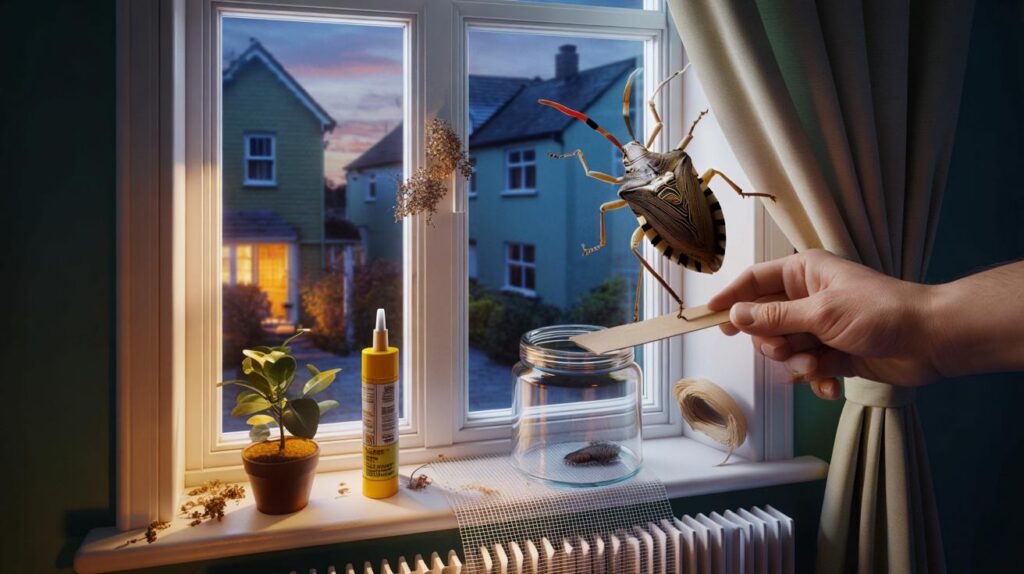
A chilly snap, a cracked frame, a light left on. Then a brown, shield‑shaped visitor appears, silent but unmistakable.
Across the UK, householders are reporting brown bugs on curtains, in lofts and behind blinds. The timing is no accident. As nights cool and radiators click on, one insect follows the heat indoors and sparks equal parts worry, curiosity and folklore.
Why you are seeing brown bugs now
The brown marmorated stink bug, a shield bug native to East Asia, seeks winter shelter once outdoor temperatures slide and day length shortens. When evenings dip below 10–12°C, warmed homes look like safe caves. Gaps as small as 3–5 mm around window frames and soffits are enough for entry.
Light plays a role. Porch lamps and bright bedrooms near open windows attract wandering adults in late afternoon and at dusk. Central heating sustains a cosy 18–22°C microclimate that encourages the bug to linger behind picture frames, skirting and curtains.
Cold outside plus warm, lit interiors equals an open invitation. Seal gaps, dim outdoor lights and ventilate smartly to cut arrivals.
Sightings cluster in autumn and early winter. They may peak again on sunny late‑winter days when overwintering adults wake and shuffle towards light sources.
What is the brown marmorated stink bug
It is a shield‑shaped insect, 14–17 mm long, mottled brown with pale bands on the antennae and a marbled edge to the abdomen. It releases an almond‑like, pungent odour when handled or crushed. That smell deters predators and can linger on soft furnishings.
It does not bite people. It does not breed indoors through the colder months. Eggs appear on plants in warm seasons, not on walls or bedding. In the UK it is an established arrival in some urban pockets, with sporadic household incursions where the species overwinters.
| Myth | Fact |
|---|---|
| It spreads disease to humans. | No. There is no evidence of disease transmission. |
| It breeds in carpets and sofas. | No. It overwinters dormant, then lays eggs on plants outdoors. |
| Crushing is the fastest fix. | Crushing triggers strong odour and may attract more bugs. |
| Pets are at risk if they sniff one. | Most pets are unharmed, though the odour can cause brief irritation. |
| Only dirty homes get them. | Entry is about gaps, light and temperature, not cleanliness. |
From superstition to social media
What people think it means
Folklore gives the brown bug a busy life. Some treat it as a sign of resilience and patient progress. Others say its quiet presence hints at order, timing and the wisdom of waiting. A few households let one wander by a window, believing it brings household stability or luck with money.
Many read the bug as a nudge to slow down and stay the course. Science reads it as an insect managing the cold.
What science actually says
The insect follows a biological clock. Shorter days switch on diapause, a resting state that leads it to dry, insulated voids. Pheromones help clusters form behind cladding and in roof spaces. It is a crop pest in warmer regions, with a taste for apples, pears, soft fruit and ornamentals. Indoors, it is mostly a nose‑level nuisance.
Allergy‑prone people may notice mild irritation if odour contacts skin or eyes. Serious reactions are rare. The greater risk sits outdoors in orchards and gardens once spring returns.
Three risks assessed
- Odour and staining: Disturbance releases scent that can mark paint and fabrics. Wipe with mild soapy water; ventilate the room.
- Plant damage in spring: If you keep indoor citrus or figs by open windows, feeding adults may pierce soft growth after warm spells.
- Cluster nuisance: Dozens can gather in lofts or behind cladding. They may wander into bedrooms on sunny winter days.
Five fixes you can do tonight
- Seal gaps of 3–5 mm around frames and pipes with silicone or draught‑proofing tape; check letterboxes and loft hatches.
- Dim or shift outdoor bulbs to warmer tones (≤3000K) and use motion sensors to reduce continuous light by doors and patios.
- Capture, don’t crush: Tap the insect into a jar, or use a credit card and paper, then release it outside away from the house.
- Vacuum smart: Fit a stocking inside the nozzle to catch bugs, tie it off, and release outdoors; empty canisters promptly.
- Manage attractants: Store firewood outside, fit fine insect mesh to trickle vents, and close curtains at dusk near lit windows.
Resist the urge to squash. Capture calmly, keep rooms aired and focus on sealing the gaps that invited it in.
Seven facts to keep handy
- Adults measure 14–17 mm and keep a shield‑like outline with marbled edges.
- They enter most often when nights fall under 10–12°C and heating starts.
- They do not lay eggs indoors during winter; egg masses appear on plants in warm months.
- They can slip through spaces the width of a pound coin’s thickness.
- Crushing can attract more bugs through released chemicals as well as smell.
- Most will leave in spring if undisturbed and unable to find food inside.
- Simple draught‑proofing often cuts incursions more than sprays or foggers.
If numbers surge at home
If you find repeated aggregations in lofts or wall voids, focus on building fabric. Check soffit vents, roofline gaps and cable penetrations. A handheld thermal camera can reveal airflow at joints on a cold, windy evening. A smoke pencil also works. Target sealing before the next cold snap.
Use sticky monitoring cards on window sills for a week to estimate scale. Ten or fewer visitors suggests local gaps. Higher counts point to entry at roofline level or cladding. Sprays offer limited value on dormant adults and can stain. Physical exclusion pays off fastest.
Practical extras for curious readers
Diapause is the term for the insect’s energy‑saving pause that gets it through winter. You can simulate the draw of warmth with a desk lamp and a box to confirm likely entry points around a window at dusk. Watch where the insect heads and you will find the draught to seal.
Families can turn prevention into a one‑hour audit. Take a banknote and slide it around frames and skirting; if it slips into a gap, seal it. Note bulb colours by doors and swap to amber. Bag and label one captured bug for reference so children learn to tell it from harmless native shield bugs.



So if I swap my porch bulb to ≤3000K and close curtains at dusk, will that honestly cut the arrivals? Any UK brand recs for warm‑white motion sensors? 🙂 Also, the stocking‑in‑the‑vac trick is genius—never heard of that before 😅
Feels a bit alarmist. If they don’t bite or breed indoors, why the “must know tonight”? Is there solid evidence that crushing releases aggregation pheromones that attract more, or is that overstated? Sources would be great.