
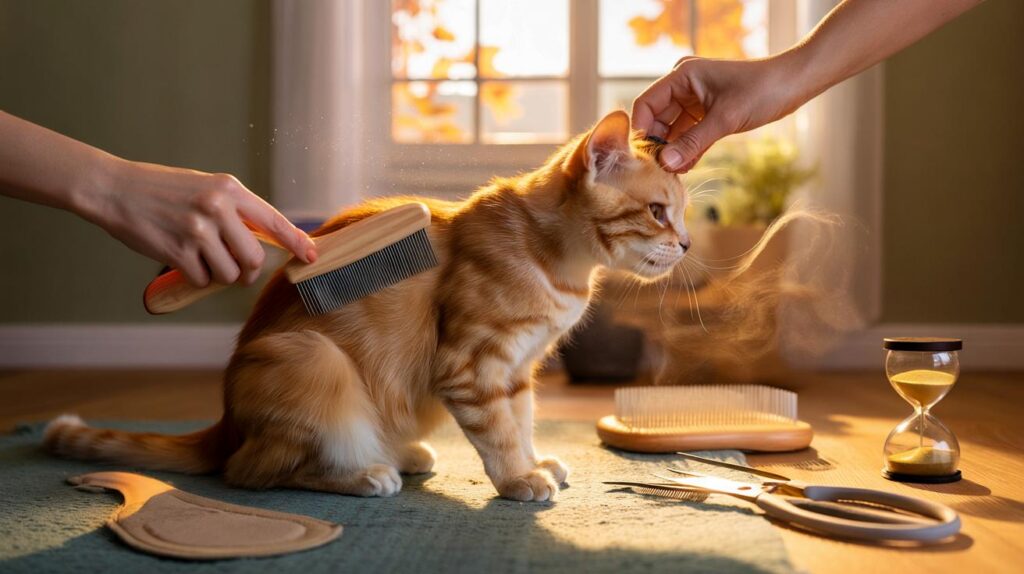
Autumn clings to jumpers, sofas and socks, and daily routines shift as cats shed and homes fill with flyaway fluff.
Across the UK, frazzled owners admit grooming time often spirals into standoffs. Small missteps with brushes, timing and tone turn a simple tidy-up into a prickly tug-of-war. This season’s shedding surge has pushed the issue into living rooms everywhere, and pet pros say the fix starts in your hand.
Autumn sheds, rising stress
Late September to November brings thicker coats and loose underfur. Loose hair drifts onto carpets, and hairballs spike. Many households react by brushing more, yet cats often push back. Behaviourists point to three flashpoints: the tool, the tempo and the touch. Adjust those, and the mood shifts fast.
Most grooming rows begin before the first stroke: the wrong tool and the wrong plan prime both sides for friction.
The hidden triggers in your hand
The wrong tool scratches, the right one soothes
Not all brushes act the same. Some scratch, others glide. Coats vary by breed, age and season, so one-size-fits-all rarely works. A softer head and flexible pins tend to win trust, especially on sensitive flanks and belly zones. Metal rakes and harsh slickers strip undercoat quickly but can sting thin skin.
| Tool | Best for | Risks | Owner tip |
|---|---|---|---|
| Soft slicker (fine pins) | Medium to long coats, seasonal moult | Pin poke on thin skin if pressed | Use feather-light pressure; test on your forearm |
| Undercoat rake | Dense double coats; heavy shedding | Over-stripping; irritation on sensitive zones | Limit to shoulder and back lines; avoid belly |
| Rubber grooming mitt | Short coats; nervous cats | Limited detangling power | Start sessions with this to build comfort |
| Wide-tooth comb | Tackling small knots, longer coats | Snagging if rushed | Support the fur at the base; lift, don’t pull |
Frequency and technique matched to the coat
Daily brushing won’t suit every cat. The coat tells you what to do. Short-haired cats often need quick sweeps two to three times a week. Long-haired breeds prefer brisk, gentle work every day or two before knots harden. Break the body into zones. Start at the back or neck where many cats enjoy touch. Avoid the belly until trust grows.
Two minutes done well beats fifteen minutes done forcefully. Quality strokes, not marathon sessions, build success.
Behaviour science you can use
The two-minute rule and the consent test
Set a timer for two minutes. Stop while things still feel calm. Offer a reward. Stretch to three minutes the next time. Keep a “consent test” throughout: pause the brush; if your cat leans in or stays, continue; if they shift away, reset or finish. This simple loop gives control back to the animal and lowers arousal.
Reading early stress signals
- Ears angle sideways or flatten: reduce pressure or switch area.
- Tail tip twitches or tail lashes: take a short break.
- Skin ripples over the back: lighten touch or change tools.
- Lip lick or sudden grooming of self: end on a positive note.
Rewards that rewire the memory
A session that ends with a win gets easier to repeat. Food works for many cats, but timing matters. Pair a lickable treat with the first two strokes. Swap to verbal praise and a chin rub after cooperative moments. Rotate rewards to keep them novel. For toy-driven cats, roll a soft ball between passes and let your cat “catch” it.
Repetition cements associations: brush equals snack, chin skritch, or play. The brain files grooming under “predictably good”.
A 10-day reset plan for wary cats
Resetting tense routines takes less than a fortnight if you go small and steady. Try this plan.
- Day 1–2: Place the brush near resting spots. Feed a tiny treat when your cat sniffs it. No brushing.
- Day 3–4: Touch the brush to the shoulder for one second. Reward. Repeat twice, then stop.
- Day 5: One gentle stroke along the back. Reward. End.
- Day 6–7: Two to three strokes on favourite areas. Skip belly and armpits. Reward each cluster.
- Day 8: Add a comb pass on visible tufts. Support hair at the base to avoid tugging. Reward.
- Day 9–10: Build to two minutes total. Finish with a calm cue, like “all done”, then play.
Health angles you shouldn’t ignore
Knots trap moisture and dirt. Matted fur can pull skin and invite hot spots. Hairball risk rises when loose coat stays on the cat rather than on the brush. If you notice sudden intolerance to grooming, check for joint pain, dental issues or skin infections. Pain changes touch tolerance. A vet check can rule out hidden triggers that no brush can solve.
Budget also plays a part. A decent soft slicker or mitt costs less than a professional dematting session. Replace worn pins and cracked mitts; rough edges scratch. Keep a small pair of rounded-tip scissors for emergency knot removal, but never cut near the skin without stabilising the tuft between your fingers.
The timing, setting and scent triangle
Pick a time your cat already relaxes—after a meal or a nap. Choose a perch with grip, like a rug or a window ledge, so paws don’t slide. Scent matters: rub the brush with a cloth your cat has slept on. A spritz of feline pheromone on a blanket fifteen minutes before you start can nudge calm without drowsiness.
When nothing seems to work
Some cats carry a long memory of rough handling or vet visits. In these cases, call a fear-free groomer who uses handling that keeps the cat in control. Ask about towel wraps, side-lying positions and station training with mats. Avoid sedatives without veterinary oversight. If mats have already formed, a professional clip may reset the coat and your routine.
Make data work for your household
Keep a tiny log for two weeks. Note the tool, area brushed, time of day, duration and mood before and after. Patterns pop up fast: mornings might beat evenings; comb before slicker might work better than the reverse. Use what you see. The goal is a repeatable, pleasant ritual that takes minutes, not a test of wills.
Practical extras to widen your options
- Static control: rub a dryer sheet on your hands, not the cat, then brush to reduce flyaway hair.
- Shedding zones: place washable throws on favoured napping spots; brush there to capture fur.
- Moulting hack: dampen a rubber glove and wipe the coat between brush passes to lift loose hair.
- Travel kit: keep a pocket comb and treats in the car for post-park touch-ups on adventure cats.
Keep sessions short, tools soft, and choices clear. Your cat learns that groom time brings comfort, not conflict.
Want an extra edge? Pair brushing with a steady cue word and a soft chime. Over days, the sound predicts a calm, short session and a small reward. You can also run a five-stroke “maintenance set” after play when the body is loose and the mind is satisfied. For multi-cat households, brush apart to prevent competition and scent-swap brushes afterwards to keep harmony.
If you fancy a small experiment, rotate three tools across a week and score cooperation on a 1–5 scale. Many owners find a rubber mitt earns a 4 or 5 on tense days, while a slicker scores highest for removing undercoat on calm days. Build your own mix-and-match routine. The gains show up quickly on the sofa, the hoover bag and, most of all, in the way your cat greets the brush tomorrow.



The two-minute rule + consent test just saved my sofa. I was pushing through 10–15 minutes and wondering why she melted down. Feather-light pressure and starting at the neck were game changers. Definately keeping a brush-only-for-back-zones rule now; belly is a no-go. Thanks for the practical, behaviour-first approach!
Interesting, but aren’t we over-thinking it? I see alot of emphasis on the “tool-tempo-touch” triangle. Is there actual data showing a rubber mitt reduces stress versus a soft slicker, or is it mostly anecdote? Also, over‑stripping seems rare if you’re not grinding the brush—caution yes, but let’s not scare people off brushing?