
Tired without answers? Years‑long limbo may be nearing its end as scientists spotlight measurable clues behind relentless exhaustion for thousands.
A British team says a simple blood draw can now flag biological patterns linked to myalgic encephalomyelitis/chronic fatigue syndrome. Early results point to high accuracy and a faster route to care, but wider testing and independent checks still stand between promise and practice.
What the new test measures
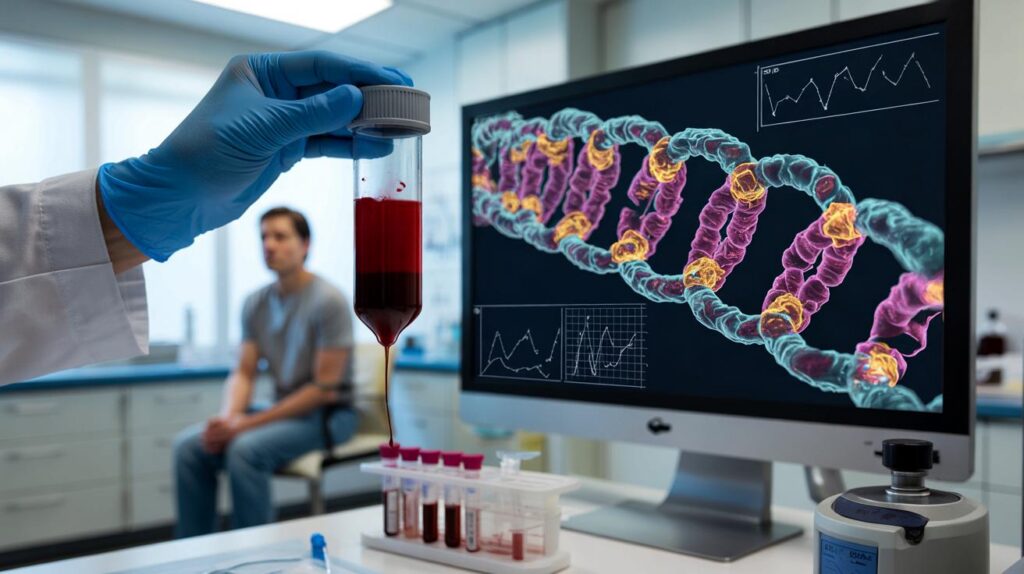
Scientists at the University of East Anglia, working with Oxford Biodynamics, report a diagnostic blood test for ME/CFS using EpiSwitch 3D Genomics. Rather than hunting for a single molecule, the method reads the three‑dimensional folding of DNA inside blood cells. Those folding patterns, also called chromatin conformations, form a kind of epigenetic fingerprint that can differ between health and disease.
In the initial study, the algorithm learned to distinguish ME/CFS samples from controls by spotting a reproducible configuration of these DNA loops. The team reports 92 per cent sensitivity and 98 per cent specificity, meaning the tool picked up most people with the condition and rarely flagged those without it.
Researchers report a lab blood test that identifies distinctive DNA‑folding patterns in ME/CFS with 92% sensitivity and 98% specificity.
Headline numbers at a glance
- Test type: blood sample analysed for 3D DNA‑folding signatures (EpiSwitch 3D Genomics).
- Reported performance: sensitivity 92%, specificity 98% in early validation.
- Who could benefit: an estimated 400,000 people living with ME/CFS in the UK.
- Potential impact: faster diagnosis, fewer misdiagnoses, clearer eligibility for support and trials.
- Next step: independent, multi‑centre studies and checks against look‑alike conditions.
Why ME/CFS has been so hard to diagnose
ME/CFS often begins after infection and brings crushing fatigue that does not ease with rest. Many experience post‑exertional malaise, where even modest activity triggers a prolonged crash. Sleep stays unrefreshing. Brain fog and light‑headedness are common. There has never been a definitive laboratory marker. Doctors rely on symptom history and the exclusion of other causes. That process can take years and varies widely across the NHS.
Misdiagnosis is frequent because the symptoms overlap with long Covid, fibromyalgia, postural orthostatic tachycardia syndrome, depression, anaemia, thyroid disorders and autoimmune disease. A test that narrows the field could shorten that journey and reduce harmful trial‑and‑error treatments.
Faster confirmation opens the door to pacing, accommodations and targeted care plans, instead of years of uncertainty and avoidable setbacks.
How the approach works
DNA does not float loose inside the cell nucleus; it folds into loops and domains that bring distant genes together. Those shapes shift when cells change state. The EpiSwitch platform captures these three‑dimensional contacts and reads them as features. A machine‑learning model then classifies the sample based on a pattern seen in people with ME/CFS.
The method is distinct from standard genetic tests. It does not sequence genes or search for inherited mutations. It measures an epigenetic signature that reflects how genes may be regulated at the time of sampling. That flexibility may prove valuable if ME/CFS involves immune, metabolic or autonomic dysfunction that leaves a structural imprint on chromatin.
What has to happen before you can get it
| Step | What it involves | Why it matters |
|---|---|---|
| Independent validation | Multi‑centre studies across ages, ethnicities and illness severity | Confirms results hold up beyond a single research cohort |
| Differential testing | Head‑to‑head against long Covid, fibromyalgia, POTS, depression, thyroid disease | Ensures the signature is specific to ME/CFS |
| Regulatory review | Quality control, lab accreditation, reproducibility checks | Makes the assay reliable for clinical use |
| Health economics | Costing, NHS commissioning, access pathways | Determines who gets the test and how quickly |
| Clinical integration | GP guidance, referral criteria, reporting standards | Prevents misuse and supports consistent decisions |
What this could mean for patients and families
For many, the biggest change would be time. A blood test that supports a diagnosis early could cut months of GP visits, scans and conflicting opinions. It could firm up benefit claims and workplace adjustments. It could also sort patients into clearer groups for trials, speeding the hunt for treatments that match biology rather than symptoms alone.
If you live with persistent, activity‑worsened fatigue, speak to your GP about your history, pacing strategies and screening for other conditions. Keep a simple diary of activity and crashes. Ask about referral to an ME/CFS‑aware clinic. The proposed blood test will not replace clinical judgement. It may, in time, sit alongside symptom criteria and other tests to provide a more confident answer.
No single result will capture every case. A useful test complements, rather than overrides, clinical assessment and patient experience.
Sensitivity, specificity and what they mean for you
- Sensitivity (92% reported) means the test correctly identifies most people who have ME/CFS. Some cases may still be missed.
- Specificity (98% reported) means it rarely flags people who do not have the condition. A small number may test positive in error.
- False negatives can delay support; false positives can divert care. Doctors weigh test results with symptoms and exam findings.
Key questions still to answer
How stable is the signature over time? Does it vary with relapse and remission? Can it separate ME/CFS from post‑viral fatigue after Covid? How does medication, diet or co‑existing illness affect results? These questions shape how, and when, the NHS might adopt the assay.
Equity also matters. Access should not pivot on postcode or ability to pay privately. Turnaround time, sample logistics and reporting must fit real clinics. The cost has to make sense against the savings from fewer unnecessary investigations and quicker support.
Why a diagnostic matters for research
A reliable lab marker can transform trials. Screening becomes faster. Participants can be stratified by biology, not just symptom checklists. Response signals stand out sooner, allowing researchers to drop ineffective ideas and scale promising ones. That feedback loop attracts investment and gives patients clearer prospects.
This approach could also reveal subtypes. If distinct folding patterns track with pain, orthostatic problems or cognitive issues, future therapies can be targeted more precisely. A test that begins as a diagnostic may evolve into a guide for treatment choice and prognosis.
Practical next steps for readers
- If you suspect ME/CFS, ask your GP about symptom criteria, red‑flag exclusions and pacing advice.
- Bring a concise history: onset, triggers, post‑exertional malaise, sleep quality, cognitive issues, orthostatic symptoms.
- Be cautious of unproven cures. Focus on energy management, support at work or school, and symptom relief.
- Watch for updates as independent studies report. Early figures often shift as larger datasets arrive.



Game-changer if validated. A 92%/98% blood test could finally cut the years of “wait and see” for ME/CFS. Please keep patients in the loop on timelines and access, not just press releases.
92% sensitivity sounds great, but what was the sample size and case definition? Any head-to-head against long Covid, POTS, fibromyalgia? Without rigourous differential testing, specificity in the real world might drop.