
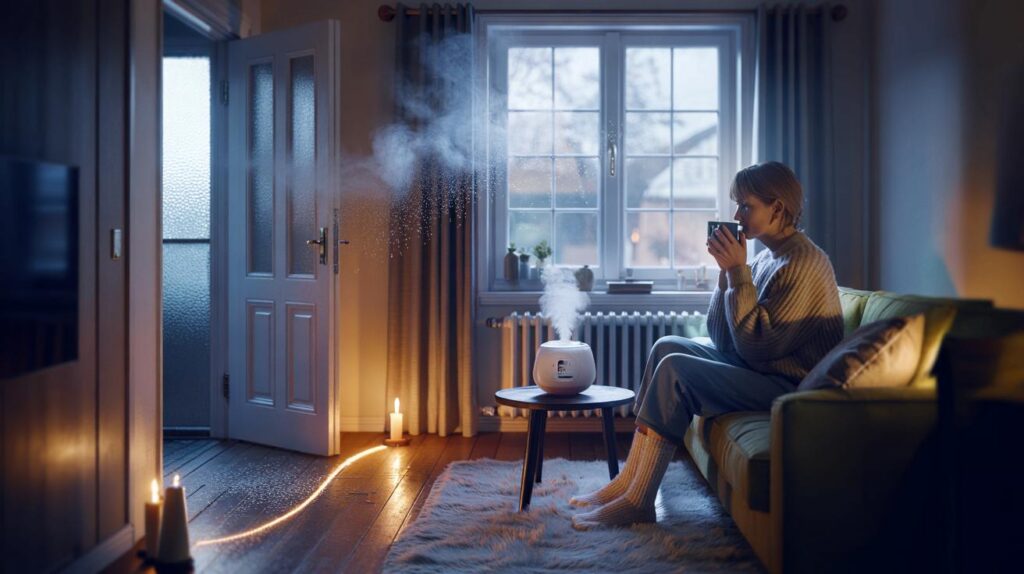
Thermostat set to 20°C, jumper on, yet your toes feel icy. The culprit often hides in plain sight, not the boiler.
Your body responds to moving air, dampness and the warmth of nearby surfaces as much as the number on the dial. A small shift in one of these can make 20°C feel like 17°C. The good news: most fixes are simple, cheap, and fast.
What your body senses is not the thermostat
Comfort is a balance of four variables: air temperature, mean radiant temperature, humidity and air speed. Metabolism and clothing tip the balance. People vary, so the same room can feel fine to one person and chilly to another.
Thermoception drives those signals. Skin receptors react to surface warmth, cool breezes and rapid temperature change. If the floor, windows and walls sit well below the air temperature, your body sheds heat to them by radiation. That loss feels like a chill, even when the room air reads 20°C.
Comfort depends on air temperature, mean radiant temperature, humidity and air speed. Change any one and you change how 20°C feels.
Age, health and hormones matter. Reduced circulation in later life lowers extremity temperature. Anaemia, low thyroid function and fatigue all decrease heat production. Many women feel cooler at the same set-point due to lower muscle mass and hormonal cycles. Medications that affect blood vessels can amplify the effect.
Humidity, draughts and radiant temperature: the usual suspects
The 40–60% humidity sweet spot
Dry winter air speeds evaporation from skin. Evaporation takes heat with it, so you feel cooler. Overly moist air in a poorly ventilated flat also chills because wetter air transfers heat faster and can make fabrics feel clammy.
Aim for 40–60% relative humidity and low air speed. These two tweaks often recover 1–2°C of perceived warmth.
Central heating commonly pushes indoor humidity below 30%. A cheap hygrometer reveals the level. A small humidifier, a pan of water near a radiator, or drying laundry in a controlled way can lift humidity. Ventilate bathrooms and kitchens to avoid drifting above 60%.
Draughts that steal warmth at ankle level
Cold air pools near the floor. Minor leaks at skirting boards, letterboxes and window latches create streams that your skin reads as cold. An air current at 20°C can feel like the room has dropped a couple of degrees because moving air strips the thin layer of warmth at your skin’s surface.
Typical signs include a cold line at the ankles, flickering candle flames near a window frame, or a door that whistles. The cure is humble: fit door brushes and seals, block keyholes, and balance mechanical ventilation so extract fans do not pull unplanned air through cracks.
Cold walls, cold floors, cold furniture
Mean radiant temperature is the average warmth of the surfaces that surround you. Single glazing, uninsulated external walls, and tiled floors act like giant cooling panels. Your body radiates heat to them even if the air feels still.
Raise the radiant temperature without touching the thermostat. Close heavy curtains at dusk, add thermal liners, lay rugs on stone or tile, and place seating away from outside walls. Reflective panels behind radiators bounce heat into the room instead of letting it soak into masonry.
Warm the surfaces you see, not just the air you breathe. Your skin reads radiant cues first.
Fixes that cost pennies before you touch the boiler
- Measure first: use a hygrometer and a simple infrared thermometer to check humidity and surface temperatures.
- Stop leaks: fit foam seals to window sashes, add a door draught excluder, and close trickle vents only if balanced by timed airing.
- Lift radiant warmth: draw curtains at sunset, add a rug, and place a throw over leather seats that feel cold to the touch.
- Slow the air: redirect supply vents away from seating, reduce fan speeds, and avoid sitting directly under ceiling fans.
- Tune habits: warm feet first with thick socks, keep wrists covered, and sip warm drinks to raise perceived warmth.
- Layer smart: wool or merino base layers trap air, while cotton blends can feel cool when dry air accelerates evaporation.
- Use heat where you are: a 50–150 W infrared panel by a desk or sofa adds radiant comfort to the person, not the whole house.
Numbers that guide comfort at home
| Metric | Target | How to check |
|---|---|---|
| Relative humidity | 40–60% | Hygrometer on a shelf away from radiators and windows |
| Air speed at seat height | Under 0.15 m/s | Handheld anemometer or a smoke pencil to spot draughts |
| Mean radiant vs air temp | Within 2°C | Infrared thermometer on walls, windows and floor |
| Head–ankle temperature difference | Under 3°C | Two thermometers at 1.1 m and 0.1 m from the floor |
| Floor surface temperature | 19–26°C | Infrared thermometer, especially on tile or stone |
| CO₂ as ventilation proxy | Under 1,000 ppm | Low-cost sensor in bedrooms and living areas |
When 20°C still feels chilly: health and habits
Metabolic rates vary. A petite person at rest produces less heat than a larger person doing light chores. Muscle mass increases internal heat generation, so regular movement helps. Short, gentle routines every hour—squats, stairs, stretches—raise blood flow to hands and feet.
Check health signals if you feel cold more than others. Persistent fatigue, paleness and brittle nails can point to iron deficiency. Sensitivity to cold, weight changes and dry skin can suggest thyroid issues. Speak to a clinician if these patterns persist.
Case study: why 20°C felt like 17°C in a rented flat
A tenant set the room to 20°C but felt cold at the sofa. Measurements showed 28% humidity, a 0.25 m/s draught from a gap under the front door, and a 14°C single-glazed window within a metre of the seating.
Three low-cost actions changed the outcome in a day. A door brush cut air speed at ankle level to 0.08 m/s. A pair of lined curtains raised window surface temperature to 17°C. A small humidifier lifted humidity to 45%.
The perceived temperature climbed. The same 20°C air now felt comfortable, and the boiler schedule stayed unchanged. Energy use did not rise, yet comfort did.
Quick diagnostics you can run this evening
- Candle test: place a candle near a closed window frame and along skirting boards. Flicker reveals leaks to seal.
- Wall scan: sweep an infrared thermometer across external walls. Cold patches point to thermal bridges worth targeting.
- Ankle check: tape a small thermometer 10 cm above the floor and another at head height. If the gap exceeds 3°C, balance airflow.
- Moisture check: log humidity morning and night for a week. If it drops below 35% after heating starts, add moisture sources.
Extra angles that save comfort and cash
Sunlight counts as radiant heat. Open blinds on south-facing windows in the day, then shut them at dusk to trap the gain. Move seating to catch winter sun for an hour; a short burst of radiant warmth resets how you feel for the afternoon.
Programmable thermostatic radiator valves let you warm the rooms you use, not the entire home. A 1°C reduction in unused spaces trims bills while rugs, curtains and humidity bring back the feel in lived-in rooms. Calibrate your room sensor against a trusted thermometer; a 1°C offset can mislead your settings and your comfort.
If you work from home, build a micro-zone. A desk mat over a cold surface, a small foot heater with a low-wattage setting, and an infrared panel on a timer target you, not the whole volume. The effect mimics a higher radiant temperature in your bubble and reduces the urge to touch the thermostat.
These approaches share a pattern: slow the air, lift surface warmth, and keep humidity in the middle band. Do that, and 20°C starts to feel like what the thermometer says—without spending more on heat.



Fantastic breakdown—this finally explains why 20°C felt chilly with my single-glazed window behind the sofa. The mean radiant temperature tip and the 40–60% humidity target are gold. I added a rug and closed curtains at dusk and the “perceived” warmth jumped without touching the boiler. Clear, actionable writing—thank you.
Do you have sources for the thresholds (air speed under 0.15 m/s, head–ankle <3°C)? ISO 7730 or ASHRAE 55 perhaps? Would love to see the standards behind the numbers.