
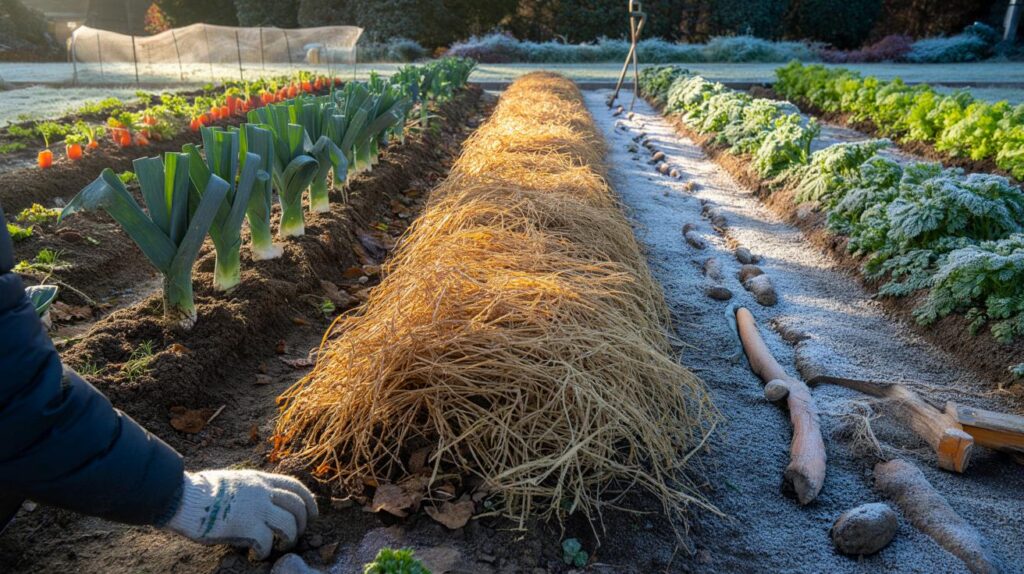
Forecasters flag colder October nights. Garden beds sit exposed. Root crops hold fast in icy ground. A small autumn move changes everything.
Your winter staples can ride out frost, yet they falter when soil freezes hard and water uptake stalls. As nights dip below zero, a simple, timely layer at ground level keeps roots alive, harvests easy, and beds primed for spring.
Why winter beds fail without warning
Leeks, carrots and celery grow where frost hits first: at the soil surface. The edible parts sit in the top few centimetres. A sharp freeze can lock soil, strain tissues and make lifting a battle. Leaves slump, translucent patches appear, and crowns bruise under heavy snow.
Cold spikes often catch people off guard. Early frosts of −2 to −4°C can damage stalk celery. Carrots deteriorate fast in rutted, frozen clods. Leeks are tougher, yet repeated freeze–thaw weakens the shanks. The problem is not just temperature. It is exposure, wind, and moisture loss from bare soil.
Apply a protective 15–20 cm blanket in October, while the soil still holds warmth. That window makes the barrier work twice as hard.
The October move that keeps roots alive
A deep mulch acts like an insulating mattress. It slows heat loss overnight and eases the shock of yo-yo temperatures. Soil stays friable. Roots keep sipping water. Plants stay productive. The right materials also cut evaporation and shelter soil life.
What to use, and why thickness matters
Choose dry, airy organic matter. Aim for a clean, pest-free mix that breathes and sheds water.
- Straw from cereals: stable fibres, good airflow, low risk of matting.
- Fallen leaves: shred or crumple; mix with straw to prevent compacting.
- Hay: insulates well; watch for weed seeds and compressing after rain.
- Dry grass clippings: use fully dried, in thin layers mixed with straw.
The sweet spot is 15–20 cm across the bed. Thinner layers let frost penetrate. Thicker layers can harbour slugs if air circulation is poor. Lay it on soil that is moist, not sodden, so roots sit in a stable microclimate.
Step-by-step in 20 minutes
- Weed the row and remove diseased or damaged foliage.
- Lightly loosen the surface around crowns and shanks with a fork.
- Water if the top 5 cm is dry; let excess drain.
- Cover the entire row 15–20 cm deep, without compressing.
- For leeks, tuck the base of the shank well; for carrots and celery, cover the whole drill.
- Weight the edges with a few sticks or stones to resist wind.
Done before persistent frost, mulch traps residual ground heat and turns icy beds into lift-anytime rows.
Mistakes that cost you your winter pickings
- Mulch too thin or too light, blown off by the first gale.
- Mulch dropped on parched or already frozen soil, sealing in stress.
- Leaving heavy mulch in place deep into spring, which invites fungal problems.
Avoid sealing crowns under wet, anaerobic layers. Keep mulch fluffy. In wet sites, add a few twiggy stems within the layer to prop it up and improve airflow.
Harvesting when the ground is iron-hard
Under a proper cover, soil stays workable in December and January. You lift on demand, rather than panic-pulling the lot before a cold snap. Slide mulch aside, insert a flat garden fork, and ease the soil. Pull from the base and keep the cover in place for the next pick.
Carrots hold crunch and sugars better in cool, protected soil than in a warm kitchen. Leeks stay firm and clean. Celery stems keep aroma for broths and casseroles well past the festive season. You reduce waste and spread meals across months.
What spring looks like after a mulched winter
That winter blanket does more than save dinner. As it breaks down, organic matter feeds microbes, builds humus and improves structure. Beds drain better yet hold moisture in dry spells. In March, pull mulch back to let the sun warm the bed. You can compost the leftover or fork a light amount into the top 2–3 cm.
Timing the spring pull-back
Most gardens benefit from opening the cover once hard frosts ease, usually mid to late March. This reduces excess humidity around crowns and gives early sowings a head start. If cold returns, push mulch back temporarily. Keep flexibility week by week.
Which mulch suits your patch
| Material | Ideal depth | Main benefit | Main risk |
|---|---|---|---|
| Straw | 15–20 cm | Good insulation and airflow | Can shelter slugs if beds stay very wet |
| Shredded leaves | 15–20 cm | Rich in carbon, builds humus | Mats if not shredded or mixed |
| Hay | 15–20 cm | Warm cover that settles evenly | Weed seeds; compresses after rain |
| Dry grass clippings | 10–15 cm, mixed | Readily available, quick to lay | Heats and mats if used fresh or thick |
Numbers that help you plan
One small square bale of straw usually covers around 4–5 m² at 15 cm depth. A 6 m by 1 m bed needs roughly two bales for a proper 20 cm layer. Budget for an extra half bale to patch wind-scoured edges after the first blow. Check forecast lows; if nights trend below −5°C for several days, top up by 2–3 cm ahead of the chill.
Extra intelligence for tougher winters
Pair mulch with windbreaks on exposed plots. Low hurdles or a mesh fence cut wind chill and protect tops from abrasion. In very wet areas, raised rows under mulch reduce waterlogging and root rot. A light, breathable fleece over the mulch adds a degree or two without trapping moisture.
Watch for slugs under dense cover. Use beer traps or ferric phosphate pellets around bed edges after rain. Voles can move into thick mulch; encourage barn-owl perches or use snap traps in protected tunnels outside the beds. If you garden on heavy clay, mix a few handfuls of coarse leaf mould into the layer to keep it airy through long wet spells.
Hardiness guide to set expectations
- Leeks: generally hardy to about −8 to −10°C, variety and exposure dependent.
- Carrots: tolerate brief dips to around −4 to −6°C; quality drops with repeated freeze–thaw.
- Stalk celery: more tender; protect well once nights dip to −2°C.
If you rotate beds, mulch delivers a second dividend. Brassicas that follow root crops find a crumbly, living topsoil with fewer caps and better drainage. If you save seed from heritage carrots, the mulch helps overwinter selected roots for flowering in year two, widening your seed choices for next season.
Those who grow at scale can trial a strip approach. Mulch one half of a row at 10 cm and the other at 20 cm, then record lift effort, slug damage and weight per metre across winter. Over one season, that small test shows the pay-off in labour saved and kilos kept. It also tells you which materials fit your microclimate without guesswork.



Great timing—forecast shows −5°C here next week. I’d definately written leeks off, but the 15–20 cm straw/leaf mix sounds doable. Quick Q: do you lay it right up to the leek flags or leave a small gap to prevent rot? Thx!
I’m not convinced thicker mulch doesn’t just turn into a slug hotel. Been burned before and got alot of slugs. Any data on damage rates at 10 cm vs 20 cm in wet, clayey plots? My bed is heavy as heck.