
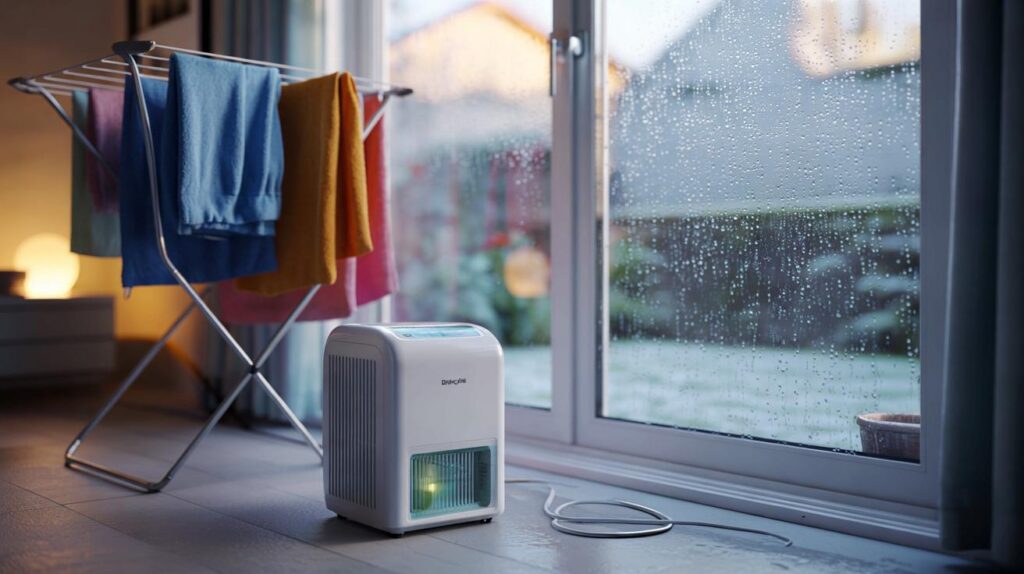
Cold mornings bring misted panes, slow‑drying washing and scratchy throats. Households are searching for low-cost fixes that calm the chaos indoors.
Across the country, families are juggling radiators, airers and steamed‑up glass as temperatures dip. A compact dehumidifier has entered that daily routine, promising clearer windows, faster laundry days and fewer musty corners—without turning the living room into a utility room.
Why moisture spikes when the heating goes on
Warm air holds more water. Turn up the thermostat, hang damp clothes and shut the windows, and indoor humidity climbs. The warm, wet air hits cold panes and walls, the water condenses, and droplets gather. That surface moisture feeds mould spores and leaves sills and grout lines looking grubby.
The hidden costs of wet rooms
Persistent damp can aggravate asthma and allergies, warp woodwork, and make rooms feel chilly even when the boiler works hard. Drying laundry on radiators adds litres of water to the room, pushing relative humidity beyond the comfort zone.
Target a steady 40–60% relative humidity. Below that range, condensation eases and mould and dust mites struggle to thrive.
The £34.99 compact device people are buying
Lakeland’s 1 Litre Compact Dehumidifier sits in the sweet spot for price and practicality. At £34.99, it’s a palm‑sized unit designed for bedrooms, home offices and laundry corners rather than cavernous lounges. Shoppers say it’s quiet, simple to carry from room to room, and—crucially—noticeably reduces window wetness.
Owners report big morning changes, with some claiming as much as 90% less condensation on cold panes after overnight use. The unit draws moisture from the air and channels it into a removable tank. The maker quotes collection of up to 1 litre in 24 hours, so you’re not emptying it every hour. A 180cm lead makes placement easier, and subtle blue or green light settings avoid a harsh glow in the dark.
Price under £35. Up to 1 litre captured in a day. 4/5 stars from buyers. Near‑silent hum you barely notice.
The appeal lies in how it changes daily routines. Park it by an airer and laundry dries faster. Leave it in a north‑facing box room and the chill feels less clammy. Use it overnight in the kitchen and the morning wipe‑down becomes a quick dab, not a full mopping session.
What it won’t do
- It won’t fix leaks, rising damp or failed window seals—those need repairs.
- It’s a compact unit, so it suits one room at a time, not an entire house.
- The power button can feel a touch stiff, according to some buyers.
- It comes only in white; the accent light offers blue or green if you want a hint of colour.
Where a small dehumidifier makes the biggest difference
| Problem | What this compact kit helps with | What needs a bigger fix |
|---|---|---|
| Streamed‑up morning windows | Overnight moisture removal in the bedroom or kitchen | Failed double glazing, no trickle vents, chronic cold bridges |
| Slow‑drying laundry | Faster drying when placed beside an airer in a closed room | Large loads daily—consider a larger dehumidifier or heated airer |
| Musty spare room | Lower humidity and fresher air with continuous low‑noise running | Water ingress, plumbing leaks, or poor insulation |
| Black spots on grout or sills | Reduces regrowth once cleaned, by keeping surfaces dry | Extensive mould colonisation—needs thorough clean and ventilation upgrade |
Set‑up that actually works in real homes
- Shut the door and windows of the room you’re drying in; otherwise you dehumidify the whole street.
- Place the unit 30–50cm from the airer for better airflow through fabrics.
- Flip and rotate garments after a couple of hours to expose damp seams and waistbands.
- Run on a cheap overnight electricity tariff if you have one; morning windows will thank you.
- Empty the tank before bed so it doesn’t stop mid‑night when it fills up.
Most compact units draw roughly 20–40 watts. That’s around 0.5–1.0 kWh per day—roughly 15–30p at typical UK tariffs.
Compared with a tumble dryer cycle that often gobbles 2–4 kWh, running a small dehumidifier for a day can cost less, especially when combined with an airer. The room warms more evenly because drier air feels less clammy against skin and furnishings.
What buyers say—and what that means for you
Feedback clusters around three themes: less glass haze in the morning, laundry that dries overnight without a radiator sauna, and calmer breathing in rooms that used to feel stuffy. A minority wish the power button were lighter to press. Most agree the faint fan noise fades into the background.
Place it where the moisture is born—kitchen after the tea‑time boil‑up, bathroom post‑shower, or bedroom overnight.
Health and home benefits you actually notice
Lower humidity helps keep mould at bay. That reduces spore counts, which can irritate noses, chests and eyes—especially for children and anyone with asthma. Furniture and window frames last longer when they aren’t perpetually damp. Paint stays put. Musty smells lift.
In small bedrooms, the change can feel immediate: fewer water beads on the glass, no damp halo on curtains, and a pillow that doesn’t feel chilly at lights‑out.
When to step up, and which type to choose
If you’re trying to tame moisture across a whole flat or you dry multiple loads daily, a larger compressor dehumidifier with a 10–12 litre daily rating may suit. It will pull more water per hour and usually includes a built‑in humidistat. Expect to pay more and accept a bulkier footprint.
For unheated spaces—garages, sheds or very cold utility rooms—desiccant units perform better at low temperatures but use more power. A compact thermoelectric model like the Lakeland handles bedrooms, kitchens and home offices that sit closer to normal room temperatures.
Simple checks before you spend big
- Use lids when boiling pans and run extractor fans for 15–20 minutes after cooking or showers.
- Open trickle vents if fitted; cracked vents cut condensation without major heat loss.
- Fix gutter leaks and window seals; no dehumidifier can keep up with constant water ingress.
- Keep furniture a hand’s width off external walls to prevent cold‑spot mildew.
Extra tips that stretch your £34.99 further
Pair the dehumidifier with a cheap digital hygrometer so you can see humidity drop in real time. Aim for 45–55% during laundry sessions. If the room dips below 40%, switch off to avoid overdrying wood and musical instruments.
Create a drying “zone”: a small room, door closed, airer centred, dehumidifier facing the rail. One or two hours with a fan‑only setting on a pedestal fan (if you have one) can speed evaporation before the unit mops up the moisture from the air. Clean window frames with a mould‑removal solution before you start; once surfaces are dry, regrowth slows dramatically.



Picked up the Lakeland 1L a fortnight ago. Bedroom went from puddles on the sill to a light mist by morning—call it 70–80% better on cold days. Laundry by the airer dries overnite if I shut the door. Running cost seems low (20–30W ticks along). My only niggle: the power button feels oddly stiff and plasticky. Otherwise it’s compact, easy to lug room‑to‑room, and the blue glow isn’t a harsh lighthouse.