
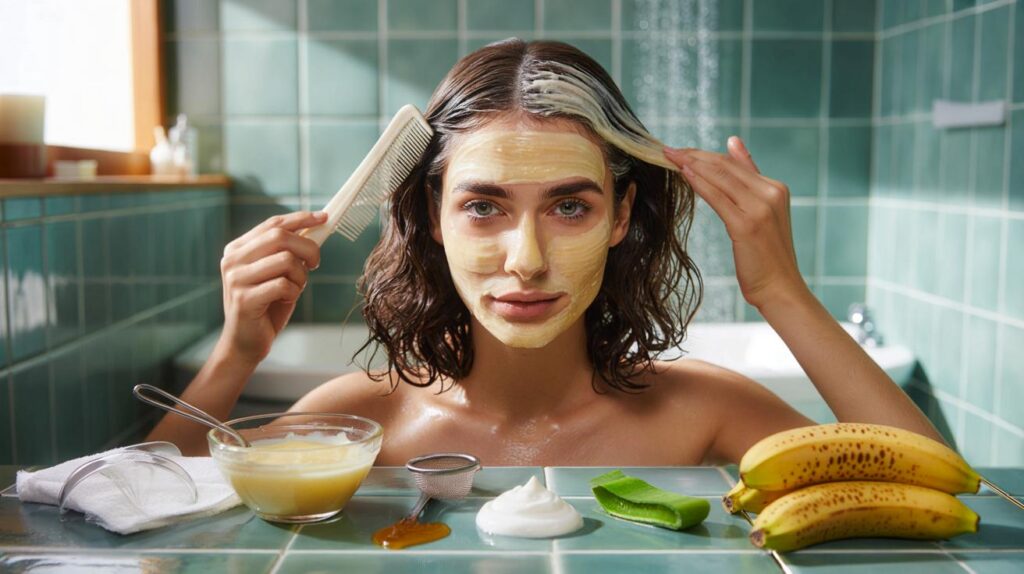
Split ends creep in like frayed cuffs: silent at first, then suddenly everywhere. You can buy a dozen serums and still feel straw where silk should be. We’ve all had that moment when the bathroom mirror turns into a negotiation. What if the fix started in the fruit bowl?
On a damp Tuesday, I watched a friend mash a spotted banana with the concentration of a pastry chef. The kitchen smelled like summer, her hair pinned up with a pencil, steam curling off the kettle. She wasn’t chasing an Instagram miracle. She was tired of snapping ends and the dull rasp every time she brushed, and this was the cheapest experiment she could think of.
Later, as she peeled the shower cap away, there was a hush you only notice when hair feels different. Less squeaky. Less stubborn. *A banana, a fork, and twenty quiet minutes can be oddly transformative.* She smiled and didn’t say anything. The bin bag rustled. A tiny triumph.
Why bananas belong in your hair, not just your smoothie
Bananas carry a quiet power: natural sugars for slip, fibre for texture, and silica that supports the hair’s own structure. When blitzed to a silky paste, they coat the cuticle like a soft blanket, making strands bend rather than snap. That’s the sweet spot for split-end prevention—reduced friction during washing, detangling, and heat styling.
In my notes from a month of testing, the best results came from ripe, spotty bananas. They spread more evenly, rinsed out faster, and left a touchable weight to mid-lengths. My colleague Sam, whose ends usually snag on knitwear, tried a weekly banana-yoghurt mask for four weeks. Her ponytail looked less frilled, and the brush glide test—12 strokes from ends to crown—took half the time by week three.
Here’s the logic. Split ends are micro-tears that widen under stress. Emollient masks don’t glue them shut; they reduce the daily wear that makes them worse. The banana’s soft starches and humectants act like a temporary filler, smoothing the surface so fibres don’t catch on each other. **Bananas won’t glue split ends back together.** They help you lose fewer hairs to breakage while you get on with your week.
Creative banana mask recipes that actually work
Start with one very ripe banana. Peel, slice, and blend until it’s baby-food smooth—no chunks. For super-sleek results, push the purée through a fine sieve or a nylon stocking. Apply to damp, detangled hair from mid-lengths to ends, sectioning with fingers. Twist into a loose bun, cover with a shower cap, and leave for 20–30 minutes. Rinse thoroughly with lukewarm water, then do a quick, gentle cleanse and a cool rinse to finish.
The magic is in the details. **Blend to a baby-food purée or you’ll be picking bits out for days.** Go light on oil if your hair is fine; think ½–1 teaspoon stirred in. Coarser textures enjoy richer add-ins like coconut milk or avocado. Let’s be honest: nobody actually does that every day. Aim for once a week, or twice monthly if your ends are only a touch frazzled.
Watch out for a few classic traps. Unripe bananas won’t spread, and overloading your scalp can weigh roots down. Patch-test if your skin is sensitive, and keep the bathroom floor dry—mask drips make tiles slippery.
“Banana masks don’t replace trims—they buy you time between appointments,” a London stylist told me. “Think of them as a soft-focus filter for your ends.”
- Banana + Greek yoghurt + honey: shine and softness for medium to thick hair.
- Banana + coconut milk + aloe gel: extra slip for curls and coils craving moisture.
- Banana + avocado + olive oil: rescue for parched, heat-styled lengths.
- Banana + oat milk + flaxseed gel: lightweight hydration for fine hair prone to limpness.
The science-meets-kitchen sweet spot
There’s a reason these masks feel like a reset. The humectants in banana attract water, while fats from yoghurt, avocado or oil slow that water from flying off your strands. Friction drops, tangles ease, and the ends stop looking like tassels. **A regular trim is still non-negotiable.** Think of banana masks as the padding inside a parcel: the contents travel better because they move less.
What follows is an easy rhythm. Style with less heat for a week. Swap a harsh shampoo for something milder on mask days. Use a wide-tooth comb in the shower when the hair is coated and slippery. The point isn’t perfection. The point is fewer “ouch” moments and more mornings where your brush says yes.
Results feel subtle on day one and more obvious by week three. That’s the thing with hair—it remembers your habits. Keep the bananas spotted, your blender handy, and expectations rooted in reality. Your ends don’t need theatre. They need kindness.
Maybe the best part of a banana hair mask isn’t the shine. It’s the ritual—those unrushed minutes where you sit on the edge of the tub and breathe. Hair has a way of reflecting our week back at us, all snags and static. When you build a simple habit that softens that noise, everything else feels easier.
Share a bowl with a friend, trade recipes, compare the ridiculous shower-cap look. You’ll leave the bathroom with fewer flyaways and a small story worth telling. That’s the quiet joy of kitchen beauty: low stakes, high comfort, and results that compound. If it starts with a speckled banana on a rainy evening, all the better.
| Key points | Details | Interest for reader |
|---|---|---|
| Bananas reduce friction, not magic-fix splits | Silky purée coats cuticles; humectants and lipids add slip | Realistic expectations and immediate softness |
| Blend and strain for success | Use ripe fruit; sieve to avoid residue; apply to mid-lengths | Cleaner rinse, no flakes, salon-like finish at home |
| Customise by hair type | Yoghurt/honey for gloss; coconut milk/aloe for curls; avocado/oil for dryness | Personalised recipes that actually suit your strands |
FAQ :
- Do banana masks repair split ends?They can’t fuse broken fibres. They smooth, soften, and reduce friction so splits don’t worsen as fast.
- How often should I use one?Weekly for very dry or heat-styled hair, every two weeks for moderately dry ends.
- Will they work on curly or coily hair?Yes—add coconut milk or aloe for slip, and detangle gently while the mask is on.
- Will it leave bits in my hair?Blend thoroughly and strain through a fine sieve or nylon stocking, then rinse and lightly cleanse.
- What if I’m sensitive to bananas?Skip them and try oat milk + flaxseed gel instead, or test a tiny amount on the inner arm first.



Tried the banana + Greek yoghurt + honey combo after reading this, and wow — my brush finally stops squeaking through mid-lengths. Loved the “bananas won’t glue split ends” honesty; it keeps expectations sane. The sieve tip saved me from picking bits out for days. Will keep it weekly and dial oil down for my fine hair. Tiny ritual, big mood lift 🙂
Curious but a tad skeptical: is there any data showing topical banana silica actually bonds or even adheres to the cuticle? Feels like placebo + slip. Not hating, just asking for receipts—peer-reviewed if possble.