
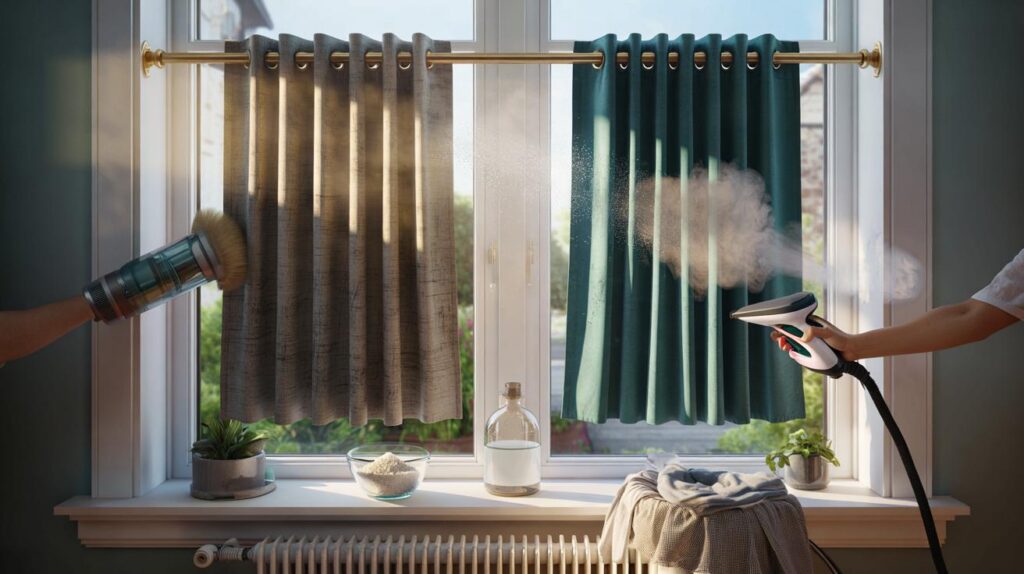
Shorter days are near, and dull curtains can steal light, warmth and mood faster than a draft sneaks under doors.
Across the country, households face greying fabric, stubborn dust and creases that refuse to fall. A few precise changes revive colour, cut allergens and trim bills without resorting to harsh products or a marathon ironing session.
Why curtains turn grey and what you can do this week
Traffic fumes, pollen and soot drift indoors when windows open during mild spells. Heating dries the air and boosts static, so dust clings to fibres. Sunlight then fades dyes, leaving a flat, tired look. Target each factor with quick, low-cost tweaks and the fabric recovers its sparkle.
Do a salt pre‑soak: 1–2 handfuls in 5 litres of cool water for 30 minutes. It reduces static, slows re‑dusting and freshens colours.
The salt soak that slows re‑dusting
Table salt in the pre‑wash acts like an anti‑static shield and helps pigments sit tighter. It suits most cottons and synthetic blends. Check colourfastness first: dab a hidden hem with the salt solution, then press with white kitchen roll to see if dye lifts. Avoid prolonged soaks on silk, wool, rayon or fabrics with metal eyelets or chains, as corrosion or distortion can occur.
After the soak, squeeze gently rather than wring. This protects seams and prevents stretched edges.
Vacuum smarter, not harder
Use a vacuum with a soft brush and low suction. Support the fabric with your free hand and work top to bottom, edge to centre. One light pass every two weeks removes skin flakes, pollen and soot before they bond to fibres. A HEPA filter helps hay fever sufferers by capturing finer particles. Clean the window frame and sill on the same round, as dust there will jump straight back onto the cloth.
Keep colours bright without ruining fibres
Detergent choice, temperature and the rinse all matter. A cool wash protects dyes and coatings on blackout linings. Hard water can dull colours by leaving mineral film. A simple pantry swap fixes that.
Replace fabric softener with 100–150 ml of white vinegar in the rinse. Expect crisper colours, fewer odours and softer drape.
Vinegar counters limescale, lifts soap residue and neutralises must. It does not leave a vinegar smell once dry. Choose a gentle liquid detergent, and avoid optical brighteners on dark shades. Close hooks, remove weights and place sheers in a mesh bag to prevent snags. Stick to 30°C. Keep spin to 600–800 rpm to limit creasing and stress at the header tape.
Skip the tumble dryer. Heat can distort pleats, harden blackout coatings and shrink natural fibres. Air drying on the rail uses zero energy and lets gravity work for you.
| Fabric | Wash | Spin | Dry | Notes |
|---|---|---|---|---|
| Cotton or linen, lined | 30°C gentle | 600–800 rpm | Rehang damp | Test dye fastness; avoid prolonged soaks |
| Polyester blackout | Cold quick wash | 400–600 rpm | Flat or rehang damp | Do not wring; keep heat low to protect coating |
| Velvet | No machine | — | Steam at distance | Professional clean if soiled; vacuum only |
| Voile or sheer | 20–30°C delicate, mesh bag | 400–600 rpm | Rehang damp | Minimise friction; avoid brighteners |
Beat creases without ironing
Rehang curtains while they are still damp. The weight helps lines drop as the fabric dries. Align pleats carefully, then close them halfway for quicker shaping. For stubborn areas, use steam at 20–30 cm distance. A handheld steamer is ideal; a kettle can substitute if you keep steam away from your hands and header tape.
Need more structure? Add a tablespoon of liquid starch to the final rinse for cotton or linen. It adds a crisp finish and supports pleats, handy in formal rooms. Avoid starch on blackout linings or textured synthetic weaves where residue could mark.
Rehang damp and let gravity press for you. Steam only where the fabric needs persuasion, not everywhere.
- Remove hooks and weights, shake outside to release loose dust.
- Pre‑soak in salted water for 30 minutes; rinse lightly.
- Wash at 30°C with gentle detergent; use 100–150 ml white vinegar in the rinse.
- Spin at 600–800 rpm; avoid tumble drying.
- Rehang damp, form pleats by hand, and steam tricky spots from 20–30 cm.
- Mist lightly with clean water mid‑month to refresh the drape.
- Vacuum fortnightly with a soft brush; clean frames and sills the same day.
Between deep cleans: small habits that bank big gains
Sun fades dyes fastest at midday. Rotate curtains end to end each season to even exposure. Consider a separate lining to take the brunt of UV, heat and dust. Keep radiators clear; hot metal can bake fibres and attract airborne dirt. Soot from candles and incense settles on folds, so reduce their use near windows.
A weekly fine mist with demineralised water perks fibres without leaving marks. Let airflow pass through by spacing pleats evenly on the pole. That small gap slows musty odours and keeps the header fresh.
Health and fabric safety checks
Check labels for flame‑retardant finishes. Some coatings lose performance if washed incorrectly, so follow the manufacturer’s care line and test a hem before any new routine. Keep salt and vinegar away from bare metal rings, chains and lead weights to prevent corrosion. If fabric bleeds during the test, opt for vacuuming and professional wet‑care instead.
The money and time maths households ask about
A quick tally for a typical two‑bed flat with three pairs of curtains washed twice a year shows why these tweaks add up:
Skip one annual dry‑clean on a single pair (£22–£35), stop buying softener for those washes (~£5–£8), air‑dry instead of tumble on two cycles (around 2–3 kWh saved), and cut 52 minutes of ironing per wash by rehanging damp. That lands close to £68 saved across a year, with extra gains if you manage more pairs.
Energy prices vary, so your figure may differ, but the time back is immediate. Rehanging damp shifts pressing work from you to gravity, and steam targets only what still resists.
If you have allergies or pets
Pet dander and pollen cling to synthetic sheers. A fortnightly vacuum with a HEPA machine can drop airborne particles near the window zone by a third. For microplastics control when washing synthetics, use a fine‑mesh laundry bag to trap fibres, then empty it into the bin. Keep cats off sills after cleaning to stop fresh paw dust from landing on damp cloth.
Want a simple schedule that actually sticks
Week 1: vacuum and wipe frames. Week 3: light mist and hand‑shape pleats. Month 2: salt soak and cool wash for the room that gets most traffic. Rotate sets seasonally and note dates on your phone. The routine spreads the workload and keeps rooms brighter throughout darker months.



Just tried the salt pre‑soak and swapped softener for white vinegar—my navy curtains are definately brighter and less staticky. Rehung them damp and the pleats settled by lunch; no iron, no drama. Bonus: HEPA vacuum every fortnight actually cut my sneeze-fests. Thanks for the practical breakdown!