
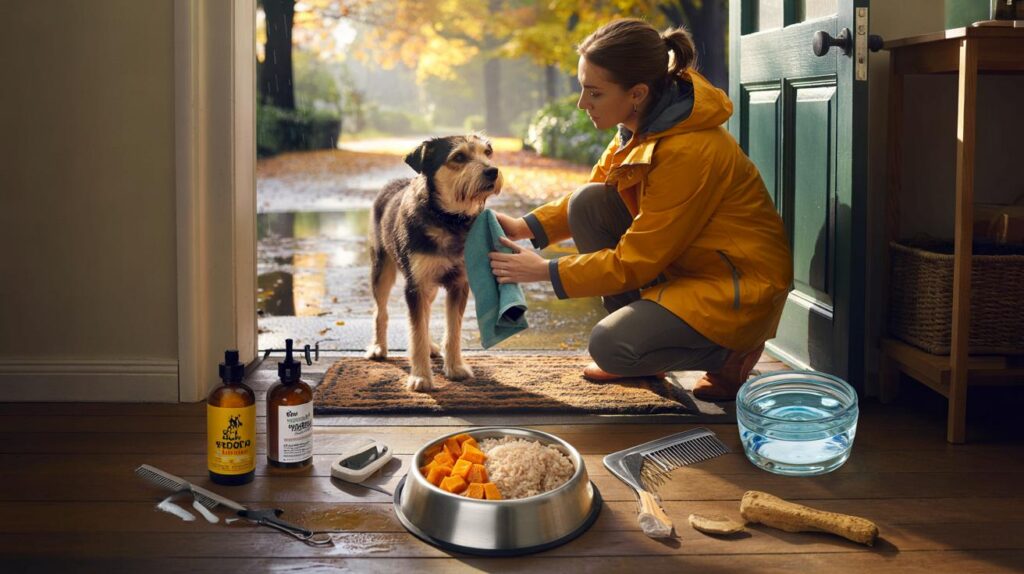
Cold rain, muddy parks and crowded kennels all stack the odds against your dog this season, unless routines shift fast.
As temperatures dip and puddles linger, infections circulate, skin flares up and energy wanes. You can tilt the balance. Small, consistent habits strengthen natural defences and spare you avoidable drama at the vet.
Why autumn raises the stakes
Wet leaves and standing water host microbes that irritate skin and guts. Busier daycare rooms and packed park meet-ups spread coughs. Sudden temperature swings stress the body and disturb sleep. Add comfort calories and less daylight, and weight creeps up. Extra kilos dampen immunity.
Seasonal pressure builds quietly: cold, damp, crowding and low light strain the body, so daily routines must carry more weight.
Feeding for stronger defences
Immune cells rely on amino acids from animal protein. Gentle fibre feeds the gut microbiome, which trains the immune system. Balanced fats steady inflammation and skin barriers.
Macronutrients that matter
Serve lean animal protein at each meal. Offer gentle fibre from cooked vegetables or brown rice. Keep fats moderate, with a focus on omega‑3 from fish.
- Protein: pick chicken, turkey, fish or well‑trimmed beef to support antibody production.
- Fibre: add a spoon of cooked carrot, pumpkin or courgette for microbiome diversity.
- Omega‑3: aim for EPA+DHA at roughly 50–100 mg per kg of body weight per day from fish oil.
- Water: refresh the bowl after every walk; hydration carries nutrients and clears waste.
Skip sugary leftovers, cured meats and salty snacks. Highly processed titbits push inflammation and upset the gut. Rotate proteins if your dog tolerates change, and introduce new foods slowly across three to five days.
Smart extras without the hype
Probiotic strains like Lactobacillus and Bifidobacterium can support stools and skin. Vitamin E and zinc aid skin repair, but dosing matters. Ask your vet before adding capsules, especially if your dog takes medication or has a health condition.
A bowl built on animal protein, gentle fibre and omega‑3 gives the gut wall and skin the raw materials they need to defend.
Move more, rest deeper
Daily movement pushes fresh blood to tissues and lifts mood. Sniff‑led walks also lower stress hormones that blunt immune responses.
- Walks: two to three outings, totalling 45–90 minutes, adjusted to breed and age.
- Pace: swap frantic fetch for varied terrain, sniffs and short sprints.
- Warm‑up: walk five minutes before running; cool down the same afterwards.
Sleep rebuilds. Most adult dogs need 12–14 hours across the day. Give a quiet bed away from draughts. Keep a predictable lights‑out routine. Puppies and seniors need more naps, so ring‑fence that downtime.
Vaccines, parasites and hygiene that pay off
Core vaccines reduce severe disease risks that surge with autumn mingling. Kennel cough and leptospirosis boosters may be advised by your vet, based on local exposure and lifestyle.
Parasites thrive in mild, damp weather. Keep flea, tick and worming schedules current. Clean gear and bedding to cut reinfection cycles.
| Action | When | Why it helps immunity |
|---|---|---|
| Rinse and dry paws | After every wet walk | Removes irritants and pathogens; prevents cracked pads and licking. |
| Ear check | 2–3 times weekly | Moist ears invite yeast and bacteria; early cleaning prevents flare‑ups. |
| Brush coat | Daily for shedders | Clears debris, spreads oils, spots skin issues early. |
| Wash bedding | Every 7–10 days | Reduces allergens, fleas and odours that stress the skin. |
| Food and water bowls | Rinse daily; deep‑clean weekly | Cuts biofilm that harbours bacteria. |
Keep puddle contact brief. Leptospira bacteria thrive in stagnant water visited by wildlife and livestock.
Seven daily habits that build resilience
- Serve two measured meals, not free‑feeding, to stabilise energy and weight.
- Add 1–2 tablespoons of cooked veg per 10 kg body weight for gentle fibre.
- Walk 20–30 minutes in the morning light to anchor sleep and mood.
- Dry the chest, belly and paws within 10 minutes of coming indoors.
- Run a five‑minute training game: sits, stays, nose‑work; brain work calms stress.
- Offer a safe chew for 10–15 minutes to soothe and stimulate.
- Ventilate rooms for 5 minutes twice a day to reduce indoor pathogen load.
Red flags to act on early
Watch for a sudden cough, a change in voice, thirst spikes or urine accidents after puddle play. Note lethargy that lasts more than a day. Check for red skin between toes, head shaking or a dull coat. Weigh your dog every fortnight; stealthy gain tells you to trim portions or add steps.
Behaviour shifts also speak up: clinginess, pacing, or a dog that stops greeting you at the door. Early calls to your vet save money and discomfort later, and they protect other dogs at the park.
Weather‑proofing your routine
Gear that makes consistency easy
Use a quick‑dry coat for short‑haired breeds. Keep two leads and two towels near the door to remove excuses. A silicone lick mat turns grooming into a calm ritual. Paw balm shields pads from grit and salt on frosty days.
Budget planning that reduces shocks
A simple monthly pot for dog health—food upgrades, parasite control and a rainy‑day vet fund—reduces pressure when problems pop up. Many minor issues resolve faster when you act at day one rather than day five. That timing often decides whether you pay £45 for a consult or slide towards a £420 course of tests and meds.
Microbiome, stress and the immune link
The gut houses much of the immune system. Sudden diet switches shake that balance. Change foods gradually. Add fermented toppers in small amounts if tolerated. Keep stress low with clear routines and short bursts of training success. Calm dogs digest better, and better digestion feeds immunity.
Routine wins. Feed well, move daily, sleep long, keep jabs current, clean gently and act early on small changes.
Practical autumn examples you can copy this week
Plan three 25‑minute walks that mix sniffing on grass, a few stairs for strength and two quick recall drills. Batch‑cook vegetable cubes and freeze them in ice trays for easy fibre. Pre‑measure fish oil for the week in labelled capsules. Put a microfibre towel and paw spray by the door and set a phone reminder for bedding wash day.
Consider a low‑stress indoor game for heavy rain: scatter a handful of kibble in a clean room and let your dog forage. For seniors, swap jumping games for slow uphill walks and gentle massage. For puppies, schedule naps after training to lock in learning and keep cortisol low.



Do I really need to wash bedding every 7–10 days?