
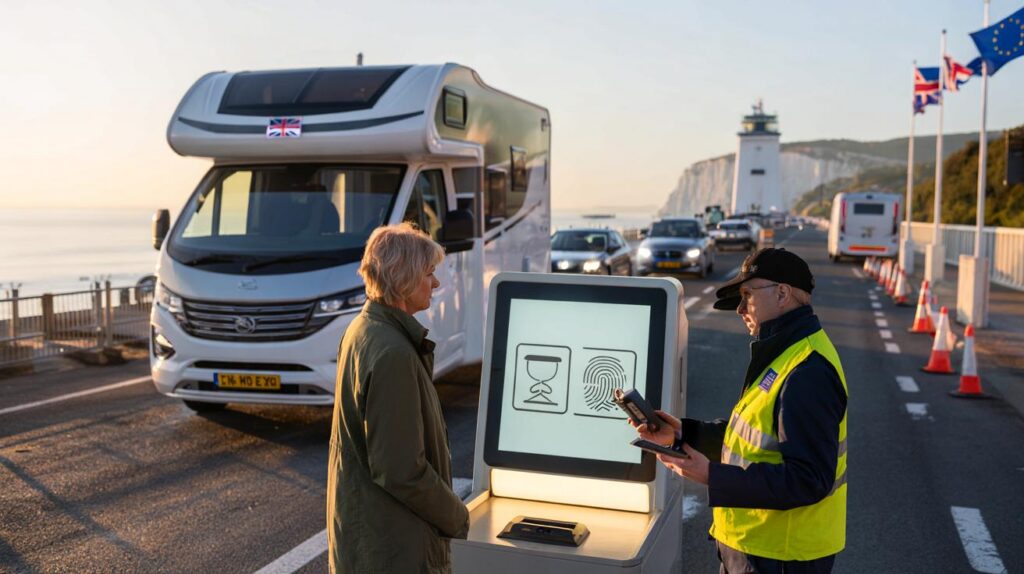
Thousands of UK campervan and caravan owners planning autumn getaways could face queues, fresh checks and new tech at the Channel.
From 12 October, a continent‑wide border change will greet British holidaymakers headed for Europe with their vehicles. It brings digital controls, biometric capture and stricter monitoring of stays. Early journeys may take longer as staff and systems settle in.
What changes on 12 October
The European Union is switching on its Entry/Exit System (EES) for non‑EU visitors, which includes UK citizens after Brexit. Instead of a manual passport stamp, your entry and exit will be logged digitally, and your biometrics will be taken on your first crossing after the go‑live.
From 12 October, expect your passport to be scanned and a biometric profile created the first time you arrive in the EU with your motorhome or caravan.
The system is designed to enforce the “90 days in any 180‑day period” limit for short stays. It records each arrival and departure automatically, making overstay calculations immediate.
Who is affected and where
Any UK resident driving or towing a motorhome or caravan into the EES area for up to 90 days within a rolling 180‑day window will be processed under the new rules. The change covers 29 countries, including France, Spain, Italy, Germany, the Netherlands and the Nordics, plus non‑EU Schengen states such as Norway and Switzerland.
Processing for Port of Dover ferries, Eurotunnel Folkestone and Eurostar St Pancras will happen at UK departure terminals before boarding. Elsewhere, checks happen on arrival at the first EU border you encounter.
EU states will phase EES in over six months, so the exact process can differ by port until April 2026. Build in extra time.
How the border process will work
On your first post‑launch trip, officers will create your EES record. Expect a face scan and, depending on your age and local practice, fingerprint capture. Your passport details and vehicle plate may be associated with your record. Subsequent trips should be quicker because the system will recognise you.
- Have passports ready for all travellers and remove covers.
- Stay with your vehicle unless directed; some lanes have booths with biometric kiosks.
- Answer questions about destination, duration and accommodation if asked.
- Check your entry is logged before you leave the control area.
Officials can refuse entry if you do not complete EES registration or if the system shows you would exceed the 90/180 rule. Early days may bring longer queues at peak times, especially on Friday evenings, Saturday mornings and school holidays.
If you cannot be registered on EES, or your planned trip breaches the 90/180 limit, you may be turned away at the EU border.
What motorhome and caravan drivers should carry
Border checks focus on people, but vehicle paperwork still matters. Prepare the essentials now to avoid delays when the new system starts.
- Valid passport with at least three months remaining on the date you plan to leave the EU, and under 10 years old.
- Driving licence; an International Driving Permit may be needed if you only hold a paper licence or a non‑UK authority.
- V5C logbook or proof of vehicle ownership/hire documents for the motorhome and trailer.
- Insurance certificate with European cover and 24/7 claims contact numbers.
- Breakdown policy that covers your vehicle’s size and weight, including repatriation.
- UK identifier on your plate; a separate UK sticker is required in Spain, Cyprus and Malta.
- Mandatory kit by country: warning triangles, reflective vests, headlamp converters and breathalysers where applicable.
- Emissions vignettes for low‑emission zones such as Crit’Air in French cities or Umweltplakette in parts of Germany.
The 90/180 rule made simple
You can spend up to 90 days in the EES area within any rolling 180‑day period. The count is shared across all member states. Days are calendar days. Day trips to Calais and weekends in Spain all add up. The digital system calculates this automatically at the border.
Track every day in the zone. A three‑week half‑term tour and a two‑week Christmas market run equals 35 days against your 90‑day allowance.
Where you will be processed and what to expect
UK pre‑clearance sites (Dover, Folkestone, St Pancras) plan to complete EES before boarding. Ferry ports elsewhere, and land borders on the continent, process you on arrival. Not every port will move at the same speed; some lanes will adopt kiosks later in the rollout.
| Before 12 October | From 12 October |
|---|---|
| Manual passport stamp on entry and exit | Digital entry/exit record with biometric enrolment |
| Officer checks previous stamps for overstays | System calculates your 90/180 status instantly |
| Queues vary by season and traffic | Extra time likely at first as systems bed in |
Practical timings and trip planning
Allow additional time at the border in the first months. Caravan towing lanes can be slower, and staff may guide you to a dedicated kiosk. Families may need several minutes per person for initial registration. Keep children close and passports grouped by household to speed things up.
Consider off‑peak sailings or mid‑week departures. Overnight ferries spread demand, and early morning tunnel slots often run smoother than late afternoons. If you are using gas on board, check your operator’s rules on LPG bottles and declare them when asked.
Looking ahead: ETIAS brings one more step in 2026
Another change is due in the last quarter of 2026: the European Travel Information and Authorisation System (ETIAS). UK travellers aged 18 to 70 are expected to pay a small fee, complete an online form and receive a multi‑year authorisation linked to their passport. ETIAS is not a visa, but it will be checked before boarding, just as airline API checks are today.
EES starts on 12 October. ETIAS follows in late 2026. Keep both in mind when you plan future European tours.
Common pitfalls to avoid
- Miscalculating days: the 180‑day window rolls; do not reset on New Year’s Day.
- Passport validity: check both the 10‑year issue date and the three‑months‑after‑departure rule.
- Ignoring port differences: some routes will have newer kiosks sooner; others rely on staffed booths during rollout.
- Vehicle limits: heavier motorhomes may need different licence categories and face lower speed limits in some countries.
- City rules: many historic centres restrict high‑emission vehicles or apply access permits; fines are automatic and can be mailed to the UK.
A half‑term example: Calais via Dover
You arrive at Dover with a 3.5‑tonne coachbuilt motorhome and a family of four. Check‑in confirms your sailing. At French controls in the UK terminal, passports are scanned. A kiosk captures a face image and biometrics for the adults. The officer confirms your two‑week itinerary and records entry. Boarding follows. On return, exit is logged automatically. Your next trip in winter should be quicker because your EES profile already exists.
Extra pointers for a smoother run
Store electronic copies of passports, insurance and V5C. Keep a running day‑count in your phone calendar to stay clear of a breach. If you tour frequently, plan winter and spring trips so the 180‑day window frees up before a long summer stay. For caravans, weigh the outfit before departure and check nose‑weight; some police checks target towing stability near ports. Finally, if you intend to work remotely, check roaming caps and campsite power limits; many sites restrict high‑draw appliances on 6A or 10A hookups.



Do kids need fingerprints, or is it face only? Can’t find a clear answer.