
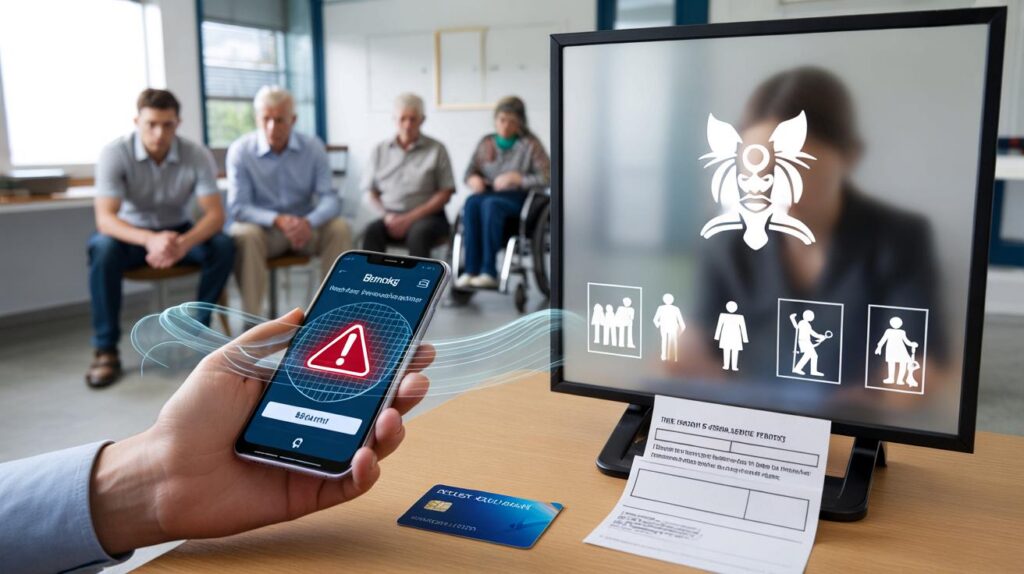
Change is coming to people on means-tested support next spring, with banks poised to scan accounts and alert officials.
The Department for Work and Pensions plans a new data-sharing regime with high-street banks from April 2026, aiming to clamp down on fraud and error. Ministers say the approach will protect public money. Critics warn it risks sweeping up innocent claimants.
What is changing in April 2026
Under the Public Authorities (Fraud, Error and Recovery) Bill, banks will be required to run automated checks for indicators that a benefit claim may not match the facts on an account. Any flags will be passed to the DWP for a human review. The government intends to align the start with the new financial year in April, subject to Parliament’s final approval of the Bill and the detailed regulations.
Bank account monitoring for welfare eligibility is due to begin from April 2026, with human review of any alerts.
Who is likely to be targeted first
Officials are expected to prioritise three benefits where overpayments can be significant and eligibility is sensitive to savings and household circumstances.
- Universal credit (means-tested, most working-age claimants)
- Pension credit (top-up for low-income pensioners)
- Employment and support allowance – income-related (for some disabled and long-term sick claimants)
Universal credit, pension credit and income-related ESA are expected to be first in scope for data checks.
How the checks will work
Banks will not hand over transaction histories wholesale. Instead, systems will look for specific markers that may suggest a claim needs a second look. The DWP stresses that no one will be treated as guilty because an alert is generated, and that trained staff will assess each case before any action is taken.
What could trigger a review
The exact data points and thresholds will be set in regulations. Based on policy documents and ministerial briefings, examples are likely to include:
- Capital that appears to exceed the savings rules for a means‑tested benefit.
- Account activity inconsistent with a declared change, such as moving in with a partner.
- Unusual or repeated large cash deposits compared with reported earnings.
- Patterns suggesting long periods abroad when a benefit has rules on residency.
- Multiple accounts receiving the same benefit payment descriptor.
Where a flag arises, DWP staff can request clarification, ask for evidence, or schedule a compliance interview. In clear-cut cases, they can calculate an overpayment and seek repayment. More serious cases may be referred for investigation.
Any signals from banks are not used by DWP algorithms; a caseworker will examine context and evidence before acting.
Why ministers say the scheme is needed
The government argues that modern data tools can reduce error and fraud without invasive trawling. It forecasts £1.5 billion of savings over the next five years, contributing to a wider package targeting £9.6 billion by 2030. Ministers also want new powers to impose financial penalties as a swifter alternative to court, which they say will deter fraud while freeing up resources for serious cases.
Forecast savings: £1.5bn over five years, within a broader £9.6bn plan running to 2030.
Why campaigners are worried
Civil society groups including Disability Rights UK, Age UK, Privacy International, Child Poverty Action Group and Big Brother Watch have raised concerns. They fear “suspicionless” scanning could misfire, pointing to the Post Office Horizon scandal as a warning about over‑reliance on systems.
They argue that pensioners, disabled people and carers could face stress and stigma if innocent activity triggers checks. There are also questions about proportionality, redress for errors and the safeguards on how bank data is used.
The DWP rejects those claims, saying the regime will be proportionate, subject to robust oversight and reporting, and delivered by staff trained to high standards.
Key dates and numbers
| Milestone | When | Detail |
|---|---|---|
| House of Lords detailed scrutiny | 15 and 21 October 2025 | Line‑by‑line examination of the Bill’s powers |
| Planned start of bank checks | April 2026 | Rollout aligned with the new financial year, subject to passage |
| Five‑year savings target | 2026–2031 | £1.5bn projected benefit to the public purse |
| Wider fiscal package | By 2030 | £9.6bn savings across measures announced in Budget/Spring Statement |
What this could mean for your benefit
Universal credit
UC is means-tested. Savings over £16,000 usually end entitlement. Capital between £6,000 and £16,000 is treated as “tariff income”, which reduces the award. Joint accounts are counted in line with ownership. If bank data suggests capital above your declared amount, you may be asked for statements or an explanation.
Pension credit
Pension credit does not have a strict upper capital limit, but savings over £10,000 are treated as income for the calculation (£1 assumed for every £500 above £10,000). The new checks may look for balances that don’t match what’s on your claim.
Income‑related ESA
For the legacy, income‑related form of ESA, capital rules are similar to UC. If you have moved to UC through managed migration, capital is assessed under UC rules.
Your rights and what to do now
- Report changes quickly: tell the DWP if your savings, household or work change. Keeping your claim up to date reduces risk.
- Keep records: store bank statements and evidence of large one‑off transactions, gifts, or refunds. These help explain anomalies.
- Check the rules: understand capital thresholds and residency requirements for your benefit.
- Challenge decisions: you can request a mandatory reconsideration and appeal to a tribunal if you disagree with an overpayment or penalty.
- Data rights: you can ask the DWP what information it holds about you and how it was used to make a decision.
Fines may be used instead of prosecution, with routes to challenge any overpayment or penalty notice.
Practical examples to stress‑test your claim
- Gift from family: a £5,000 gift paid into your account should be reported if it moves you across a capital threshold. Keep the bank reference and a written note from the giver.
- Holiday abroad: UC has strict limits on time outside the UK. If your account shows foreign transactions for several weeks, you may be asked to clarify dates and purpose.
- Side income: repeated marketplace sales can look like trading. Keep records to show if items were personal possessions and not a business.
- Joint savings: if money belongs to another account holder, evidence of beneficial ownership can prevent a misinterpretation.
What to watch before April 2026
The detail will sit in secondary legislation and a code of practice. Look for clarity on the specific data fields banks will scan, how often checks run, the threshold for alerts, retention periods for data, and the independent oversight mechanism. Guidance for claimants and frontline staff will shape how proportionate the system feels in practice.
If you are budgeting ahead, consider running a simple entitlement check against capital limits and household changes. A short simulation using your current balances and planned spending can show whether one‑off events might nudge you across thresholds. Setting aside evidence now can save time if your case is reviewed after April.



Can the DWP publish the exact indicators and thresholds before April 2026, plus the oversight model and error‑redress route? A human review is reassuring, but false positives can still snowball. Will claimants see the flag reason on first contact and get clear timelines for providing evidence and appealing?