
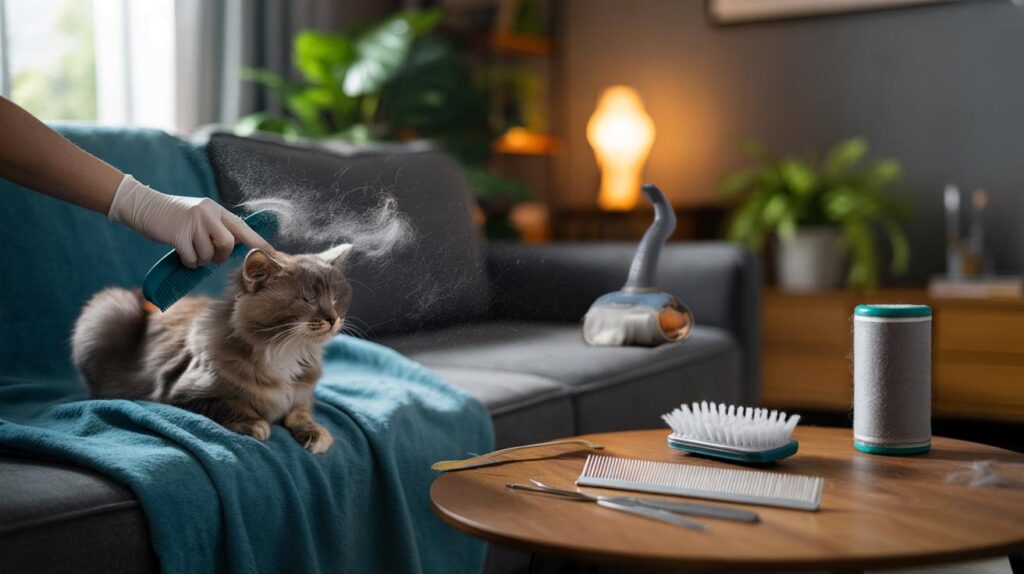
As the heating clicks on and blankets return, thousands of living rooms face one familiar invader: drifting cat hair.
Across the country, owners are trading lint rollers for routine. A simple, low-cost method is quietly transforming sofas from fluff traps into guest-ready seats.
Autumn sheds are back: why your sofa takes the hit
Domestic cats moult to refresh their coats, with a stronger wave as daylight shortens. Indoor life softens the seasonal pattern, so shedding stretches through the year. Central heating dries the air and loosens hair. Stress, poor grooming tolerance and a low-quality diet can also push more hairs onto fabric.
Older cats may struggle to groom properly. Long-haired breeds release more undercoat. Even short-haired moggies leave a steady drift if no one removes dead hair at source.
Target the source before it lands: owners who brush daily report far less hair on cushions and throws within a week.
The 7-minute routine: the method owners swear by
Tools that actually work
You do not need a cupboard full of gadgets. Two or three well-chosen tools make the biggest dent.
- Rubber grooming glove (£6–£12): excellent for short to medium coats, gentle and quick.
- Slicker brush with soft pins (£8–£18): lifts undercoat in long-haired breeds without tugging.
- Fine comb (£5–£10): details the neck, trousers and tail where tangles start.
- Microfibre or polyester throw (£10–£25): traps hair on a washable layer instead of upholstery.
| Tool | Best for | Typical price | Daily time | Pros | Watch-outs |
|---|---|---|---|---|---|
| Rubber glove | Short hair | £6–£12 | 3–4 min | Gentle, minimal noise | Rinse to keep grip |
| Slicker brush | Long hair | £8–£18 | 4–6 min | Lifts undercoat fast | Use light pressure |
| Fine comb | Finishing | £5–£10 | 1–2 min | Finds knots early | Avoid sensitive areas |
| Microfibre throw | Sofa protection | £10–£25 | 30 sec | Quick to wash | Skip wool blends |
How to nail it in three steps
Build a micro-habit that fits your evening.
Pick microfibre or polyester, wash at 40°C, and add a short tumble-dry: static falls, hair releases, fabric looks fresher.
Fast fixes for hair already on the sofa
Emergency clean before guests arrive
When time is tight, stack methods for a quicker lift.
- Damp rubber glove: swipe in short strokes to ball hair into clumps you can lift by hand.
- Electrostatic cloth (unscented): glide along seams and cushion edges where hair hides.
- Fabric squeegee: drag lightly across upholstery to pull embedded hair to the surface.
- Lint roller: finish high-contact areas and armrests; tear sheets often to keep grip.
Work top to bottom. Tap cushions upright, treat surfaces, then vacuum the floor to stop re-depositing onto the sofa.
Make it a household habit
Shared routines keep the sofa clear without arguments.
- One person brushes the cat after dinner; set a 7-minute timer.
- Another resets the throw after the last nap of the day.
- Saturday: wash throws at 40°C, quick tumble, then swap in the spare set.
- Sunday: 5-minute upholstery vacuum with a pet tool around seams and piping.
Consistent, short actions beat occasional marathons. Ten minutes a day replaces an hour of weekend scrubbing.
Fabric choices that change the game
Some textiles hold on to hair more stubbornly than others. Small switches cut effort and improve results.
- Go-to options: tight-weave polyester, microfibre, canvas. Hair sits on the surface and lifts easily.
- High-friction traps: wool, chenille, corduroy, velvet. These knot around fibres and resist rollers.
- Colour strategy: mid-tones disguise light and dark hair better than extreme shades.
- Anti-static sprays: light mist on the throw reduces cling; test a hidden patch first.
Health, allergens and when to call the vet
Hair is visible, but dander drives many reactions. Regular grooming reduces both. A HEPA-equipped vacuum and weekly hot washes for pet bedding help sensitive households.
Diet shapes coat quality. Cats do well on complete food with balanced omega-3 and omega-6. Ask your vet about safe supplements if the coat looks dull or flaky. Hydration matters; a water fountain can raise intake and support skin.
Watch for bald patches, excessive scratching, or sudden spikes in shedding. Fleas, mites, fungal infections or stress-related overgrooming need professional advice. Long-haired breeds benefit from trimming problem areas to reduce mats and hairballs.
Shinier coat, fewer hairballs, calmer skin: grooming plus good nutrition cuts fallout and keeps cats comfortable.
Money and time: the quiet savings
Basic kit costs £20–£35 and lasts years. A pet upholstery tool for your vacuum adds efficiency for £15–£30. Skipping a single emergency upholstery clean can recover that outlay.
The 7-minute routine totals just over 40 minutes a week. That is less than one deep clean and avoids the dread of starting from scratch. A second throw lets you rotate without waiting for a wash cycle.
For multi-cat homes and busy weeks
Groom cats separately to avoid scuffles. Label each brush to prevent sharing skin issues. If time evaporates, prioritise high-shed areas: chest, flanks and tail base. A twice-weekly longer session, paired with daily throw resets, keeps the balance when the calendar fills up.
If your cat resists grooming, build positive associations. Offer a small treat after each stroke, keep sessions short, and switch to a softer tool. Many owners find a rubber glove accepted first, then progress to a slicker for deeper results.



I tried the rubber grooming glove last week—my short‑hair tabby is shedding far less on the sofa. The 7‑minute timer defintely keeps me consistent. Also, the 40°C wash + quick tumble reduced static a ton. Solid, practical tips.
£12 tools? Sounds like another gadget‑drawer filler tbh. Does the slicker brush actually avoid tugging on long coats, or is that just marketing?