
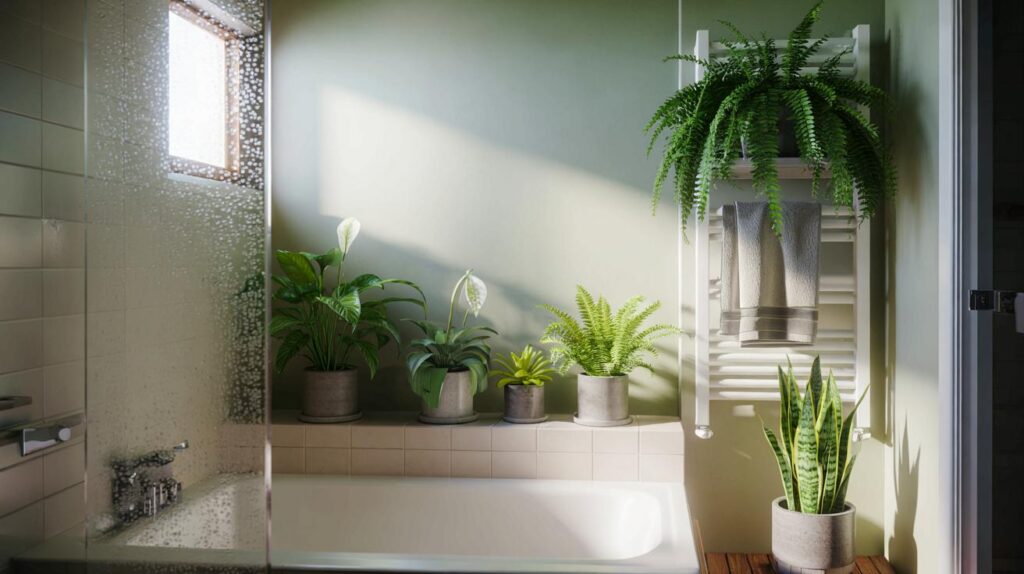
Fogged mirrors and lingering whiffs need not be your morning routine. A low-effort tweak can shift the bathroom mood.
Rising energy bills make fans run less, and chemical sprays add harsh scents. Green fixes now appeal to busy households. Some houseplants thrive in steam, shadow and shifting temperatures, and they do useful work between showers.
Why bathroom air goes bad
Hot water fills a small room with vapour. That vapour hits cool tiles and glass, then condenses into fine droplets. Condensation feeds mould, softens grout and traps odours in towels and mats. In winter you open windows less, so the air turns stale. Detergents and aerosols add volatile compounds that stick around after the steam clears. Extractor fans help, but many run too briefly to finish the job.
Keep indoor relative humidity around 40–60%. Above 65%, mould thrives and fabrics keep a musty note.
Seven plants that earn their keep
Not every plant enjoys a steamy cubicle. The winners love humidity, cope with low light and forgive the odd missed watering. They add leaf area that sips moisture from the air and they trap odour‑causing compounds on their surfaces.
Peace lily (Spathiphyllum)
It likes shade, drinks freely and pushes glossy leaves that keep working in cool light. It filters common household vapours and softens harsh smells after hot showers. White spathes appear for a lift in dull months.
Spider plant (Chlorophytum comosum)
It handles splashes, fluctuating temperatures and weak daylight. Its arching leaves intercept airborne particles. Baby offshoots let you multiply plants and spread the effect around the room.
Boston fern (Nephrolepis exaltata)
Fronds relish damp air and give dense coverage. That large leaf area captures moisture just when mirrors start to fog. It suits a shelf near the towel rail where warmth and vapour linger.
Snake plant (Sansevieria/Dracaena trifasciata)
Upright blades cope with shade and neglect. Water sparingly and it will tick along for years. It helps keep air fresh overnight in windowed bathrooms used late or early.
Aloe vera
This succulent stores water in its leaves and hates heavy watering. It tolerates humidity but wants a brighter sill. Give it the window ledge and it will sit quietly and behave.
English ivy (Hedera helix)
Trailing stems hang from a high pot and make use of rising steam. Tests show it can reduce airborne mould spore counts in small spaces. Keep it trimmed so it does not creep into grout.
Cluster three to five small pots near the shower. The combined leaf area lifts moisture take‑up after every bath.
| Problem | Best plant | Why it helps | Ideal spot | Typical price (£) |
|---|---|---|---|---|
| Fogged mirror | Peace lily | High transpiration and odour filtering | Shelf by sink, out of splash | 9–15 |
| Musty towels | Boston fern | Loves damp air and boosts airflow around fabrics | Near towel rail | 8–12 |
| Lingering odours | Spider plant | Traps airborne compounds on leaf surfaces | High ledge | 5–9 |
| Poor light | Snake plant | Tolerates shade and uneven watering | Floor by bath | 10–18 |
| Small window | English ivy | Helps reduce mould spore counts | Hanging pot near pane | 6–10 |
| Sunny sill | Aloe vera | Handles bright light and dry spells | Window ledge | 6–12 |
Where to put them for maximum effect
Place pots close to the steam source but away from direct spray. A shelf beside the shower works better than the floor. Avoid cold draughts from a leaky window, which stress leaves and slow growth. Keep plants clear of the fan intake so you still move air out. Hanging planters save space and pull rising moisture. A cluster looks good and acts like a small canopy. Use saucers with drainage holes so water never stagnates in the pot.
- Group plants within one metre of the shower for peak humidity capture.
- Rotate pots weekly so each side gets light, even in a dim room.
- Choose breathable terracotta for ferns; use heavier ceramic for top‑heavy snake plants.
- Add a thin pebble layer under pots to stop water pooling against the base.
- Do not cram leaves against tiled walls; give air a path to circulate.
Care that takes seconds
Bathroom humidity already does part of the watering for you. Check compost with a finger rather than using a calendar. Dust dulls leaves and slows the effect, so rinse fronds in the sink or mist them and wipe with a soft cloth. Feed lightly from spring to late summer, then stop until March. Repot when roots coil around the inside of the pot. If fungus gnats appear, let the top layer dry and add a layer of horticultural sand.
Water when the top two centimetres of compost feel dry. In winter, many bathrooms stretch that gap to 10–14 days.
What not to do
Do not rely on plants alone in a windowless bathroom. Run the fan for 15 minutes after showers and crack the door to move air. Avoid placing plants on a cold sill in freezing weather. Skip heavy watering before a holiday; a soaked pot and a shut room make mould. If tap water leaves white marks, switch to rainwater or let water stand overnight before use. Keep peace lilies and snake plants out of reach of pets and toddlers, as they can irritate if chewed.
Costs, payback and small wins
A bundle of three to five starter plants runs £25–£45 in supermarkets and garden centres. A mid‑range dehumidifier can draw 200–300 watts, which adds monthly cost if you run it daily. Plants draw no power and keep working whenever steam rises. They will not replace ventilation, but they shave down the fog window and soften stale notes after use. Households that group plants report clearer mirrors a few minutes sooner and fewer musty towels by the end of the week.
Think of plants as a quiet teammate to your fan: cheaper than gadgets and ready to work every shower.
Extra tips and useful add‑ons
Track the room with a small hygrometer and aim for 40–60% relative humidity. Squeegee glass after showers to cut the load your plants must handle. Wash towels at 60°C weekly to reset odours. A teaspoon of activated charcoal mixed into compost absorbs smells and keeps pots fresher. If your bathroom has no window, set a simple LED grow bulb on a timer for eight to ten hours so plants keep their strength.
Want a quick start? Pick three: a peace lily for the shelf, a spider plant for a high ledge and a snake plant for the floor. That trio covers shade tolerance, odour control and day‑to‑day resilience. Add a Boston fern near the towel rail if space allows, and you will notice calmer air without lifting more than a watering can every week.



I clustered a peace lily, spider plant and fern by the shower this week—miror cleared faster and towels smell less musty. Surprisingly low effort; the pebble layer tip was gold. Thanks!
About that “60%” claim—do you have a study, a hygrometer log, or any before/after measurements? I’d love a link or methodology to replicate at home.