
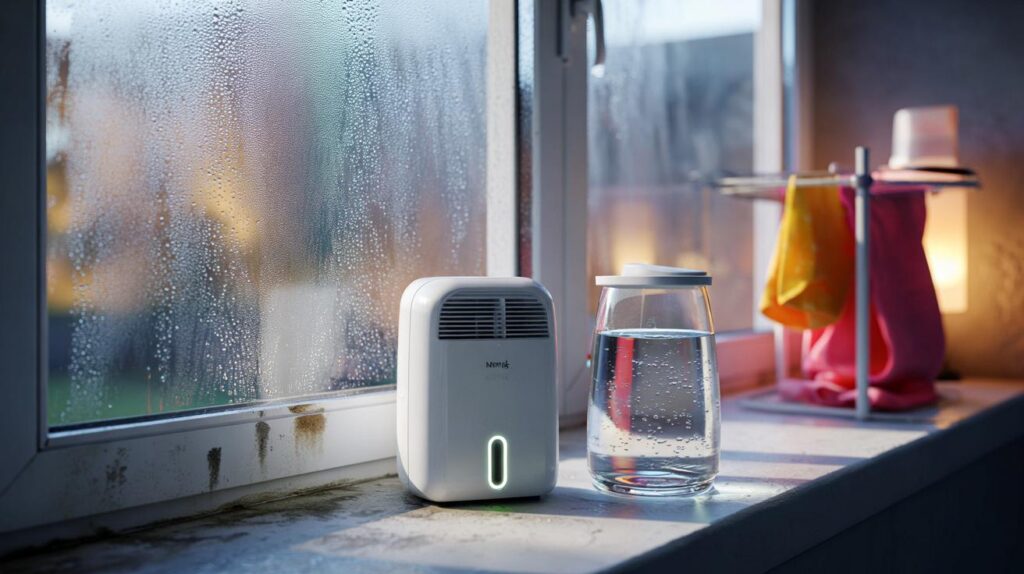
Cold mornings, wet laundry and misted panes are back, pushing households to hunt for fixes that don’t batter budgets now.
As autumn bites, indoor drying racks return and radiators work overtime. That mix leaves rooms clammy, windows streaked, and fabrics slow to dry. A surge in shopper chatter points to a compact, sub-£35 dehumidifier drawing attention for shrinking condensation and taking the edge off damp without upheaval.
Why condensation spikes as the temperature drops
Warm air holds more water vapour. When that moist indoor air meets cold glass and chilly corners, it dumps liquid as droplets. Add laundry steaming away in small rooms and the result looks and smells like trouble. Mould thrives where relative humidity stays above 60% and surfaces stay cool.
How indoor drying traps moisture
Clothes can release over a litre of water into the air per load when dried inside. In tightly sealed homes, that moisture lingers. It fogs panes, feeds black spots on silicone, and leaves musty odours in soft furnishings. Children’s bedrooms, north-facing rooms and kitchens often suffer first.
The £34.99 compact dehumidifier that families are buying
A popular option this season is Lakeland’s 1 Litre Compact Dehumidifier, listed at £34.99. It’s small enough to sit on a windowsill or a hallway console, and light enough to move from a steamy kitchen to a laundry corner without fuss.
Price point: £34.99; stated capacity: up to 1 litre collected in 24 hours; intended use: small rooms and laundry spots.
What it claims to do in 24 hours
The unit pulls moisture from the air and collects it in a tank, reducing the humidity level that fuels mould growth. The maker says it can collect up to 1 litre of water in a day, depending on room conditions. Users report noticeably clearer panes on cold mornings and quicker drying times for school uniforms and gym kits.
Noise sits low on the scale for this kind of gadget, so it can run in living spaces without setting the TV to full blast. Simple light settings help you see it at a glance in dim corners, and a long cable gives some freedom when sockets are scarce.
Several households reported a steep drop in morning condensation, with one buyer estimating around a 90% reduction on kitchen glass.
What we heard from households
Parents and tenants highlight three wins: fewer wipe-downs on windowsills, faster laundry cycles without using the tumble dryer, and a fresher feel in rooms that normally smell stale after a night with the door shut.
- North-facing rooms felt less clammy after overnight running.
- Drying racks cleared quicker, reducing reliance on costly heating boosts.
- Bathroom mirrors and tiles stayed clearer after showers.
Small quibbles worth noting
Some owners mention that the power button could be more responsive. Styling only comes in white, which blends easily but won’t please every décor. Even so, the trade-off for size, price and impact carries weight for many buyers.
Where to place it and how to use it
Position matters more than people think. Place the unit where moisture is produced or settles: beside laundry racks, beneath a persistently damp window, or near a cold external wall. Keep doors and windows mostly shut while it runs to avoid pulling in fresh moisture from other parts of the home.
| Typical room | Suggested running time | Common signs of excess moisture |
|---|---|---|
| Small bedroom | Overnight or during early morning | Misted windows, musty wardrobe |
| Kitchen | While cooking and 1–2 hours after | Drips on panes, damp sill corners |
| Laundry corner | During drying and until clothes feel crisp | Slow-drying fabrics, humid feel |
| Bathroom | After showers with door closed | Persistent condensation, black spots on grout |
Quick set-up and safety
Set the unit on a flat surface with airflow around the intake and outlet. Empty the tank before it brims, and clean the intake grille to keep performance steady. Keep cables tidy to avoid trips, and keep the device off the floor in splash zones.
Best results come when doors and windows stay closed while the unit runs, then opened briefly to purge stale air.
Will it save money?
Dehumidifiers don’t heat rooms, but drier air often feels warmer and lets you dial back the thermostat slightly. Clothes dried with lower humidity also need less radiator time, which helps trim gas or electricity use. For households that lean on a tumble dryer, a modest cut in dryer hours can deliver noticeable savings.
A back-of-the-envelope calculation
Assume a compact unit runs for eight hours and draws a small amount of power typical for this size. If it helps you avoid one 60-minute tumble cycle that week, the electricity saved by the dryer alone can outweigh the dehumidifier’s running cost for that period. Multiply that across a wet autumn and winter, and the numbers can justify the spend, especially at a sub-£35 purchase price.
How it stacks up for small spaces
This model targets modest rooms and focused jobs rather than whole-house control. In a studio flat, a children’s bedroom, or a laundry nook, it can make a tangible difference by attacking local humidity peaks. Larger, compressor-based machines suit big, draughty spaces, but they cost more to buy and store.
Compact units shine when you treat the damp at source: right beside the wash rack, below that cold pane, or where shoes and coats gather.
Extra tips to keep mould at bay
- Vent after showers and cooking by opening a window for five minutes once the dehumidifier has done a stint.
- Keep furniture a hand’s width from external walls to allow air to circulate.
- Wipe visible mould with appropriate products and dry the area fully so spores don’t find a foothold again.
- Dry laundry in one room with the door shut and the unit running, rather than spreading damp across the home.
- Watch relative humidity; many phones pair with simple sensors that show when you’re creeping above 60%.
What to expect day to day
On wet weeks, the tank will fill faster. Empty it before work, set it running while dinner cooks, and park it under the foggiest window overnight. Most users report a new rhythm forming quickly, as natural as switching on the kettle. The pay-off is clearer glass, quicker-drying clothes, and fewer musty corners.
If you rent or live in a modern, tightly sealed home, humidity can climb even when the heating is off. A small dehumidifier offers a movable, low-effort response. Pair it with short, sharp ventilation bursts and basic housekeeping, and you cut the conditions mould loves without turning your lounge into a utility room.



Does it auto shut-off when the tank’s full?