
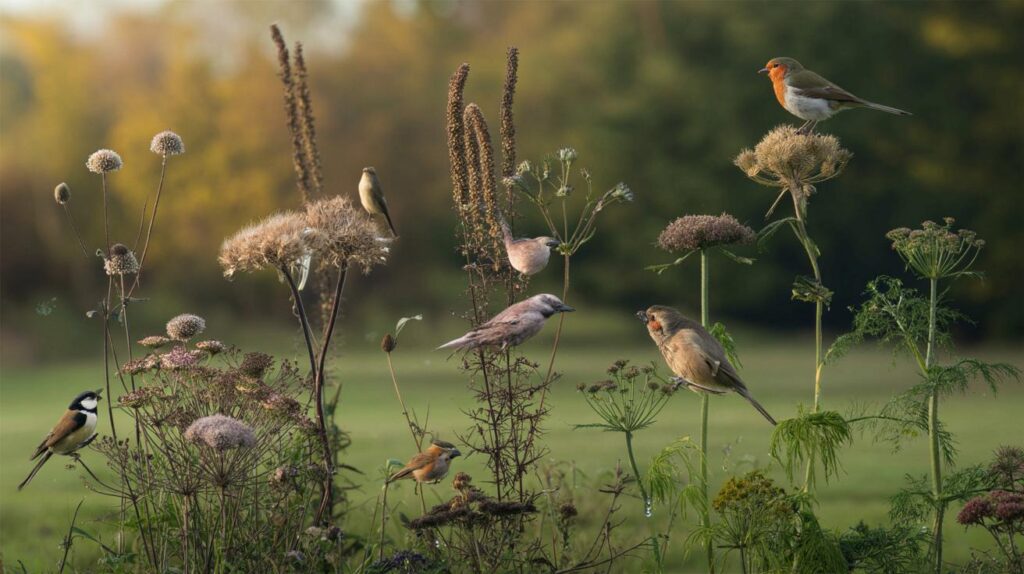
As daylight thins and rain returns, a quiet shift is reshaping back gardens across britain this October, with birdsong close behind.
Across patios, borders and balconies, gardeners are turning away from plastic feeders and towards seed-rich planting that feeds birds for months. The timing is no accident. Warm soil and gentle rain help roots settle now, so the plants can carry your birds through winter with little intervention.
October is prime time for a living larder
Autumn planting sets strong roots before frost. Soil still holds warmth. Regular showers arrive without the scorch of summer heatwaves. That trifecta reduces stress for young perennials and cuts next summer’s watering to near zero.
Plant in October while the ground stays warm and damp. Roots anchor fast, costs stay low, and the watering can mostly gathers dust.
Seedheads matter. Where a feeder serves a handful of species, a mixed border supports robins, tits, finches and dunnocks, and it also shelters insects they hunt. Leave stems standing. Birds pick through them from November to March, then you tidy in spring.
The seedhead stars that feed garden birds
Scabious: nectar in summer, seed in winter
Scabious (scabiosa) draws bees for months, then holds tight domes of seed that goldfinches prize. Low mounds suit front-of-border positions and containers. Deadhead lightly to extend flowers, but keep late blooms to ripen seed for birds.
Joe pye weed: airy plumes that turn to buffets
Eupatorium, often sold as joe pye weed, sends up hazy pink clouds. After bloom, the heads dry into soft seed that small finches probe repeatedly. It thrives in moisture-retentive soil and partial light, perfect near a fence where wind is softer.
Mullein: tall spires that ration seed slowly
Mullein (verbascum) gives statuesque stems that hold seed capsules into midwinter. Each spike feeds birds in stages, not all at once. It loves dry banks and poor soil, so it performs where lawns struggle and watering hoses seldom reach.
Other stalwarts that earn their keep
Yarrow (achillea millefolium) forms flat plates that dry into tidy discs for finches. Fennel (foeniculum vulgare) brings architectural umbels and spicy seed. Knapweed (centaurea) offers bristly heads that cling to seed for weeks. All three ask for sun and sparse feeding.
Skip the tidy-up. Seedheads left standing feed birds, shield insects and give winter structure that a bare border cannot match.
Plant once, then put the watering can away
Choose locally suited perennials, not thirsty exotics. Space plants for their adult spread. Firm them in and water once to settle soil. After that, rainfall does the heavy lifting.
- Loosen soil to a spade’s depth; remove thick mats of roots or rubble.
- Set plants at the same depth they grew in the pot; do not bury crowns.
- Mulch 3–5 cm with leaves, wood chips or compost to lock in moisture.
- Group in threes and fives for stronger feeding stations and easier foraging.
- Resist staking unless winds are fierce; sturdy stems feed better when upright.
What to plant where
| Plant | Height | Best spot | Soil preference | Birds helped |
|---|---|---|---|---|
| Scabious (scabiosa) | 40–60 cm | Front of sunny borders | Free-draining, low fertility | Goldfinch, chaffinch, sparrow |
| Joe pye weed (eupatorium) | 120–180 cm | Back of border, light shade | Moist, humus-rich | Finches, tits |
| Mullein (verbascum) | 80–150 cm | Dry banks, gravel gardens | Dry, poor, alkaline | Finches, buntings |
| Yarrow (achillea) | 40–70 cm | Sunny, open beds | Free-draining, lean | Sparrows, dunnocks |
| Fennel (foeniculum) | 120–200 cm | Back of border, full sun | Free-draining, light | Finches, tits |
| Knapweed (centaurea) | 40–90 cm | Meadow-style plantings | Average, not waterlogged | Linnets, goldfinches |
More than food: cover, safety and quiet corners
Dense stems and evergreen clumps break the wind and hide birds from cats. Leave some leaf litter near the base for beetles and larvae. Those invertebrates become protein-rich snacks, especially in cold snaps when seed alone will not do.
Skip chemicals. Insecticides and fungicides strip away the menu your birds rely on. A diverse border manages pests by balancing predators like ladybirds and lacewings.
Costs, timing and a weekend plan
A basic six-plant starter can land for £18–£30 from local nurseries or community sales. Add a bag of mulch for £5–£8 if you lack leaves. Two hours on Saturday prepares beds. One hour on Sunday plants and waters-in. That is your winter feeding plan, done.
Leave seedheads standing until early spring, then cut back in stages. You feed birds longer and protect early nesting attempts.
Spacing guides keep things simple. Allow 30–40 cm between scabious, 45–60 cm for knapweed, 60–90 cm for joe pye weed and fennel. If you have 2 square metres, that means around 8–10 plants, mixed to flower from June to September and feed from October onwards.
Smart tweaks for small spaces and balconies
Containers work if they drain well. Use a peat-free mix with added grit. Choose compact scabious and dwarf yarrow. Drop in a vertical verbascum if your balcony avoids strong gusts. Do not deadhead after late August; let seed form and dry on the plant.
Window boxes can still help. Leave a strip of dried stems until March. Birds will perch, peck and move on, and you will notice visitors you never saw before.
Extra notes you will thank yourself for later
Avoid sterile doubles. Many flashy cultivars hold little nectar or sterile seed. Pick straight species or wildlife-friendly selections labelled for pollinators. Steer clear of invasive introductions; check local advice before planting if you garden near wildland or waterways.
Feeders still have a role in ice and snow. Use them as a backup, not the main course. Clean them weekly in winter to limit disease spread. Place any feeder near dense cover so birds can bolt from sparrowhawks.
Cat pressure changes behaviour. Prickle mats under favourite ambush spots, bell collars and higher perches reduce kills. Position key plants away from low walls and garden furniture that cats use as launch pads.
Think of yield per square metre. A mature 2 m² patch can carry 40–60 usable seedheads through winter. That supports daily visits from small flocks, while the same area of lawn offers almost nothing. Repeat the formula along a fence and you build a corridor that stitches your garden into the wider neighbourhood.
If you enjoy a project, sow a tray of verbascum and scabious now and overwinter the seedlings in a cold frame. You add dozens of future seed spikes for pennies, and you keep the border replenished as older clumps tire.



Brilliant timing—I’ve been meaning to ditch the plastic feeders. The step-by-step (spacing, mulch, leave seedheads) makes this feel doable, even for a lazy weekender. Scabious + knapweed combo sounds ace. I’ll try community plant sales; £20 is tight but maybe doable. Definately bookmarking.
“0 watering”? In an East Anglia dry spell, really? And £20 for nine perennials sounds optimistic unless you hit a swap. Realisticaly, are plugs the trick? Also, any UK-native stand-ins for joe pye weed if my clay stays wet-but-cold?