
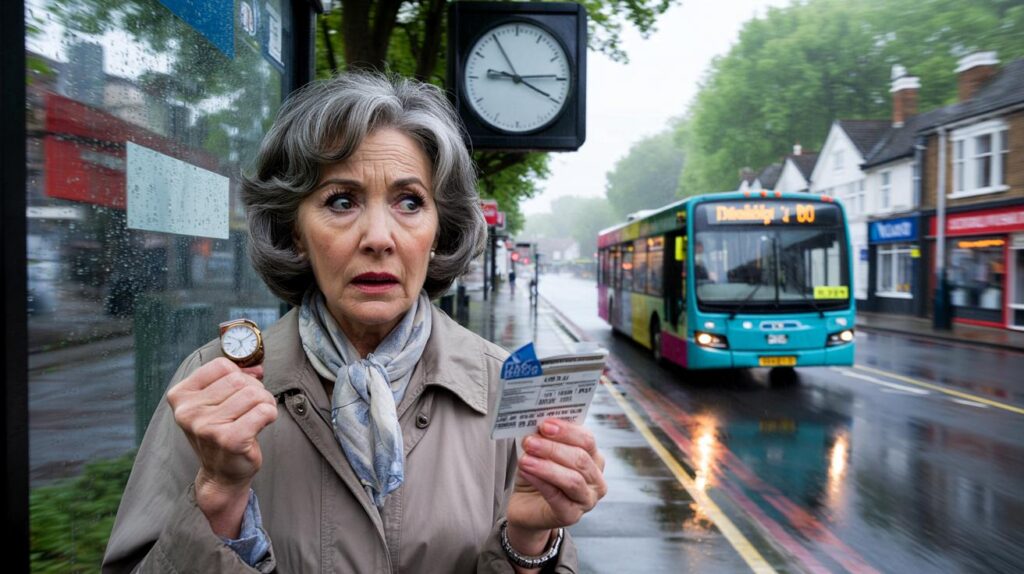
From school runs to hospital check-ups, your routine could soon change as England redraws the map of free local bus travel.
Ministers have confirmed a shift to the qualifying age, linking it directly to the rising State Pension timetable across England.
What is changing and when
From next April, people in England will have to wait an extra year before qualifying for a free bus pass. Eligibility will move in step with the State Pension age, which is increasing from 66 to 67 in stages between 2026 and 2028 under the Pensions Act 2014. In practice, those who expected a pass at 66 will only receive it at 67.
The change applies to the English National Concessionary Travel Scheme (ENCTS), which offers free off-peak local bus travel once you reach State Pension age or meet disability criteria. Scotland, Wales and Northern Ireland continue to offer free travel from 60, so England will remain the outlier on age.
From April, the qualifying age in England rises in line with State Pension rules, adding up to 12 months to the wait for a free pass.
The pension timetable has been set for years. The move to 67 was accelerated in 2014, and a further step to 68 is pencilled in for 2044–2046. Concessionary travel mirrors that schedule.
Key facts at a glance
- Current English eligibility: State Pension age (66 rising to 67); or qualifying disability.
- Travel times: free off-peak journeys from 9:30am to 11:00pm on weekdays, and all day at weekends and Bank Holidays.
- Cost of the English scheme: about £700 million a year.
- New funding: £1 billion for buses announced at the Budget, including £712 million for councils to support services.
- Devolved nations: Scotland, Wales and Northern Ireland offer free bus travel from age 60.
- Local discretion: councils in England can add concessions, including lowering the age, if they fund it themselves.
Who is affected
The increase primarily affects people in England approaching 66 who expected to qualify during 2026–2028. Those born between 6 March 1961 and 5 April 1977 fall into the cohort that hits State Pension age at 67, and their bus pass age follows suit. People already holding a pass are not affected.
How the age rule applies by birth date
| Date of birth | State Pension age | Earliest bus pass eligibility (England) |
|---|---|---|
| Before 6 March 1961 | 66 | At 66 |
| 6 March 1961 to 5 April 1977 | 67 (phased 2026–2028) | At 67 |
| Future cohorts | Planned rise to 68 (2044–2046) | Likely 68, subject to future decisions |
Why ministers say the change is necessary
The Department for Transport argues that aligning free bus pass eligibility with State Pension arrangements keeps the scheme sustainable. Officials point to the annual £700 million cost of concessionary travel and say any national changes must be weighed against long-term funding pressures. The government has also set out separate bus improvements, with £1 billion earmarked for networks and £712 million passed to local authorities to bolster reliability and affordability.
Whitehall’s line: protect the core concession by matching it to the pension timetable, while giving councils room to go further.
What campaigners want
A petition calling for free bus travel from 60 in England has passed 100,000 signatures, triggering a debate in Parliament. Supporters say older people are driving less, many on tight budgets, and England should match Scotland, Wales and Northern Ireland. They also argue that earlier access supports volunteering, part-time work, and caring responsibilities, which all rely on affordable transport.
Pressure will now fall on the Transport Secretary, Heidi Alexander, to consider whether extra funding or a revised age could be justified. Activists are likely to highlight the geographical divide, pointing to places where residents in their early sixties already travel free because the council pays for a local scheme.
What your council can still offer
Local authorities in England can add discretionary concessions beyond the national minimum. London, for example, runs a separate 60+ scheme, while some city regions, including parts of Merseyside, top up entitlements. These extras are funded locally and can be adjusted as budgets and priorities change.
Your council can still set a lower local age — if it can afford to pay for it from its own resources.
If you live outside these areas, you’ll rely on the national rules. Councils may use the latest bus funding to protect routes, extend operating hours, or introduce fare caps. Whether any of that money goes towards a wider 60+ offer will vary by area.
What you should do now
- Check your State Pension age to see whether you fall into the 67 cohort.
- Ask your council about local concessions, especially if you live in or near a mayoral city region.
- Plan for a 12‑month gap if you turn 66 during 2026–2028 and expected a pass at that point.
- Consider alternatives: multi-journey tickets, fare caps, or off-peak passes offered by local operators.
- If you qualify through disability, gather evidence early and apply under that route.
Example: the real‑world cost of a 12‑month delay
Assume a £2 single fare under a local fare cap. Two return trips a week equals four singles, or £8 weekly. Over a year, that is roughly £416 out of pocket. Increase to three return trips a week and the annual bill approaches £624. A delayed pass matters most for people with frequent appointments, caring duties or part-time shifts spread across the week.
How this interacts with off-peak rules
Remember that English passes cover off‑peak local bus journeys: 9:30am to 11:00pm on weekdays, and all day at weekends and Bank Holidays. Early morning commuters may still pay the cash fare unless their council funds an enhancement. If your routine requires peak-time travel, a delayed pass can have a bigger impact than the headline age change suggests.
What happens after 2028 and beyond
Once the State Pension age hits 67, the dust may settle for a period. But the long‑planned move to 68 between 2044 and 2046 is on the horizon. If ministers keep the current link, the concessionary pass would also shift to 68 for future cohorts. That depends on future reviews, fiscal conditions and political appetite, so people in their forties and fifties should expect more debate before any date is fixed.
Extra pointers to maximise your options
- Combine modes: short walks or cycling to faster bus corridors can cut paid journey time.
- Ask about companion passes if you support a disabled family member; some councils offer them.
- Track operator deals: month‑to‑month fare promotions can beat pay‑as‑you‑go on regular routes.
- Check community transport: dial‑a‑ride and charity shuttles can bridge gaps in rural areas.



England pushing the free pass to 67 while Scotland, Wales and NI keep 60 feels like a postcode penalty. If the scheme already costs ~£700m, why not use some of the new £1bn bus funding to hold the line at 66? For many carers and part‑timers, that extra year isnt trivial—£400–£600 by your own example. This hits the people who actually rely on buses the most. Shortsighted policy, tbh.