
Thousands freeze leftover loaves each night, yet many wake to soggy slices and odd aromas the next day. Here’s why.
That quick dash to the freezer after dinner feels sensible and thrifty. But the way bread goes in, and how it comes out, decides both flavour and safety. Cold slows life down; it doesn’t erase it. A few simple fixes protect your kitchen, your tastebuds and your wallet.
Why cold doesn’t kill kitchen microbes
Freezers halt microbial activity by dropping temperatures below the point where bacteria and mould can grow. They rarely kill them outright. When bread thaws, surviving microbes wake up fast, especially if moisture condenses on the surface. That is when off-odours appear and the crumb softens in the wrong way.
Freezing pauses microbes. Thawing restarts them. Safety comes from smart packaging, stable -18°c, and careful thawing.
The bread-specific risk: moisture, spores and “rope”
Bread holds water and nutrients. A few species can withstand the cold as spores. One notorious culprit behind sticky, stringy “rope” spoilage is Bacillus subtilis. It’s uncommon, but it exists. Most households will notice changes first as stale notes, a damp crumb or a faintly sour smell. All point to the same root cause: moisture and air exposure during storage.
The packaging mistake most people make
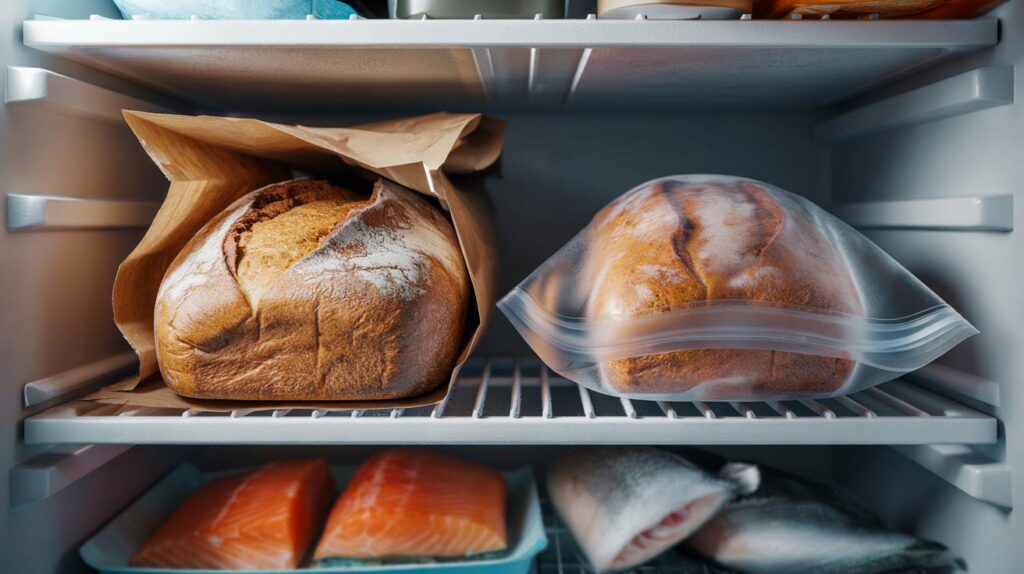
Most of us slide a baguette or loaf into the freezer still in its paper bag. It feels convenient. It is also the single biggest error. Paper breathes. It lets in air and humidity, wicks in odours from raw meat or fish nearby, and offers little defence against freezer burn. The result is bread that tastes like the freezer rather than a bakery.
Paper is porous. It invites air, moisture and smells into your bread. Airtight packaging keeps them out.
What goes wrong when air gets in
- Ice crystals form on the surface and in the crumb, shredding texture.
- Odours migrate: bread can take on notes of fish, garlic or curry.
- Condensation on thawing leaves damp patches that favour microbes.
- Temperature swings from frequent door openings amplify moisture problems.
The safe method: cool, portion, seal and label
Good freezer bread starts before it gets cold. Follow a simple routine and the payoff is crisp crust, tender crumb and reliable safety.
- Let the loaf cool fully at room temperature to prevent steam trapping.
- Portion: slice or break into meal-sized chunks so you defrost only what you need.
- Wrap tight: cling film or foil snug to the crust, then place in a zip bag or sealed box.
- Push out the air or vacuum-seal if you can. Less air means fewer ice crystals.
- Label clearly with the date and type of bread. Aim to use within 3–6 months.
- Keep the freezer at a steady -18°c. Avoid constant door openings that cause frost and humidity.
Once thawed, don’t refreeze bread. Refreezing multiplies risk as water melts, microbes revive, and texture degrades.
Which packaging works best?
| Material | Air barrier | Odour protection | Best use |
|---|---|---|---|
| Paper bag | Poor | Poor | Very short room-temp storage only |
| Cling film + zip bag | Good | Good | Everyday freezing of portions and loaves |
| Foil + box with tight lid | Good | Very good | Flatbreads, baguettes, pastries |
| Vacuum bag | Excellent | Excellent | Longer storage, premium loaves, batch slicing |
Thawing and refreshing without inviting bacteria
Thaw bread unwrapped on a wire rack or inside a clean tea towel at room temperature. The rack lets moisture escape rather than soak back in. For crusty loaves, a hot oven brings the magic back.
Simple reheating that preserves texture
- Crusty loaves and baguettes: 2–3 minutes at 220°c for crunch; 6–8 minutes if thawing from frozen.
- Sandwich slices: straight into the toaster from frozen for speed and a dry crumb.
- Microwave: quickest, but heat spreads unevenly and can leave a rubbery crumb. Use only for soft rolls, 10–15 seconds.
Keep thawed bread away from raw foods. Use clean boards and knives. If the loaf feels unusually tacky, smells off, or shows unusual sheen or threads in the crumb, bin it.
How long can frozen bread last?
Safety lasts as long as food remains frozen solid and well protected. Quality drops first. Most bread tastes best within 3–6 months. Rich brioche and enriched doughs sit at the lower end. Dense rye and wholemeal can hold up longer because the crumb dries more slowly. Thin baguettes lose their snap sooner, so plan to eat those within a few weeks for best results.
Stop cross-contamination in the freezer
A quick household checklist
- Store bread above raw meat and fish. Gravity carries drips down, not up.
- Group flavours: keep bread away from pungent items like onions or spicy stews.
- Use a thermometer. Many home freezers sit warmer than -18°c; adjust the dial to hold the mark.
- Load bread at the back where temperature stays stable.
- Defrost the freezer when frost builds up. Thick ice insulates and raises internal temperature.
Why the right method tastes better
Airtight packaging reduces evaporative loss, so fewer ice crystals form. That protects the gluten network and the delicate oils in seeds and wholegrain crumbs. Tighter wrapping also blocks odour molecules, which are small and travel quickly through air gaps. The result is bread that still smells like bread when it comes out.
A small health bonus you might feel
Cooling and freezing shift some starch into a form called resistant starch. It digests more slowly. That may lower the glycaemic impact of a slice and feed friendly gut microbes. This effect is modest, yet consistent. Reheating does not remove it entirely. For those watching blood sugar, a cooled-then-toasted slice can be a neat tweak.
Smart ways to use frozen bread
Freeze pre-sliced for weekday mornings, and mixed sizes for soup nights. Keep a bag of crust ends for blitzing into crumbs. Stale or over-thawed pieces make perfect croutons: toss with oil and salt, bake at 180°c until crisp. Flatbreads reheat well in a dry pan for 60 seconds each side.
If you suspect a problem
Trust your senses. Rope spoilage often brings a sweetish, fruity smell and a stringy crumb that clings to the knife. Musty smells or visible mould call for the bin. Do not sniff deeply at mouldy bread. Wrap and discard.
Bottom line for busy kitchens
Cool fully, portion smart, and seal tight. Keep a steady -18°c. Thaw on a rack and revive heat in the oven or toaster. That routine cuts bacterial risks, saves money and keeps flavour close to fresh-baked—without turning your freezer into an aroma sponge.



Had no idea paper “breathes” in the freezer. Zip bag + squeeze the air out from now on.