
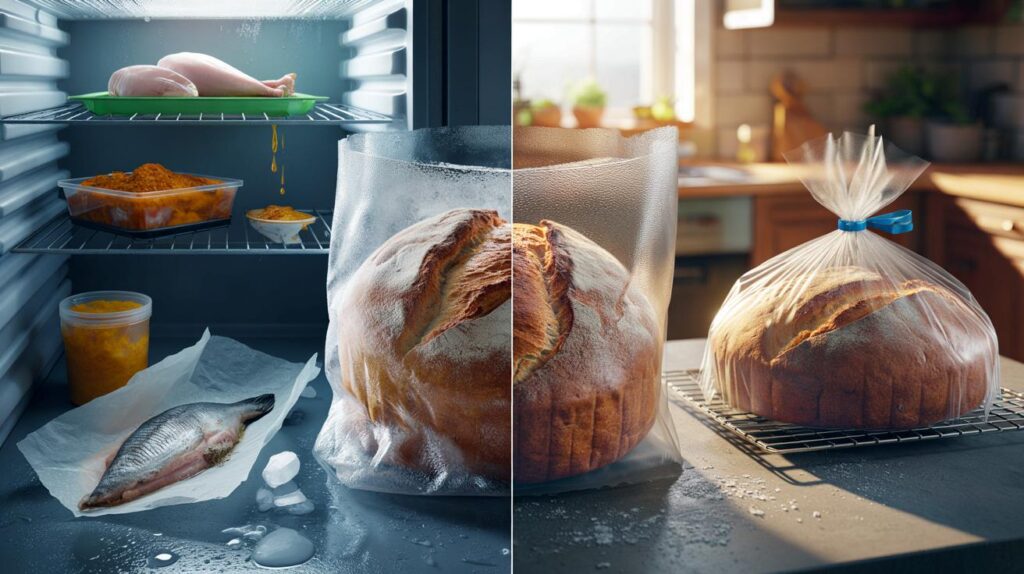
You stash leftover bread in the freezer and forget it. The wrong wrap can sabotage safety, texture and flavour fast.
Freezing slows spoilage, yet it does not wipe the slate clean. Most people pop a loaf into the freezer in its paper bag, then feel let down when a thawed slice smells odd or tastes stale. The fix starts before the door closes.
Why freezing does not sterilise bread
Cold pauses microbial activity; it does not kill every survivor. Bread carries moisture and nutrients that microbes can use once warmth returns. When you thaw, any hardy cells wake up, and they can multiply quickly if the surface turns damp.
Signs crop up as a sour or dairy-like odour, a pasty crumb, or a stringy, sticky “rope” defect linked to Bacillus subtilis. Most cases lead to mild tummy upsets at worst, yet no one fancies gambling with a sandwich.
Cold pauses microbes; it does not wipe them out. Thawing restarts the clock and invites a quick comeback.
The hidden culprit: the wrong bag
The biggest mistake sits in the packaging. A paper bag breathes. Air, humidity and freezer odours pass through it, and so can surface contamination already present inside the appliance. That flow dulls crust, softens crumb and muddles aroma with whiffs of fish, meat or last week’s curry.
- Paper lacks a moisture barrier, so ice crystals form and then melt into the crust.
- Air exposure dries edges and boosts freezer burn.
- Porous fibres let foreign smells cling to the loaf.
Seal it tight: the safe way to freeze loaves
Method beats magic. Cool the bread completely on a rack first; warm bread traps steam and encourages ice formation. Portion it so you only thaw what you need. Then use a proper barrier and remove as much air as you can.
- Let the loaf cool until no warmth remains to the touch.
- Slice or halve; smaller packs thaw faster and stay safer.
- Wrap closely in baking parchment plus aluminium, or use a thick freezer bag. Squeeze out air before sealing.
- Label with the date and the type of bread.
- Keep the freezer at −18 °C with minimal door openings.
- Aim to eat within three to six months for best flavour and texture.
Three to six months at −18 °C keeps quality in line; after that, flavour fades even if safety holds.
Which packaging actually works
| Packaging | Moisture barrier | Odour risk | Best use |
|---|---|---|---|
| Bakery paper bag | Poor | High | Short carry home, not freezing |
| Thin supermarket bag | Fair | Medium | Temporary cover inside a sturdier wrap |
| Zip freezer bag | Good | Low | Everyday freezing after air removal |
| Rigid airtight box | Good | Low | Fragile pastries and shaped loaves |
Thawing without risk or sogginess
Thaw smart and you lower both microbial risk and gumminess. Take bread out of its wrap so condensate does not soak the crust. Set it on a rack or clean tea towel at room temperature until no icy patch remains.
- Whole loaves: warm for 5–10 minutes at 150 °C to refresh the crust.
- Baguette: 3–5 minutes at 180 °C brings back snap without drying the crumb.
- Slices: straight to the toaster from frozen works well.
- A microwave softens unevenly and leaves a wet crumb; reserve it for emergency slices only.
Unwrap to thaw. Let moisture escape, then use a short, hot refresh to restore crust and aroma.
Never refreeze thawed bread
Once thawed, the loaf has crossed warmer temperatures where microbes can multiply. Refreezing traps that growth and risks a larger bloom next time. Food safety guidance flags this as a common cause of illness. Portioning before freezing solves the problem because you only thaw what you plan to eat.
Bread types and what freezes best
Dense, high-hydration loaves, such as wholemeal or rye, freeze and thaw with fewer texture shifts. Sourdough often holds up well because its acidity discourages spoilage organisms during thawing. Enriched breads with butter, milk or eggs keep tenderness, yet their fats readily absorb stray odours, so sealing matters even more.
Thin-crusted baguettes go stale faster after thawing. A quick, hot bake revives their crust, but they benefit from short storage and small portions. Gluten-free bread tends to dry out; freeze it in slices and toast from frozen for a better crumb.
Why the habit feels safe, yet goes wrong
Freezers lend a false sense of security. People assume frost equals sterile. In reality, freezing preserves both the loaf and whatever came with it. If the wrap lets air and moisture in, you set up a cycle of ice and thaw that harms texture and gives surviving microbes a boost when you finally take the loaf out.
Health, waste and money: the upside of doing it right
Handled well, freezing cuts waste dramatically. UK estimates suggest households bin tens of millions of slices of bread each day. If you save just three loaves a month at £1.20 each, that puts roughly £43 back in your pocket each year, and you avoid last-minute dashes to the shop.
You also gain a small dietary perk. Cooling and reheating favour starch retrogradation, which raises the share of resistant starch. That shift can modestly lower the glycaemic impact of a slice and feed gut bacteria that like fibre-like carbohydrates. The effect varies by recipe and time in the freezer, so treat it as a bonus, not a cure-all.
Practical extras most people miss
- Place bread above raw meat and fish in the freezer to prevent drips and cross-contamination when you open packs.
- Wipe the gasket and shelves monthly; crumbs and spills seed odours that migrate into bread.
- Use a cheap thermometer. Many freezers sit warmer than −18 °C; a small tweak keeps conditions stable.
- Avoid overfilling. Packed airways raise humidity and slow down freezing, which encourages larger ice crystals.
What to do about mould and “rope” spoilage
Never freeze bread that already shows mould or smells off. Freezing pauses mould growth; it does not destroy spores. Discard suspect loaves. If you slice into a sticky, stringy crumb that smells like hay or fruit, you may be looking at rope spoilage. Bin it, clean the board and knife with hot, soapy water, and review your packaging routine before the next batch.
A quick checklist for busy households
- Cool fully, then portion.
- Double wrap or use a thick freezer bag and squeeze out air.
- Label the date; aim for three to six months.
- Keep −18 °C steady; limit door openings.
- Thaw unwrapped on a rack; refresh briefly in a hot oven.
- Never refreeze thawed bread.



Is the “rope” issue from Bacillus subtilis really common at home, or is that more of a bakery-scale problem?
I always froze baguettes in the paper bag. No wonder they came out soggy. Thanks for the −18 °C target and the “unwrap to thaw” tip—plus the resistant starch bonus. Will try parchment + foil next.