
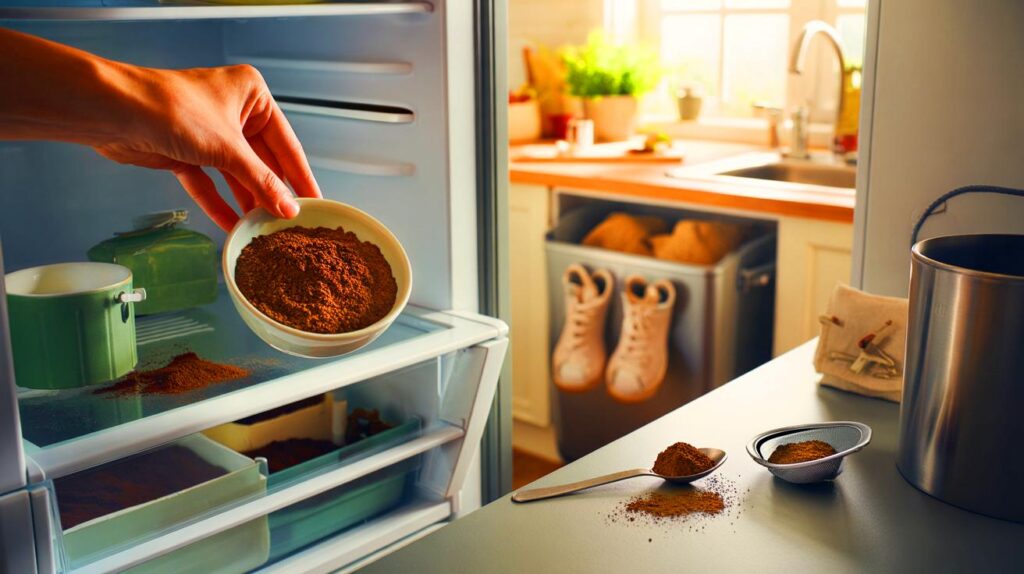
Your fridge hums, the bin lingers, trainers sulk. A kitchen staple hints at a quieter home without fragrances.
Homes trap smells fast. Grease, humidity and closed windows make odours bloom. A simple routine clears the air, then a free fix tackles the hotspots. Coffee grounds, dried well, pull smells from fridges, bins, shoes and even drains without perfume or harsh chemicals.
Why smells linger in homes
Odour molecules cling to damp surfaces and fabric. Warm rooms amplify them. Poor air change lets them accumulate. Gaps around pipes, sockets and skirting boards can draw stale air from voids. Kitchens and bathrooms add steam and grease, which carry smells further.
Start with circulation. Open windows for ten minutes, morning and evening. Use extractor fans during cooking and showering. Keep trickle vents unblocked. Clean the hob filter and cooker hood regularly. Ventilation upgrades, such as an MVHR unit, need clean filters to perform.
Open windows for 10 minutes, twice a day. Stale air magnifies every smell you notice later.
- Dust air inlets monthly to keep airflow steady.
- Wash extraction grilles with hot water every 3–6 months.
- Check MVHR or bathroom fan filters once a year and replace if clogged.
Turn coffee grounds into a zero‑p deodoriser
Spent coffee grounds act like a tiny sponge for odours. When dry, their porous structure traps smell‑causing compounds. They add no artificial scent. They cost nothing if you already brew at home. They are easy to deploy in bowls, sachets or old socks tied off with a knot.
Dryness matters. Spread fresh grounds in a thin layer on a tray. Air‑dry for 6–24 hours until crumbly. Store in a jar with a lid. Drier grounds absorb better and avoid mould. If you drink organic coffee, your waste is organic too. That helps when you later compost the used grounds.
Simple prep, step by step
- Collect grounds after brewing. Break up clumps with a spoon.
- Dry on a tray or on baking paper until no longer damp.
- Pour into a small open bowl or fabric sachet.
- Place only where smells build up. Check after two days.
- Replace when the grounds feel moist or their effect fades.
Replace the bowl as soon as the grounds feel damp. Moisture ends the absorbing effect quickly.
Target the hotspots: fridge, bin, shoes, drains
Fridge
Place a small open bowl with 1–2 tablespoons of dry grounds on a shelf. Keep it away from spills. The bowl traps whiffs from cheese, fish and last night’s curry. It leaves, at most, a faint coffee note many households barely notice. Clean shelves with hot soapy water first for a fresh start. Swap the bowl weekly or sooner if it gets wet.
For strong episodes, also simmer a pan of water with lemon slices on the hob nearby. Run the hob extractor. Allow the fridge to air for ten minutes while you wash the salad drawer and seals.
Bin
Sprinkle a teaspoon of grounds into the empty bin before the new liner goes in. Or set a small cup of grounds at the base. The grounds help trap sulphur and ammonia compounds that build from food waste. Wash the bin with hot water and a drop of washing‑up liquid every fortnight. Dry it fully so you don’t hand moisture to the grounds. Replace after each bag change.
Shoes
Spoon 1–2 tablespoons into the toe of a clean old sock or a cut section of tights. Tie a knot. Pop one sachet in each shoe overnight. Coffee grounds drink up dampness and the smell it carries. Avoid direct contact with pale linings to prevent staining. Air trainers near a window during the day. Dry insoles separately when possible. Refresh the sachets every few nights.
Drains
If a sink smells, use a light touch. Tip no more than a teaspoon of grounds into the plughole. Follow with a full kettle of boiling water. That wash moves grease along and reduces odour. Do not do this daily. Grounds can settle and contribute to clogs if overused. Fit a strainer to catch debris and hair. For deeper cleaning, use pantry standbys that dissolve fully.
A safer deep‑clean: 3 tablespoons bicarbonate of soda, 3 tablespoons coarse salt and 120 ml white vinegar. Let fizz 15 minutes, then flush hot.
How coffee grounds compare with other cupboard classics
Different absorbents work at different speeds and in different places. Coffee grounds excel in small, contained spaces and shoe interiors. Bicarbonate of soda wins in enclosed boxes and ovens. Activated charcoal shines where odours are intense or constant, such as pet areas.
| Method | Typical cost per use | Best for | Notes |
|---|---|---|---|
| Coffee grounds | £0 (reused waste) | Fridge, bin, shoes, small cupboards | Dry well; can stain; compost after use |
| Bicarbonate of soda | £0.05–£0.15 | Fridge boxes, ovens, carpets | Odour neutraliser; safe on most surfaces |
| Activated charcoal | £1–£3 (per pouch) | Persistent pet, smoke or damp smells | High capacity; needs sun to recharge |
What science says about the smell fix
Spent coffee grounds are porous plant material. As they dry, micro‑pores trap volatile compounds through adsorption. That is a surface effect, not a soak. The drier the material, the more sites remain open to grab odour molecules. Heat, humidity and airflow affect the rate. In laboratories, coffee waste is even turned into activated carbon, which boosts surface area. You don’t need that for daily life. Plain dried grounds handle small domestic smells well when refreshed.
Adsorption differs from absorption. In adsorption, molecules stick to the surface. In absorption, they enter the bulk. Odour control here relies on the first process, which is why a thin, dry layer beats a wet clump.
Extra tips to stretch results and avoid missteps
- Never seal wet grounds in a jar or sachet. That invites mould within days.
- Keep bowls away from toddlers and pets. Some animals react poorly to caffeinated residue.
- Label sachets if you store them near spices. Grounds can transfer aroma.
- Avoid sprinkling directly on porous stone or unfinished wood. Wipe marks promptly.
- Refresh little and often. Small bowls changed weekly beat a large bowl left for a month.
What to do with used grounds after odour duty
Do not send them down the sink. Add them to your compost heap or food waste caddy. Mix with dry browns, such as shredded paper or cardboard, to balance moisture. On cleaning day, a tablespoon with washing‑up liquid makes a gentle scouring paste for greasy pans. Rinse thoroughly to avoid residue.
How much you need and how much you save
Two espressos a day yield roughly 30–40 g of grounds. That covers three small bowls or two shoe sachets. Over a week, you can refresh a fridge, a bin and a pair of trainers without buying anything. A typical home spends £20–£40 a year on deodorisers. Reusing coffee waste cuts that to near zero and reduces plastic pods and aerosol cans.
A quick routine you can copy this week
Air the flat for ten minutes in the morning. Clean the bin and sprinkle a teaspoon of dried grounds. Set a small bowl of grounds on the middle fridge shelf. Make two sock sachets for shoes and swap them between pairs. Mix a bicarbonate and vinegar drain treatment for the smelliest sink on Sunday night. Keep a jar of dried grounds on the counter, topped up each brew day. Track which spots respond fastest and rotate bowls as needed.



Doesn’t coffee just add anoter smell? My parnter hates coffee—won’t this make the fridge worse?
Tried the sock sachet in my gym shoes last night—massive difference by morning. Cheap, easy, no fake perfumey blast. Thanks! 🙂