
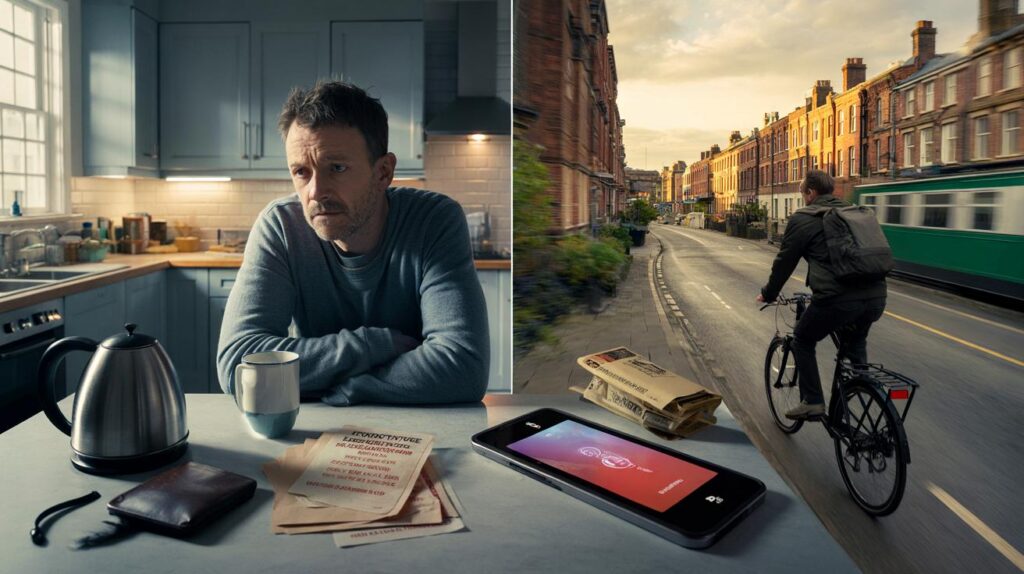
A man in Leeds, 36 years old, sat across from £45,000 of debt and found a way out. Not with a lottery win. Not with magic. With a plan he could stand to live with.
The kettle clicked in a dark kitchen as Liam opened his banking app and winced at the red numbers. On the table: three unopened envelopes, a traffic fine he’d ignored, and a car insurance renewal he couldn’t afford. He scrolled through transactions that read like a diary he didn’t want to keep — petrol, late-night takeaways, minimum payments that kept his head barely above water.
Outside, a neighbour’s engine coughed and started. He thought about selling his own car, then felt the panic rise. He whispered, “I can’t live like this.” He wasn’t reckless. He was tired. Tired of hiding. Tired of the dread that arrived with every buzz of an unknown number.
He made a list. Every debt. Every rate. Every date. Then he drew a line under the page and wrote one number. £45,000.
Then he did something small.
Facing the number that owns you
Liam calls it the minute the fog lifted. He sat with a pad and wrote everything down — not vibes, not guesses. Just the facts. A car on finance, two credit cards at 29.9% and 24.9% APR, a gnarly overdraft, and a lingering HMRC bill after a chaotic year of freelance work.
He wrote each lender’s number next to the balance. He added the minimum payment and the due date. It fit on one page. **Debt didn’t end him; denial nearly did.** He didn’t feel brave. He felt relieved.
We’ve all had that moment when a problem shrinks as soon as it’s said out loud. For Liam, the page made it real but survivable. In the UK, charities like StepChange and Citizens Advice see millions wrestling with problem debt, often triggered by a dip in income or a life change. High-interest cards in the mid-20s APR range turn small slips into sinkholes.
Put that math into months and you see the trap. A minimum payment compounds pain, not progress. So a plan has to reset the rules. Less theatre. More numbers.
His first win wasn’t heroic. He called his card providers and asked for help. He sounded embarrassed. He used the words “breathing space” and “reduced payments”. One froze interest for six months. The other offered a lower rate if he stopped spending on the card. That tiny wedge of time gave him room to move.
With snowball maths in one hand and avalanche logic in the other, he chose a hybrid: smallest debt first for momentum, then the highest interest. He automated every payment the day after payday. He set reminders and left the rest alone. Quiet systems beat noisy guilt.
The rebuild: systems, not willpower
Here’s what Liam actually did. He ditched the car finance by selling the vehicle, then bought a reliable banger for cash. He moved from a one-bed flat into a house share to cut rent by £350 a month. He applied for a 0% balance transfer card and shifted the higher-rate balance, paying a 2% fee that saved him thousands across 24 months.
He created a zero-based budget with three rules: the rent gets paid, the lights stay on, and the highest-priority debt gets fed first. Groceries went down to £35 a week with batch cooking. He picked one streaming service and paused the rest. He did two side hustles that fit his life: weekend football coaching and evening deliveries twice a week. Let’s be honest: no one really does that every day.
Then he did something people skip. He built a tiny emergency fund — £500 in a boring savings pot — before attacking the rest. **Your budget is a guardrail, not a prison.** It stops a flat tyre becoming a new credit card balance. He tracked spending once, weekly, on a Sunday night, not obsessively. He gave himself £60 of guilt-free money each month and kept it sacred. He didn’t try to be a monk. He tried to be consistent.
Liam made peace with two truths. First, you don’t owe anyone a lifestyle you can’t afford. Second, the fastest plan is the one you can repeat on your worst week. He cut mistakes by naming them: “doom scrolling at the supermarket till”, “rounds at the pub that turned into a whole night”, “treating payday like a festival”.
He set traps for old habits. He removed saved card details from shopping sites. He turned off one-click. He kept an embarrassingly big water bottle and a protein bar in his bag so he’d stop grabbing £6 lunches. One small swap at a time.
Liam credits strangers as much as willpower. He asked for help without drama. Then he followed the next right step.
“The shame went the day I saw progress. I wasn’t a mess. I was a bloke with a plan. That changed everything.”
- Call your lenders. Ask for a lower rate or a pause. Use the words “financial difficulty”.
- Move the highest-interest balance to a 0% card if you can qualify. Pay the fee off quickly.
- Automate payments the day after payday. Future you is forgetful.
- Build a £500 buffer before going hard on debt. Life happens.
- Track once a week. Two lines: “planned” and “actual”. That’s enough.
What keeps you free
Liam took 34 months to clear £45,000. There were wobbles. A chipped tooth. A friend’s wedding. Three nights when he wanted to say, “Sod it.” He didn’t chase perfection. He kept the lights on. He checked the totals once a month. He let the plan be boring so his life could be less so. **Freedom felt ordinary, which is the magic of it.**
He rebuilt his credit by keeping one card with a low limit and paying it in full. He kept the emergency fund and grew it to three months of expenses. Work got steadier. Sleep did, too. He still cycles to work most days. Not out of martyrdom. Because it saves him £80 a month and clears his head.
There’s a line he wrote on a Post-it above his desk: “You can’t be your best self if you’re terrified of your letterbox.” He keeps it there to remember. The life he bought back isn’t flashy. It’s Sunday phone calls to his mum without secretly dodging a number with no caller ID. It’s going to the pub and leaving when he’s had enough. It’s a flat that fits. A plan that fits. A future that doesn’t need a miracle, just a calendar.
| Key points | Details | Interest for reader |
|---|---|---|
| Face the real number | List every debt, rate, payment date on one page. Choose snowball, avalanche, or a mix. | Clarity replaces dread and gives an exact first step. |
| Systems beat motivation | Automate payments after payday, weekly money check-in, 0% transfers where possible. | Reduces decision fatigue and late fees. |
| Protect the plan | Build a small buffer, trim housing and transport, add a simple side income. | Prevents setbacks from becoming new debt. |
FAQ :
- How long does paying off £45,000 usually take?It depends on income, interest, and how much you can throw at it monthly. With £1,200 a month and some rate cuts, two to four years is common. Slower is fine. Progress is what counts.
- Snowball or avalanche — which is better?Snowball (smallest balance first) builds momentum. Avalanche (highest interest first) saves more in interest. Many people do a hybrid: clear a small win, then hammer the highest APR.
- Should I save while paying off high-interest debt?Keep a small emergency fund first, £300–£1,000. Then focus on high-interest balances. Without a buffer, every hiccup sends you back to the card.
- What if my credit score is too low for 0% cards?Call lenders for hardship options, explore debt management plans with StepChange or PayPlan, and focus on steady on-time payments. Improvement follows consistency.
- How do I avoid burnout on a long payoff?Pick two or three rules you can live with. Schedule rest. Plan small rewards that don’t wreck momentum. Rotate side gigs. Change pace, not the goal.



Genuinely one of the most practical debt stories I’ve read. “Quiet systems beat noisy guilt” hit hard. The 0% transfer plus a £500 buffer is so doable — and definitley the bit I’ve been missing. Did you cap your “fun” money strictly every month, or allow rollovers when life happened?
Good read, but selling the car and moving into a house share isn’t possible for everyone. If housing and transprot costs were fixed, what trade‑offs would you make next — more side gigs, or deeper cuts to variable spend?