
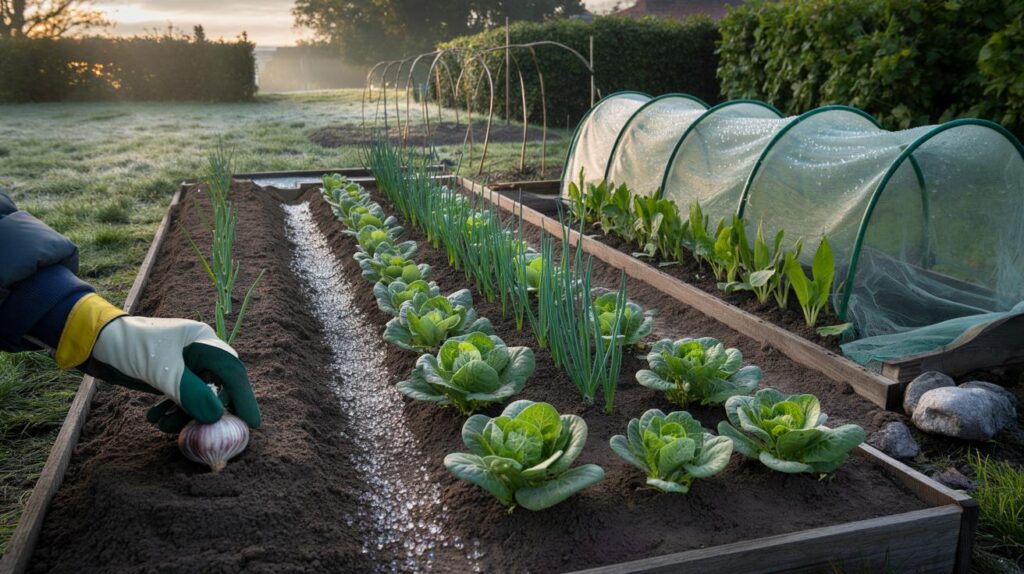
Fog rolls in and hands reach for storage. Yet a narrow autumn window still bends the shape of spring.
The last days of October still matter. Soil holds summer warmth. Seeds settle, bide their time, and surge when light returns.
Why late October sowing changes the game
Warm subsoil meets cooler air. Roots push without stress. Tops stay compact. Growth slows, not stops. Plants harden before winter bites.
Sow now and you bank time. Seeds sit safe in the tilth. They break dormancy with the first mild spell. You gain weeks on the calendar and space in the beds.
In temperate regions, late-October sowings often harvest 2–4 weeks earlier than spring sowings, with fewer weeds to fight.
Market gardeners speak of “quiet growth”. They keep the soil active. They fill gaps fast. They cut losses from bare ground and winter erosion.
Seven hardy crops to sow before November
Bankable staples that shrug off cold
- Garlic (white or pink) — Plant firm cloves 2–3 cm deep, 15 cm apart, rows 30 cm. Choose a certified seed garlic, not supermarket bulbs. Expect harvests from June. Mulch with leaves to steady temperature.
- Lamb’s lettuce (corn salad) — Broadcast or drill very shallowly at 0.5 cm. Keep rows 15 cm apart. Thin to a dense carpet. It tolerates light frost. Pick baby rosettes from February under fleece.
- Winter radish — Sow 1 cm deep, 10 cm apart. Opt for daikon, ‘Black Spanish’ or ‘Green Luobo’. In mild belts or under a cloche, roots size up as days lengthen. Pull from March.
- Spinach (winter types) — Drill 1.5 cm deep in double rows 25 cm apart. Select hardy strains. Keep soil moist, not wet. Pick tender leaves from March without uprooting the plants.
- Round-seeded peas — Use smooth, early types such as ‘Meteor’ or ‘Feltham First’. Sow 5 cm deep, 5 cm apart, rows 45 cm. Protect against mice with mesh. Vines climb at the first warmth.
- Broad beans — ‘Aquadulce Claudia’ thrives in cold. Sow 5 cm deep, 20 cm apart. Plants withstand sharp frosts when mulched. Pick pods from late May.
- Spring onions — Choose a hardy line such as ‘White Lisbon Winter Hardy’. Sow 1 cm deep in bands. Thin to 2–3 cm. Cut bunches from April. Shelter with fleece in exposed plots.
Sow shallow for light-lovers like lamb’s lettuce. Bury deeper for peas and beans. Keep spacing generous to reduce disease.
How to prepare beds without wrecking soil life
Skip deep digging. Loosen the surface with a fork or rake. Lift compaction but keep the layers intact. Rake a fine tilth where seeds need contact.
Spread a 2–3 cm mulch of shredded leaves, straw, or garden-made compost after sowing. Pull mulch aside to expose narrow drills for tiny seed. Replace mulch gently once seedlings anchor.
Water once to settle seed. Then leave the soil to drain and breathe. Heavy watering in cold weather rots seed. Aim for even moisture, not wetness.
Protection that pays for itself
Fleece, tunnels and smart placement
Lay horticultural fleece loosely over beds. Pin with hoops or stones. Fleece traps a pocket of warmer air and sheds wind. Use low tunnels on peas and beans in windy sites.
Choose sun and shelter. Avoid frost pockets at the base of slopes. Give beds morning light to melt ice faster.
Mulch for roots. Fleece for leaves. Airflow for everything. This trio carries seedlings through winter.
Timing, checks and a calm winter routine
Set a simple schedule. Visit beds every two weeks. Clear sprouting weeds with a hand hoe. Top up mulch after gales. Vent tunnels on mild days to prevent mildew.
| Period | What to check | Action to take |
|---|---|---|
| Late Oct–Nov | Germination, slug damage, dry crusts | Re-firm ground after wind, set beer traps, water lightly if dust-dry |
| Dec–Jan | Fleece secure, pooling water, vole activity | Raise edges for airflow, improve drainage channels, add mesh against rodents |
| Feb | New growth, weed flush, bolting risk on warm spells | Harvest little and often, hoe on sunny days, shade spinach if heat spikes |
What growers report from the field
Earlier plates, steadier work
Experienced growers log earlier picking by 2–4 weeks on peas, spinach and lamb’s lettuce. Garlic matures on schedule yet bulbs bulk better after a long, cold root season. Winter radish holds crunch and stores well once lifted.
Spring labour evens out. Beds already carry crops. You sow less in a rush. You harvest sooner when prices rise and shelves run thin.
Common pitfalls and quick fixes
- Waterlogging suffocates seed. Raise beds by 5–8 cm and add surface grit on heavy clay.
- Rodents raid pea rows. Use wire mesh or sow in short gutters, then transplant in clumps.
- Slugs love lamb’s lettuce. Clear debris, use ferric phosphate pellets sparingly, and set traps.
- Frost heave lifts garlic. Re-firm with a boot on a dry day and top with more leaves.
- Overcrowding breeds mildew. Thin seedlings early and keep fleece off foliage with hoops.
Small numbers that make a big difference
A £6 roll of fleece, £2 of seed and two hours’ work can return 6–10 kg of greens and pods by May. A single 1.2 m x 2.4 m bed can carry 40 garlic plants or a carpet of lamb’s lettuce for eight weeks of salads.
Spacing guards yield. Keep 15 cm between garlic plants, 20 cm between broad beans, and 45 cm between pea rows. Narrower gaps look tempting now yet cut airflow in damp spells.
Advanced moves for those who want more
Succession and pairing
Interplant spinach between garlic rows. Spinach finishes by May when garlic needs space. Sow a short row of peas every 10 days for three waves of pods. Pop a strip of mizuna or rocket under fleece to fill lean weeks.
Soil tests, green manures and microclimates
Check pH before planting alliums. Aim for 6.5–7.0 to limit rust and improve bulb growth. Where beds will rest, sow field beans as a green manure. They bind nitrogen and shield soil from winter rain.
Build microclimates with hedges and low windbreaks. Even a mesh fence lifts temperature on still days. Dark mulch warms soil faster than pale straw in late winter. Use it where peas must sprint.
What to watch between now and February
Track the weather, not the calendar. Cover beds ahead of deep frost. Lift fleece for a few hours on mild days to vent. Keep notes on which varieties cope best. That record trims risk next year and pushes your harvest window wider.
Set a modest target—two crops from one bed before June. Peas over garlic greens, or lamb’s lettuce before spring brassicas. That plan anchors your actions and brings earlier, cleaner harvests with less scramble when spring finally arrives.



Fantastic guide—clear and timely. I sowed ‘Feltham First’ and ‘White Lisbon Winter Hardy’ on Oct 28 last year and picked 3 weeks earlier than my spring sowings. The reminder to vent tunnels on mild days saved me from mildew. Bookmarked for this weekend’s push.
“30% earlier” sounds sales-y. Is that based on degree-days or trials across sites, or just anecdote? In my zone 7b, late-October peas often rot unless I add grit and a low tunnel. Any data comparing spring vs. autumn sowings for peas/beans beyond the 2–4 week claim?