
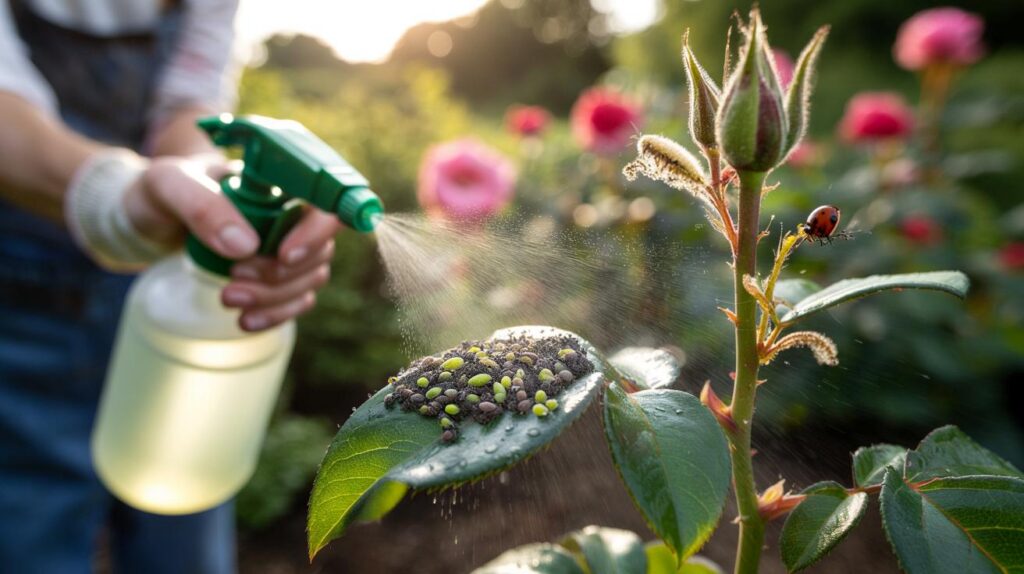
A pantry fix is racing through sheds and allotments as budgets tighten and green-minded growers trade tips, trials and doubts.
Across the UK, social feeds and community noticeboards are buzzing about a so-called grandmother’s spray made from two kitchen staples. Supporters claim it knocks back up to 95% of aphids in days. Others urge care, saying timing, mixing and plant choice decide whether it helps or harms. Here is what people are doing, why it seems to work, and how to avoid the common pitfalls.
Why the old recipe is back
Mild, damp spells have pushed aphids early onto roses, beans and soft fruit. Prices of branded garden products have crept up. Many householders want a cheaper, gentler approach that still delivers visible results. That mix of pressure and thrift has revived an old method: vegetable oil plus a mild soap, diluted in water and sprayed onto infested leaves.
Reports from allotment groups suggest infestations fall by roughly 80–95% after two or three careful applications.
The appeal is simple. The ingredients sit in most kitchens. The method needs no specialist kit. Waste is low and the spray breaks down quickly. It targets soft-bodied pests while leaving little residue when used with care.
How the mix acts on pests
The oil coats soft-bodied insects. It blocks spiracles and disrupts water balance. The soap contains fatty acids that weaken the cuticle and improve spreading on leaf surfaces. Together, the emulsion smothers nymphs and adults of aphids, whitefly and some mites. It does not reach eggs tucked on stems or within curled leaves, which is why repeat treatments matter.
The two-ingredient method, step by step
What you need
- 1 litre of lukewarm water
- 1 tablespoon (15 ml) of light vegetable oil
- 1 tablespoon (15 ml) of mild liquid soap, such as Castile or unscented washing-up liquid
- A clean 1-litre trigger sprayer
Mix and apply
- Whisk the oil and soap together for about 30 seconds until slightly creamy.
- Slowly add the water while stirring to form a milky emulsion.
- Pour into the sprayer and shake for a minute.
- Test on a few leaves. Wait 24 hours. If there is no scorching, proceed.
- Spray in the early morning or evening. Coat the undersides of leaves where aphids cluster.
- Aim for 2–3 firm sprays per leaf on heavy colonies.
Work in cool conditions, keep spray off open blooms, repeat every 5–7 days and after rain.
What gardeners are seeing
By day three, clusters thin out and honeydew drops. By the end of week one, new growth looks cleaner and less curled. A second or third round sweeps up late hatchlings and stragglers. The best results show on roses, beans, peppers, brassicas and houseplants like chillies. Leaves regain their gloss as sooty mould fades with the loss of honeydew.
Where plants suffer stress from drought or excess nitrogen, aphids bounce back quickly. Here, growers combine the spray with steadier watering, lighter feeding and pruning of badly twisted tips. That mix reduces sap richness and the pest’s breeding speed.
Caveats and risks
Not every plant tolerates oil and soap in the same way. Succulents, some ferns and glaucous, waxy leaves can mark or burn. Tender new growth can scorch if sprayed in bright sun or heat. Blossoms attract pollinators, so keep the spray away from open flowers. Ants often farm aphids for honeydew, so ant control helps the spray hold its gains.
- Shake before every use. The emulsion separates as it sits.
- Do not oversaturate. Films work; drips waste product and raise scorch risk.
- Avoid midday heat and hard sunshine. Cloudy, calm conditions are ideal.
- Rinse edibles with clean water before harvest to remove residue.
How it compares on cost, effort and impact
| Method | Estimated cost per litre | Likely impact on aphids | Pollinator risk | Time/skill |
|---|---|---|---|---|
| Oil and soap spray | £0.20–£0.40 | High on nymphs/adults; weak on eggs | Low if kept off flowers | Moderate; needs repeat |
| Plain water jet | Near £0 | Moderate; dislodges, does not kill | Very low | Low; frequent use |
| Insecticidal soap (shop-bought) | £2–£4 | High on nymphs/adults | Low if used as directed | Low; ready mixed |
| Systemic insecticide | £1–£2 | High | Higher; label restrictions apply | Moderate; approvals vary |
Two ingredients, one litre, under 40 pence a batch: that cost is driving the surge in home mixing.
Tips that raise the success rate
- Start early at the first sign of wingless nymphs on soft tips.
- Target the colony base on stems and the underside of new leaves.
- Prune out the most twisted, infested shoots to expose hidden clusters.
- Control ants with barriers or traps so they stop guarding aphids.
- Hold back on high-nitrogen feeds that push sappy growth.
- Encourage ladybirds and lacewings with mixed flowers and minimal broad-spectrum spraying.
What the science says about mode of action
Oils act as contact suffocants. Soaps act as contact desiccants and spreaders. Both need direct contact with the pest to work. Rain, irrigation and leaf expansion dilute the film within days, which explains why follow-up rounds matter. Because the approach relies on physics and simple chemistry rather than systemic uptake, it fits well in gardens that prioritise low residues.
Where this fits in a wider plan
Sustainable pest control rarely rests on a single tactic. A kitchen spray can blunt a surge fast, yet long-term pressure falls when habitats suit natural enemies. Mixed hedges, uncut corners, shallow water dishes and nesting aids for solitary bees raise predator activity. Companion plants such as calendula, marigold and dill draw hoverflies whose larvae gorge on aphids.
Aphids also spread plant viruses, especially in beans and cucurbits. Remove and bin leaves that show strong mosaic or severe distortion that does not recover after the colony collapses. Keep tools clean. Avoid moving from plant to plant with sticky hands that carry honeydew and winged insects.
A practical example for your beds
If you manage ten mature rose bushes, plan for two litres per round to reach both sides of foliage. That cover rate assumes roughly 150–200 leaves per litre at three short pulls per leaf. Mix fresh each time rather than storing the bottle. A fresh emulsion spreads more evenly and reduces clustering of oil droplets that can scorch.
Beyond aphids: what else this mix can tackle
Light whitefly on tomatoes and spider mites on houseplants respond to the same contact film. Scale insects are tougher; the spray may loosen crawlers but established shells need gentle scraping and repeat care. Always patch test on sensitive ornamentals and avoid blue-grey foliage that relies on a protective bloom for its colour.



Tried the oil + Castile mix last week on my roses—three rounds, cool evenings. I’d say about 90% of aphids gone and the honeydew vanished. Costs pennies. Just don’t drench; a light film worked best for me.
95% sounds… optimistic. How are you measuring? Counting sticky little corpses with a magnifier, or just vibes? I’m definitly open to it, but show me before/after pics.