
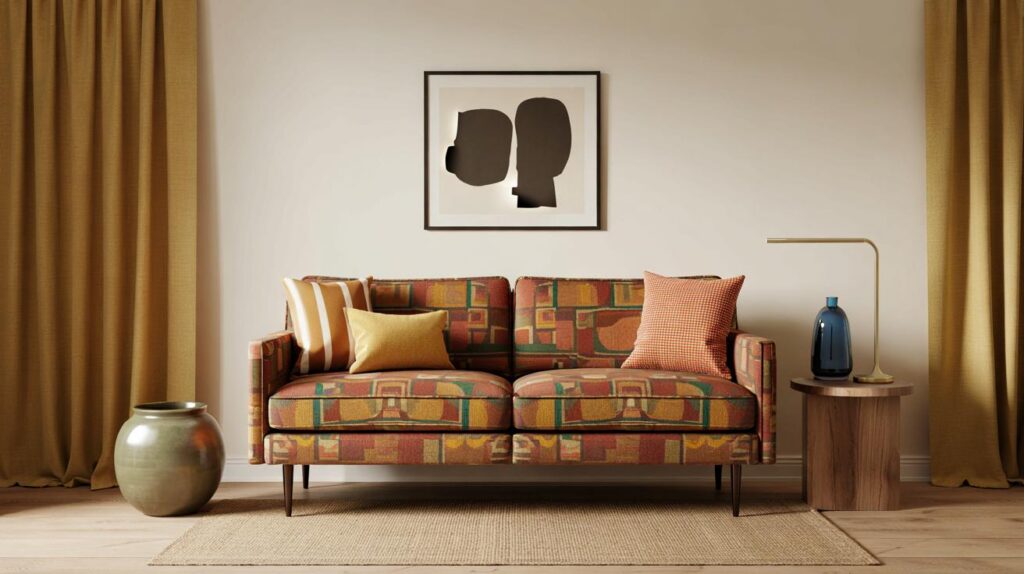
Living rooms across Britain feel restless. Colour is creeping back, patterns are louder, and the safe option now looks strangely tired.
In 2026, a familiar shape from the 1970s and 1980s is reappearing with new confidence: the patterned sofa. It borrows retro swagger, mixes in modern fabrics, and turns a single purchase into a full-room refresh.
Why patterned sofas are back
For a decade, neutrals ruled the sitting room. Then cost-conscious homeowners began asking for bolder change without full renovations. One decision stood out: choose a striking sofa that lifts everything around it. Designers reworked retro silhouettes, upholsterers revived classic repeats, and retailers expanded lines beyond plain boucle and beige chenille.
The pull is emotional and practical. Patterns carry memories of 1970s stripes, 1980s checks and botanical prints seen in family homes. They also hide the crumbs of daily life far better than a pale flat weave. A vibrant three-seater can anchor a space, turning a plain room into something characterful with a single delivery.
Patterned sofas give you maximum impact with one purchase, shifting a room’s mood without repainting or new flooring.
What’s driving the shift
- Retro forms feel fresh again: low-slung modular sections, generous roll arms, channel tufting and plinth bases suit compact British rooms.
- Social feeds favour personality over perfection, pushing stripes, gingham, jacquard florals and bold geometrics back into view.
- Households want durable fabric that shrugs off daily marks; a densely woven pattern hides wear better than most plains.
- Reupholstery and second-hand frames reduce waste, making “new old” looks affordable and greener.
How to choose a patterned sofa that lasts
Start with a plan. Decide which role the sofa plays: headline act or steady anchor. If it leads, keep walls, rug and curtains quieter. If it supports, choose a calmer pattern and let art or curtains carry the drama.
Scale, colour and balance
Scale decides calm versus chaos. A large repeat suits bigger rooms or clean-lined shapes. A small repeat works in snug terraces or flats. Pick one key colour, repeat it two or three times elsewhere, and keep the rest low-key.
- Use the 60-30-10 guide: 60% calm base, 30% complementary shade, 10% high-contrast accent.
- Mix three patterns at most: one large, one medium, one small. Vary geometry to avoid clashes.
- Stripes add order; botanicals add softness; checks add structure; animal motifs add wit in small doses.
- Choose simple sofa lines if the fabric is busy. Let the pattern do the talking.
- Check pattern repeat and “railroading” so stripes or motifs run as you expect on long cushions.
Limit the room to three patterns: one large, one medium, one small, all tied by a shared colour thread.
Fabric performance and safety
Looks matter, but your sofa lives a hard life. Ask for lab data and read the label. In the UK, domestic upholstery should meet fire safety regulations; reputable retailers and upholsterers can confirm compliance and supply certificates.
- Durability: aim for a Martindale rub count of 30,000+ for busy households.
- Lightfastness: south-facing rooms need better UV resistance to prevent fading.
- Cleanability: stain-guarded fibres or removable covers ease upkeep; test a sample with water and mild soap.
- Comfort: patterned velvets feel plush but show pile shading; flat weaves breathe better in warm rooms.
| Pattern type | Best room use | Hides stains | Typical price band |
|---|---|---|---|
| Wide stripe | Formal sitting rooms, bay windows | Moderate | £700–£1,500 |
| Botanical floral | Family rooms, cottage-style spaces | High | £600–£1,400 |
| Check or gingham | Kitchen-diner nooks, playrooms | Very high | £500–£1,200 |
| Geometric jacquard | Modern apartments, open-plan zones | Moderate | £800–£1,800 |
| Small animal motif | Statement corners, reading chairs | High | £650–£1,300 |
Styling a bold sofa in a small British home
Space is tight, so every line counts. Pick narrower arms to keep seat width generous without increasing overall length. Exposed legs create breathing room under the frame and lighten busy patterns. A plain jute or wool rug grounds braver fabrics and brings texture without noise. Keep curtains simple or match a minor colour from the sofa for quiet coherence.
Art can echo the sofa tone rather than its pattern. One large piece beats a cluster if the upholstery is already lively. Choose matte frames and simple mounts to avoid visual fuss.
Pattern mixing without visual clutter
- Echo one colour from the sofa in cushions and a throw. Repeat it three times across the room.
- Pair curves with angles: floral sofa, striped cushion; geometric sofa, painterly cushion.
- Break up intensity with natural materials—timber, linen, rattan—so the eye can rest.
When in doubt, give your eyes blank space: plain walls, simple curtains, textured but quiet rugs.
Budget, sustainability and the “new old” route
A showpiece does not have to be brand new. A sound vintage frame, reupholstered in a modern performance fabric, delivers the 1970s look for less waste and often less money. Check springs, joints and webbing; hardwood frames last longer than softwood.
- Reupholstery ballpark: £700–£2,000 for a three-seater, depending on fabric and labour.
- Fabric costs vary widely: £20–£90 per metre; many sofas need 12–18 metres.
- Ask about foam quality, feather wraps, or fibre fill; mixed cores hold shape while staying comfy.
- Select FSC-certified timber and water-based finishes where possible.
Slipcovers add flexibility. A spare set in a different print refreshes the room each season. Washable covers also calm nerves in homes with children or pets.
Risks to weigh and smart safeguards
Patterns can dominate, and taste can change. Manage risk with samples and small tests. Order swatches, pin them to existing cushions and live with them for a week. Check the fabric at midday sun and after dusk under warm bulbs. Photograph the room in black-and-white on your phone; if the sofa area becomes a solid dark block, reduce contrast or choose a finer repeat.
- South-facing rooms: consider UV blinds or deeper-toned fabrics to mask fade.
- Pets: tight weaves snag less than loose slubs or boucle.
- Cleaning: confirm care codes; steam not always suitable for viscose blends.
- Delivery: measure stairwells and doorways; modular options avoid tight turns.
A well-chosen patterned sofa hides real life, saves redecorating costs and delivers personality on day one.
Two quick home tests before you buy
Make a scale plan with painter’s tape. Mark the sofa footprint on the floor at full size and sit on dining chairs inside the outline to check circulation space. Tape a printed A4 of the pattern to a current cushion and step back 2 metres; if the motif still reads clearly and does not flicker, you have a workable scale.
Try the cushion swap. Bring a cushion in the sofa fabric into the room for 48 hours. If it lifts the space in daylight and feels calm at night, your choice will age well.
Extra notes that help with decisions
Learn the key terms. “Martindale” measures abrasion resistance. “Pattern repeat” is the distance before the motif starts again, which affects fabric quantity and visible scale. “Railroaded” means the pattern runs across the roll; helpful for long seat cushions. “Colourfastness” describes how well dye resists fading or washing.
Try a simple simulation. Sketch the room and shade areas where the sofa colour repeats: a book spine on shelves, a throw, a lampshade trim. Three echoes are enough. This low-cost trick turns a bold sofa from a risky purchase into a cohesive scheme you can live with for years.



The 60-30-10 and “three patterns max” finally make sense of my living room chaos. Bold sofa as the anchor is definately the move—now to pick a check that won’t date in 2028.
Genuine question: can a £799 sofa really hit 30,000+ Martindale, meet UK fire regs with proper certificates, and still use a decent jacquard? Or is that price only for small two-seaters?