
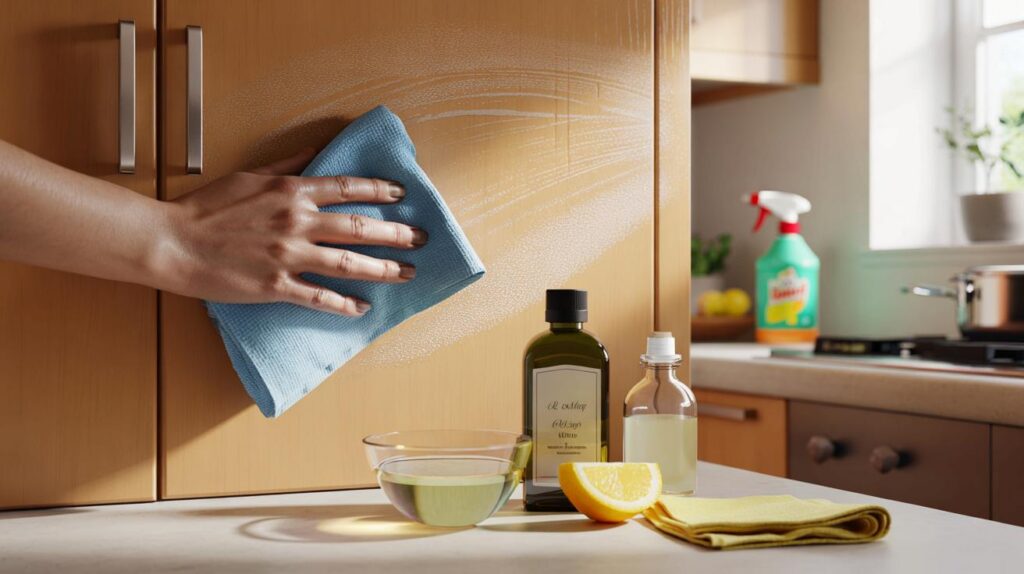
Across Britain, a humble kitchen hack is resurfacing from family notebooks to feeds, promising faster spring cleans and calmer budgets.
The method sounds almost too simple: a mix of olive oil and white vinegar, a soft cloth, five focused minutes. Yet homeowners report bright wood, fewer harsh fumes and a bill that barely dents the weekly shop.
Why this old trick is back
High-energy cooking throws tiny fat droplets across nearby doors and handles. Over weeks they bond with dust and form a sticky film. Many reach for strong degreasers. Others now reach for the cupboard itself. Rising prices and worries about indoor air push people to low‑cost, low‑odour options. A family recipe that pairs kitchen staples with microfibre cloths is gaining ground because it works quickly and leaves wood looking cared for rather than stripped.
Three common items, five minutes, one patch test: that is the promise driving this back-to-basics clean.
What you need
- Extra-virgin olive oil: 3 tablespoons (about 45 ml)
- White vinegar: 1 tablespoon (about 15 ml)
- Fresh lemon juice: 1 teaspoon (about 5 ml), optional for scent
- Two clean microfibre cloths
- One small glass bowl for mixing
On a tight budget, sunflower oil does the job for cleaning. Olive oil nourishes bare or oiled wood slightly better, so keep it if your doors are solid timber and unsealed.
How it works
Grease dissolves best in substances that behave like it. Oil loosens old cooking fat and lifts it from the surface. The vinegar brings a mild acid that helps cut odours and breaks the bond between grime and dust. Microfibre adds thousands of split fibres that grab loosened particles, so you remove rather than spread the mess. You finish with a dry buff to remove residue and leave a soft sheen.
Oil lifts, vinegar loosens, microfibre traps. The trio turns a smeary wipe into a clean, streak‑free finish.
Step-by-step in 5 minutes
Test first
Choose a hidden corner inside a door. Apply a dot of the mix. Wait five minutes. Wipe dry. If the finish stays even and the colour holds, proceed. If you see dulling, stickiness or whitening, stop and switch to a neutral pH cleaner.
Mix and clean
Work one or two doors at a time. That keeps the timing tight and avoids smears. Open a window if the vinegar scent lingers.
Where it shines, where it does not
- Best on: sealed wood with a satin finish, oiled wood, painted timber, metal handles.
- Use caution on: matte paint, aged shellac, very dry antique timber. Test longer and dilute the mix with more oil.
- Avoid on: high‑gloss lacquer, melamine that shows stress whitening, natural stone such as marble or limestone, unsealed butcher block directly used for food.
Never pair vinegar with bleach or strong alkalis. Mixing creates hazardous gases. Keep methods separate and rinse cloths well.
Time and money: the quick maths
| Option | Typical cost per clean | Time to result | Smell and residues | Surface care |
|---|---|---|---|---|
| Oil + vinegar mix | £0.40–£0.90 (based on 45 ml oil, 15 ml vinegar, UK supermarket prices) | 5 minutes for two doors | Mild vinegar note that fades; low residue after buffing | Gentle on oiled wood when buffed dry |
| Branded degreaser spray | £0.60–£1.20 (per comparable area, mid‑range products) | 4–6 minutes, may need second pass | Fragrance varies; may leave film if not rinsed | Can strip oils from dry timber with frequent use |
Prices vary by brand and region. The home mix uses ingredients many already own, which cuts the marginal cost close to zero.
A cleaner kitchen with fewer chemicals
Regular use once a month prevents the sticky build‑up that causes heavy scrubbing. After a curry night or a full roast, a quick wipe on nearby doors can stop fresh aerosols from setting hard. Keep separate cloths for kitchen doors and worktops to avoid cross‑contamination. Store the mix only for the session; fresh batches perform best and reduce the risk of rancid oil.
Small upgrades that make a big difference
- Add one drop of lavender or lemon essential oil for a softer scent. Use one drop per bowl to avoid streaks.
- Warm the vinegar to room temperature before mixing on cold days. The blend spreads more evenly.
- Swap to a denser microfibre for heavy build‑up. The higher the gsm, the more debris it traps.
- Use a soft toothbrush around hinges and handle bases. Work the mix in, then wipe and dry.
Set a timer for five minutes per section. Short, focused sessions beat marathon cleans and keep grease from winning.
What to do if things go wrong
If a surface looks cloudy, stop. Wipe with a barely damp cloth and dry thoroughly. For unexpected streaks, buff with a clean microfibre and no product. If you suspect a reaction with a delicate finish, consult the manufacturer’s care guide or a local finisher before further cleaning. Do not try to fix damage by adding more oil; that can deepen uneven patches.
Where else the method helps
The same mix loosens adhesive residue on glass jars and metal labels. Apply, wait three minutes, scrape gently with a plastic card, then wash with warm soapy water. On stainless‑steel splashbacks, use more vinegar and less oil to reduce smears, always buffing along the grain. Avoid exposed stone and natural slate; acids etch them over time.
The science behind the shine
Kitchen grease is a mix of triglycerides, oxidised oils and airborne particles. Heat polymerises some of the oil, turning it gummy. Non‑polar components respond to non‑polar solvents such as vegetable oil. Mild acetic acid helps release ionic grime and reduces odours. Mechanical action from microfibre does the heavy lifting by increasing contact points and drag. You get a clean finish because each part handles a different part of the mess.
Practical add‑ons for a lasting result
Fit a good carbon filter and run the extractor on high during frying. Wipe handles weekly with a damp cloth and a drop of mild washing‑up liquid to break fresh skin oils. Once a quarter, condition oiled timber lightly with a furniture oil designed for food‑adjacent areas. That reduces dryness and makes future cleans faster.
A quick checklist you can stick on the inside door
- Mix 3:1 oil to vinegar, fresh each time.
- Patch test for five minutes in a hidden spot.
- Wipe, wait up to five minutes on heavy spots, then buff dry.
- Keep away from bleach and stone surfaces.
- Repeat monthly, or after heavy cooking sessions.



Just did the patch test and two sticky doors—gone in under 5 mins. Buffed with a dry microfibre and they look cared for, not stripped. Cost me pennies vs my £14.99 spray. Vinegar whiff faded quick. Definitley keeping this in the cleaning rota 🙂