
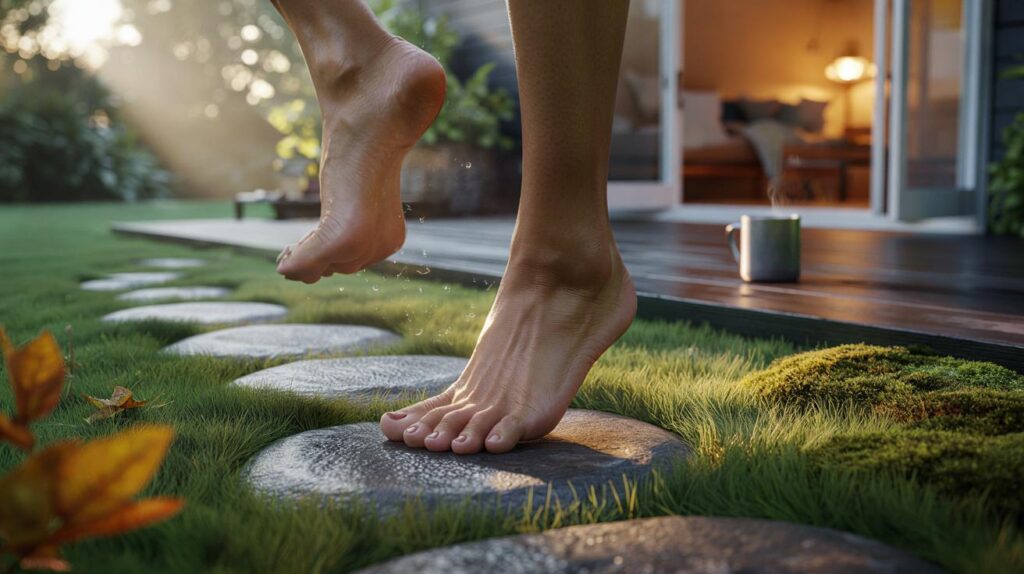
Crunching leaves under naked feet is trending this autumn, but the reasons people are trying it stretch beyond novelty and nostalgia.
Across parks, gardens and even living rooms, a growing crowd is slipping off shoes for a short daily ritual. They talk about calmer minds, stronger feet and deeper sleep. Behind the buzz sits a simple prescription: 600 seconds, on safe ground, with attention on every step.
Why barefoot steps are back this autumn
Short barefoot sessions have moved from summer whim to all-season habit. People cite screens, stress and sedentary days as triggers. They want something practical that fits a crowded diary. Ten minutes in the morning, or after work, feels doable. It costs nothing. It asks for no special kit. It works indoors on a clean floor, or outside on grass when conditions allow.
The trend also taps a deeper need. Feet are packed with sensory receptors. When they meet varied textures—moss, bark, stone, tiles—the nervous system gets rich feedback. Balance improves with practice. Gait can brighten. Posture often follows.
Ten minutes barefoot on safe surfaces offers a quick reset for body and mind, without apps or equipment.
What science says, and what it does not
Advocates of “grounding” or “earthing” argue that direct contact with the earth allows electron flow that may offset oxidative stress. The idea is appealing. Evidence, for now, remains limited and contested. Some small studies report shifts in biomarkers; others find no clear effect beyond relaxation and movement.
What stands on firmer ground is the mechanics. Barefoot time can strengthen intrinsic foot muscles. It can sharpen proprioception. Slow, attentive walking can calm a jumpy nervous system by turning down cognitive noise—much like paced breathing or a brief body scan.
There is no consensus that electrons from soil neutralise free radicals in humans; the behavioural benefits of slow, focused movement are far better supported.
Real-world gains you can measure
People who stick with 10-minute sessions for a few weeks often report noticeable shifts. You can track changes without lab tests.
- Sleep: note how long you take to drift off and how often you wake.
- Mood: rate tension, clarity and energy once a day on a simple 1–10 scale.
- Balance: time how long you can stand on one leg, eyes open, without wobbling.
- Feet: check for less stiffness on waking and improved toe spread by week three.
- Gait: film a short walk each week and watch for longer, smoother strides.
How to start in 10 minutes
Set a timer for 600 seconds. Keep it gentle. Pay attention to contact, pressure and breath. Build variety through the week.
- Minute 0–2: stand tall, soften knees, feel weight shift from heel to forefoot.
- Minute 2–6: walk slowly, roll through the big toe, relax shoulders, lengthen exhale.
- Minute 6–8: change surface if available; shorten steps and keep eyes up.
- Minute 8–10: pause, stretch calves, spread toes, put shoes back on if heading out.
Safety first
- Scan the ground. Remove sharp objects. Avoid glass, thorns and litter.
- Cold checks: if the surface is wet and near freezing, keep sessions short and warm up afterwards.
- Hygiene: wash and dry feet, especially between toes; keep nails trimmed.
- Tetanus vaccination should be up to date if you plan outdoor sessions.
- If you have diabetes, neuropathy, poor circulation, or foot wounds, speak to a clinician before going barefoot outdoors.
Best and worst surfaces at a glance
| Surface | Sensation | Upside | Caution |
|---|---|---|---|
| Short, damp grass | Cool, springy | Gentle feedback, low impact | Hidden debris; check for animal waste |
| Wooden deck | Warm, even | Convenient at home | Splinters; inspect planks |
| Indoor tiles | Firm, smooth | Year-round, predictable | Slippery when wet |
| Fine sand | Soft, shifting | Strengthens toes and arches | Calf overload if overdone |
| Pavement | Hard, abrasive | Strong stimulus for short bouts | High impact; watch heat, grit and glass |
What changes when you go barefoot more often
Footwear narrows toes and dampens sensation. Brief barefoot time can reverse some of that. The big toe starts to drive the final push of each step. The arch works like a spring again. Knees and hips often track better as the foot lands under the centre of mass.
For people who sit long hours, these changes matter. Better foot function supports the chain above it. Many report steadier mood by pairing slow steps with longer exhales. Others notice their shoulders drop within minutes as the jaw unclenches.
Seven benefits people commonly report
- Less foot stiffness on waking after two to three weeks.
- Calmer headspace within minutes, helped by slower breathing.
- Improved balance on uneven ground.
- More natural stride length and cadence.
- Milder lower-back niggles as gait smooths out.
- Stronger toe control, visible in wider toe splay.
- A quicker wind-down in the hour before bed.
Who should take extra care
Anyone with loss of foot sensation, open wounds, or circulation issues needs a tailored plan. Start indoors. Use clean, warm surfaces. Keep sessions brief and supervised at first. Children enjoy sensory play, yet still need ground checks and limits to avoid splinters and cuts. Runners should reduce mileage slightly when adding barefoot time; calves and Achilles need space to adapt.
A one-week taster plan
- Day 1: 10 minutes on indoor tiles, slow pace, focus on exhale length.
- Day 2: 10 minutes on short grass, add three calf stretches afterwards.
- Day 3: Rest day for feet; do seated toe spreads and towel scrunches.
- Day 4: 10 minutes on wood, add one-leg balance for 30 seconds each side.
- Day 5: 12 minutes on grass or sand if available, shorter steps, softer knees.
- Day 6: Indoors again, eyes up, imagine “quiet feet” landing under hips.
- Day 7: Choose your favourite surface; write a short note on mood and sleep.
Beyond walking: simple add-ons for a calmer day
Pair your 600 seconds with a micro-practice. Hold a warm mug afterwards to bring feeling back when it is cold. Try 4-6 breathing during the walk: inhale for four counts, exhale for six. Add two minutes of toe yoga—spread, lift, and press each toe in turn—to cement strength gains.
If you enjoy numbers, run a small personal trial. Track a week with shoes on at all times, then a week with daily barefoot sessions. Compare sleep onset, morning stiffness and balance time. The difference, even if modest, can guide whether you extend the habit to 15 minutes or keep it at 10.



I gave the 600-second routine a try this week—tiles on Day 1, grass on Day 2—and I’m shocked how much less morning stiffness I felt by Day 4. The toe splay tip was wierdly helpful. Cheap, simple, actually doable. Definitley keeping this in my after-work wind‑down.