
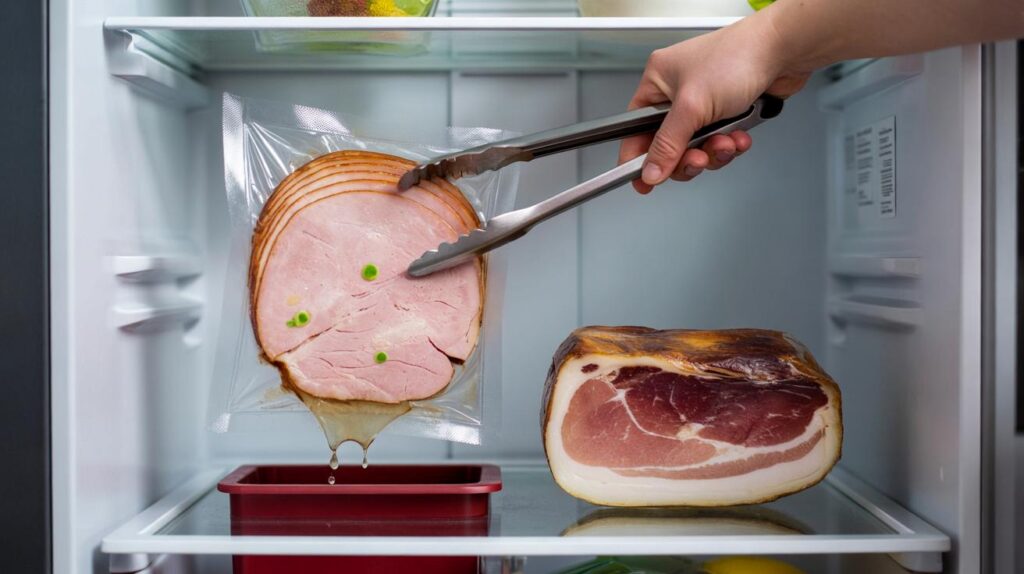
You’re hungry, the fridge door hisses, and that pink pack smiles back. The date slipped by yesterday. What now.
Across Britain, millions face the same pause at the fridge: safety versus waste. With ham, that decision carries real stakes, and the label on the pack changes everything. Here’s how to read it, what your senses should pick up, and when to bin it without a second thought.
Use-by versus best-before: why the label changes the rules
Not all dates speak the same language. A Use by date signals safety. Eat it in time or throw it away. A Best before date points to quality. Past it, flavour or texture may dip, but the food can still be safe if it looks and smells normal.
Cooked, sliced ham (the classic pink “ham” for sandwiches) almost always carries a Use by date. It sits wet, with little salt barrier, so bacteria can take hold fast. Cured or smoked ham (parma-style, serrano, prosciutto, or smoked slices) often uses Best before, because salt and drying slow bacterial growth.
Use by means risk. Best before means quality. That single phrase decides how strict you must be.
Cooked ham with a use-by date: do not risk it
If the cooked ham is past its Use by date, don’t eat it. The margin is tiny. Even a short delay can allow harmful bacteria to multiply. Infants, older adults, pregnant people, and anyone immunocompromised face higher stakes.
Check these red flags. One strike is enough to bin the pack:
- Pack feels swollen or tight with gas
- Sour or vinegary odour on opening
- Surface feels sticky or slimy
- Colour shifts from pink to dull grey
- Edges look parched or crusted
- White or green specks that resemble mould
Symptoms that suggest a problem include diarrhoea, vomiting, stomach cramps and fever. Don’t “test a bite.” The price of a sandwich is not worth a night of regret.
Cooked ham past its Use by date? No half measures. Bin it, even if the pack looks tempting.
Cured or smoked ham with a best-before: a narrower window
Cured or smoked ham holds up better. Salt and drying push back bacteria, so a short delay beyond Best before can be acceptable for some households. The window is only a few days, and only if the ham looks, smells and feels right.
If you notice a puffed pack, sour odour, tacky surface or any spots, throw it away, even if the date hasn’t passed. Pregnant people, very young children, older adults and those with weakened immunity should avoid any charcuterie that’s out of date, Use by or Best before.
What the label and the ham itself are telling you
| Ham type | Date on pack | After the date | What you should do |
|---|---|---|---|
| Cooked sliced ham | Use by | Zero tolerance | Do not eat once the date has passed |
| Cured ham (parma, serrano, prosciutto) | Best before | Very short leeway | Assess look, smell, texture; if unsure, discard |
| Smoked ham | Best before | Very short leeway | Same checks; vulnerable groups should avoid if out of date |
Pack condition first, senses second, date third. One warning sign trumps everything else.
Storage that buys you time and peace of mind
Good habits keep risk down and flavour up. Set the fridge between 0°C and 5°C. Store ham on the coldest shelf, away from raw meat. Keep it sealed. Once opened, press out the air and rewrap tightly or move to a clean lidded container.
- Cooked sliced ham: eat within 2 days of opening
- Cured or smoked ham: aim for 3–5 days once opened
- Never leave ham at room temperature for more than 1 hour
- Use clean tongs or freshly washed hands for every touch
Smell test alone isn’t enough. Some dangerous bacteria don’t always shout with strong odours. Use the combination of date, pack condition and texture.
Near the date and worried about waste: smart ways to use it safely
If the ham is still in date and passes the look–smell–feel test, cook it hot the day you open it. Heat reduces risk and salvages value. Stir it into a bubbling pasta bake, fold it into an omelette that steams, or add it to a soup that simmers.
Reheat until piping hot throughout, roughly 74°C at the centre. Steam should rise visibly.
Don’t try to “rescue” out‑of‑date cooked ham with heat. If toxins formed, heat won’t always solve the problem. Save the kitchen heroics for food that remains within date and shows no warning signs.
Freezing, defrosting and small print that saves money
You can freeze ham before the date. Freeze it flat in portions, label the bag, and use within 1–2 months for cooked ham and up to 3 months for cured slices. Defrost in the fridge, never on the worktop. Eat within 24 hours of thawing and don’t refreeze.
Check the pack for “freeze by” guidance. Some producers advise freezing on the day of purchase. If the pack says “previously frozen,” don’t freeze it again.
When to trust your senses, and when to walk away
Your senses work best as a team. Fresh ham smells clean and slightly savoury. The surface should feel moist, not sticky. Colour should look even and pink for cooked ham, or deep rosy for cured slices. Any gas build‑up, sourness, slime, grey patches or specks means no.
When in doubt, bin it. The cost of guessing wrong dwarfs the price of a replacement pack.
Extra pointers that broaden your safety net
Prevent cross‑contamination
Use a separate board and knife for ready‑to‑eat ham. Wash utensils in hot soapy water. Dry them before the next use. Keep raw and ready‑to‑eat foods apart in the fridge.
Read beyond the date
Labels hide useful cues: storage temperature, days to use after opening, and whether the pack is gas‑flushed. Respect those details. A resealable pack helps. If not, rewrap tightly to block air.
Turn near‑date food into planned meals
Plan a “use‑first” shelf. Put the oldest items front and centre. Build fast meals around them: toasted sandwiches, jacket potatoes with diced ham, or a quick fried rice. You cut waste, you eat well, and you keep risk low.



Brilliant breakdown of Use by vs Best before—finally makes sense. This might actually save my family and £20 of shopping from a bad ham-day. Thanks!