
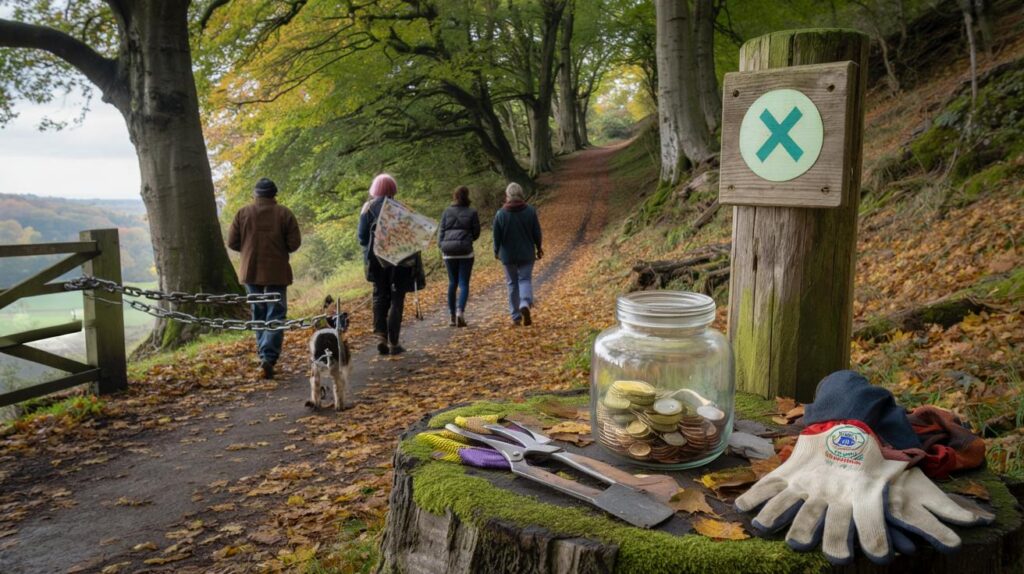
On a steep bank above Ross-on-Wye, a much-loved woodland faces a turning point. Neighbours are rallying. Money, as usual, complicates everything.
The debate around Merrivale Wood touches nerves that run deeper than a property listing. It tests how a small community, a conservation charity and prospective buyers weigh access, biodiversity and tight budgets.
What is being sold and why
Herefordshire Wildlife Trust plans to sell Merrivale Wood, a 4.5-hectare site on the edge of Ross-on-Wye. The charity manages nearly 60 sites in the county. It says smaller reserves now absorb too much staff time and money, drawing focus away from larger landscapes where it believes it can deliver more for nature recovery.
Routine work adds up. Path repairs, tree safety near public routes, fencing, signs, ecological surveys and invasive species control all demand cash. Ash dieback, which weakens trees and creates hazards, has pushed costs higher for landowners across England.
Merrivale Wood is small, ancient and cherished. The trust argues that scarce funds will do more for wildlife if concentrated on bigger sites.
The sale is being handled by Sutherlands. The site is set to be delisted as a local nature reserve. Public access would then default to the existing right of way, rather than permissive paths through the wider wood. The trust says it wants a buyer who will look after the land for nature, but it cannot set binding conditions beyond what the law already requires unless a legal agreement forms part of the sale.
A race against the calendar
Local residents Jess and Jody Shaw have launched a campaign to keep the wood open for community use. They aim to raise £90,000 by 30 October. Their crowdfunder has already gathered just over £1,100. They know the deadline is tight, yet they argue that public support could still shape the outcome, even if a full purchase proves out of reach this week.
Community organisers want to show the trust and any buyer that access, stewardship and local pride can sit alongside private ownership.
- Target: £90,000 to secure the site
- Current total: just over £1,100 raised
- Deadline stated: 30 October
- Campaign aim: maintain broad public access and community-led care
Who gets to walk there if it sells
Two designations matter. First, the local nature reserve status, which the agent says will be removed. That status reflects a partnership with the local authority and encourages access and education. Losing it narrows public expectations but does not erase wildlife protections. Second, the wood is identified as ancient woodland, meaning it has been continuously wooded for centuries. That carries strong weight in planning decisions.
If a private buyer takes over, the public still retains the right to use the official footpath. Use of any other trail would be at the owner’s discretion. Signs, waymarking and path surfacing could change. Dogs might face restrictions, especially in nesting season.
| Key fact | Detail |
|---|---|
| Location | Edge of Ross-on-Wye, Herefordshire |
| Area | 4.5 hectares |
| Status | Ancient woodland; local nature reserve status to be removed |
| Access | Public footpath remains; wider access depends on new owner |
| Community target | £90,000 by 30 October |
What community ownership could look like
Supporters talk about a community purchase, perhaps through a community benefit society or a charity set up for the wood. That model can blend small grants with local donations, volunteer time and small revenue streams such as guided walks or gentle coppicing where appropriate. A formal woodland management plan would help attract grants and set out long-term goals for wildlife, access and safety.
Another avenue is an Asset of Community Value (ACV) listing with the local council. If granted, an ACV can trigger a moratorium when the owner decides to sell, giving community groups time to prepare a bid. It does not force a sale to the community, but it buys breathing space.
An Asset of Community Value listing can pause a sale for up to six months if a community group steps forward with intent to bid.
Where money could come from
- Local giving: match-funding from businesses, service clubs and parish councils.
- Small grants: schemes that support access improvements, biodiversity surveys and volunteer training.
- Woodland management grants: options under countryside schemes can fund rides, glades, fencing and invasive control.
- In-kind support: skilled volunteering for tree safety checks, path work and habitat mapping.
What protections remain after a sale
Sale does not strip away legal safeguards for the habitat. Ancient woodland carries strong protection in planning policy. Proposals that damage it face a high bar. Tree felling usually needs a licence unless it falls within specific exemptions. Many species are protected by law, which controls activities during nesting or breeding seasons. Badger setts, bat roosts and veteran trees would still require careful management.
- Planning tests for development in ancient woodland remain stringent.
- Felling licences and tree safety duties apply whoever owns the land.
- Wildlife legislation continues to protect habitats and species.
Why small reserves feel the squeeze
Conservation charities face rising bills. Insurance grows as storms and disease increase risks. Contractors charge more for specialist tree work. Compliance takes time. Volunteers still matter, but they need training and supervision. Larger sites can spread these costs across more hectares and deliver landscape-scale projects that attract bigger grants.
Per hectare, a tiny wood with public paths can cost more to run than a flagship reserve with economies of scale.
That calculation does not soften the emotional hit for people who learned to identify birdsong under Merrivale’s canopy or took daily dog walks there. The friction sits between an accountant’s spreadsheet and a child pressing a fallen leaf into a notebook. Both matter. The question is who pays, and how.
Practical next steps for residents
- Ask the seller and agent about access intentions, covenants and willingness to consider conservation buyers.
- Seek advice on ACV listing from the local council and form a constituted group if you plan to bid.
- Draft a simple, costed management plan that covers tree safety, path maintenance and habitat goals for five years.
- Secure letters of support from schools, health groups and businesses to evidence community benefit.
- Prepare for blended finance: donations now, grants later, and measurable outcomes for nature and wellbeing.
Key risks and possible gains
Risk sits in the loss of permissive access if a private owner fences off paths or reduces maintenance. Another risk is ecological neglect if the new owner underestimates the work needed to tackle disease or invasives. There is also risk to the charity’s reputation if locals feel excluded from decisions. On the positive side, a committed buyer could invest in sensitive management, and the trust could reallocate funds to larger sites where habitat restoration scales up.
For anyone who cares about woods like Merrivale, two ideas help. First, ancient status does real work; it raises the threshold for harmful change. Second, community models can turn sentiment into stewardship. A clear plan, honest budgets and a patient approach to fundraising create options that a seven‑day dash cannot. If £90,000 proves out of reach this week, a structured bid later—backed by a management plan and a trained volunteer base—can still shape the future of these trees and the paths beneath them.



Community ownership could work if there’s a simple 5-year management plan, trained volunteers for tree safety, and blended finance (donations now, grants later). Have you applied for an ACV to trigger the moratorium and buy time? Even if £90k in a week is a stretch, a structured bid with letters from schools and health groups could definately help. Show a clear budget for path repairs, ash dieback work, and surveys—transparency will pull more locals in.
HWT managing 60 sites yet selling a small, ancient, much-used wood feels off. Isn’t the per-hectare argument just accounting that ignores community value? Publish the actual maintenance costs vs. benefits, not just “too much staff time”.