
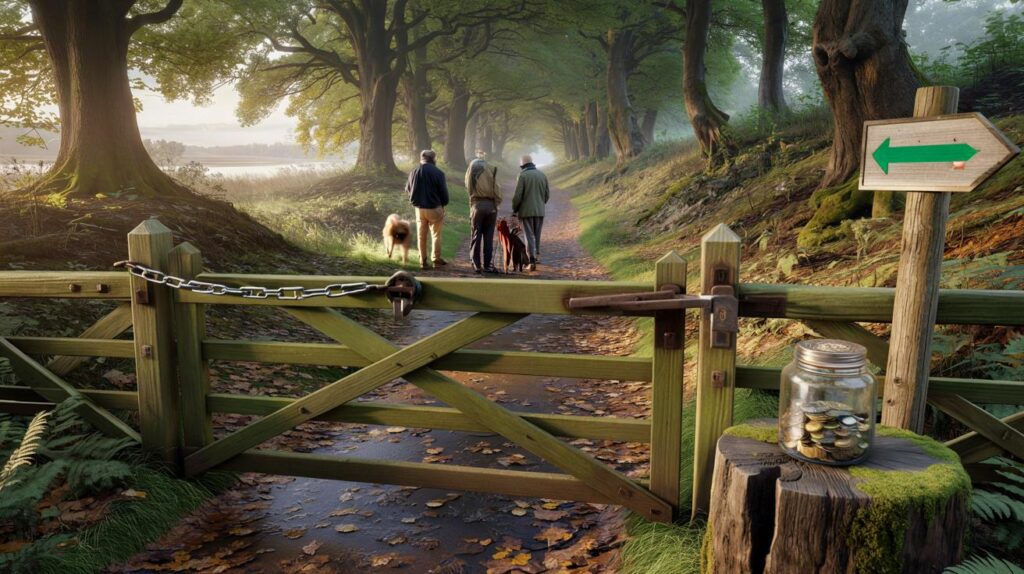
A much-loved wood near Ross-on-Wye enters a decisive week, as budgets, public access and community ambition pull in different directions.
Herefordshire Wildlife Trust plans to sell the 4.5-hectare Merrivale Wood to concentrate limited funds on larger nature reserves. The move has triggered a grassroots bid by local residents to raise £90,000 and keep the gates open for everyday walkers. The trust manages nearly 60 sites across the county and says small reserves like this one have grown costly to maintain.
Why the trust says it must sell
The charity has been reviewing its landholdings to direct money where it believes it can deliver the greatest ecological gains. That means prioritising bigger, better-connected reserves where staff and volunteers can focus on habitat restoration at scale. By contrast, small, popular blocks of woodland come with daily bills: path upkeep, tree safety checks, litter removal and invasive species control.
Trust managers say the sale will allow resources to follow their nature recovery plan, rather than being spread thinly across many small parcels. Merrivale Wood sits just outside Ross-on-Wye and is widely used for short walks. Keeping such places open brings community benefits, but it also brings routine costs and legal liabilities that add up quickly for a charity.
Limited resources, nearly 60 sites, and a 4.5-hectare wood: the trust argues money must chase the biggest nature gains.
What the sale could mean for access
The site is described locally as ancient woodland, a term used for areas that have been continually wooded since at least 1600. It currently operates as a local nature reserve. The estate agent handling the sale says that designation would be removed on completion, leaving public access restricted to the existing right of way through the site. In practice, that could mean footpaths you use today may no longer be available for casual wandering or dog walking off the marked route.
Campaigners fear that a private owner might decide to limit entry for safety, privacy or land management reasons. A local councillor backing the community effort has called for a deal that keeps the wood in common use, arguing that closing informal paths would hit families and older residents who rely on short, safe routes close to home.
Without a community agreement, only the legal public footpath would be guaranteed for future access.
The community bid: people, pounds and a ticking clock
Residents Jess and Jody Shaw have launched a crowdfunding appeal aiming to buy the wood for community use. They face a tight deadline of 30 October and a steep target of £90,000. Early donations top roughly £1,100, and supporters say the immediate goal is to show the seller that a credible coalition exists, even if the full price cannot be assembled in a week.
The £90,000 target and what’s on the table
The trust says it wants a buyer who will care for the wood as a nature reserve. A community purchase would tick that box. The board has invited a formal proposal and will assess it alongside private bids. Any offer needs not just cash to buy the land but also a plan to run it: governance, insurance, regular maintenance and a fund for emergencies such as storm damage.
- Pledge funds now, with a clear route for refunds if the bid falls short.
- Form a community benefit society to hold the title and manage volunteers.
- Ask the town and parish councils to consider seed funding.
- Seek philanthropic gifts from local businesses and residents.
- Approach woodland charities about match-funding or advisory support.
- Discuss with the county council whether an Asset of Community Value listing is appropriate.
Who else might step in
Private buyers sometimes commit to permissive paths and wildlife-friendly management, especially when local sentiment is strong. Some landowners also seek nature-based solutions projects, from habitat restoration to carbon and biodiversity initiatives, which can sit alongside public access. The shape of any promise would need careful drafting so future owners understand what is expected and what costs follow.
What makes Merrivale Wood special
Ancient woodland carries layered habitats formed over centuries. Veteran trees, deadwood, coppice stools and spring ground flora create niches for fungi, insects and birds. While the wood is compact at 4.5 hectares, its proximity to the town gives it daily value well beyond its acreage: a green loop for school runs, a calm route for those with limited mobility, a free outdoor classroom for local groups.
Agents describe it as hugely popular and a potential “special visitor attraction.” That phrase often implies gentle improvements—clearer paths, habitat interpretation, benches and safe access points—rather than large-scale infrastructure. Such tweaks can improve both biodiversity awareness and visitor care, but they also require steady, predictable funding.
| Area | 4.5 hectares |
|---|---|
| Location | Just outside Ross-on-Wye, Herefordshire |
| Status | Locally run as a nature reserve; sale would remove that local designation |
| Trust portfolio | Nearly 60 sites across the county |
| Guide price | £90,000 target for community purchase |
| Raised so far | Just over £1,100 (campaign figures) |
| Deadline | 30 October for a credible proposal |
Wider picture: small reserves under pressure
Charities across the UK face rising costs for tree risk surveys, ash dieback management, insurance and volunteer support. Many are pivoting to landscape-scale projects where connecting rivers, meadows and woodlands can restore species and absorb climate shocks. That strategy does not sit easily with the public’s fondness for small, well-used pockets of green near homes. The tension is real: scale delivers ecological punch, but neighbourhood spaces knit people to nature.
Selling to fund bigger, connected habitats can make ecological sense, yet it tests the public’s faith in conservation charities.
Policy shifts add complexity. Biodiversity net gain funding and new agri-environment schemes can channel money into habitat creation, often favouring larger land parcels. Meanwhile, communities look to protect close-at-hand spaces where children learn to name trees and birds. Between those poles sit woods like Merrivale: modest in size, rich in heritage, and used by hundreds every week.
What happens next
In the coming days, community representatives are preparing a proposal. The trust’s board will weigh it alongside private interest. If a private sale completes, the local nature reserve badge would be removed, though the public footpath would remain a legal right of way. A sympathetic owner could maintain broader access; a cautious one might keep visitors strictly to the marked route.
For residents weighing a bid, a simple running plan helps. List the recurring jobs—path cutting, signage, tree safety, rubbish clearance, invasive plant control—and assign roles and budgets. Build a modest contingency for storms and disease. Consider volunteer training and safeguarding. Small woods can run on goodwill, but they work best when goodwill is organised.
Ancient woodland brings both rewards and responsibilities. Sensitive coppicing can boost biodiversity. Leaving deadwood supports insects and birds. Dogs on leads in nesting season protect ground flora. Seasonal path diversions reduce compaction. These are low-cost measures that maintain the wood’s character while keeping it welcoming and safe.



If the trust wants scale, fine, but don’t punish walkers. Could we secure a permissive path agreement as a condition of sale? Otherwise, access shrinks to a single right of way and families lose their loop.
£90k in a week is a fantasy, no? Might be better to form the community benefit society first, get councils to pledge seed funding, then negotiate an option rather than a rushed purchase.