
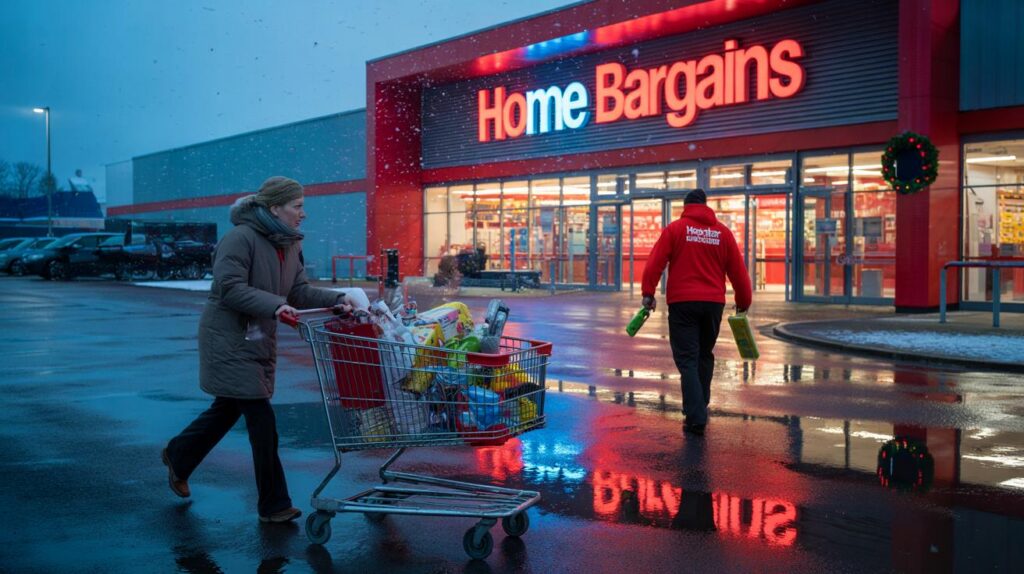
Christmas shopping plans now face a curveball as a household-name discounter reshapes its end-of-year opening hours nationwide for millions of customers.
Home Bargains will pause trading on three key dates over the festive period, with an earlier finish on Christmas Eve. The move, agreed at the company’s annual conference, aims to give staff meaningful time off at the height of the season.
What’s changing and when
The bargain chain will stop trading on Christmas Day, Boxing Day and New Year’s Day across every store in the United Kingdom. Doors will also close at 5pm on Christmas Eve to let teams head home earlier.
All Home Bargains shops will be shut on 25 December, 26 December and 1 January, with a 5pm close on 24 December.
- Christmas Eve: stores close at 5pm
- Christmas Day: closed
- Boxing Day: closed
- New Year’s Day: closed
| Date | Trading status | Key detail |
|---|---|---|
| 24 December | Open until 5pm | Early finish for Christmas Eve |
| 25 December | Closed | Christmas Day non-trading day |
| 26 December | Closed | Boxing Day non-trading day |
| 1 January | Closed | New Year’s Day non-trading day |
Why the chain is taking a breather
Leaders at Home Bargains say colleagues have grafted all year and deserve extra rest with friends and family. The company, still family-run, has leaned into its roots by ringfencing downtime rather than chasing a rush of Boxing Day footfall. The message is clear: people before receipts.
Retail work peaks in December. Long shifts, deliveries at odd hours and intense customer traffic push teams hard. By shutting for three dates and trimming hours on 24 December, the chain removes pressure points that typically stretch staff to the limit.
“Time off” sits at the heart of the decision, reflecting a family-business mindset rather than a short-term sales play.
What this means for your festive planning
Shoppers who rely on Home Bargains for budget-friendly gifts, toys, decorations and household basics will need to shift their timetable. Plan your final pre-Christmas shop for earlier in the week, and expect a brisker pace late on 24 December as tills stop at 5pm.
Five practical steps to stay ahead
- Build a list now for non-perishables and grab them in early December to avoid bottlenecks.
- Buy perishables with clear dates and store them properly; check shelf life to minimise waste.
- Factor in returns. Keep digital or paper receipts together; photograph them as a backup.
- Allow extra time for toy and gift restocks, which can tighten in mid-December.
- Check alternative nearby stores for any must-haves you cannot shift to another day.
Many families top up on batteries, gift wrap, tape, toiletries and cleaning products in the final 48 hours before Christmas. Move those into the week leading up to Christmas Eve. If you usually shop on Boxing Day, consider switching your household restock to the 27th instead.
How staff stand to gain
Three non-trading days grant 28,500 colleagues a chance to decompress. Retailers face rising retention challenges, especially in frontline roles. A predictable break can improve morale, reduce burnout and help teams return sharper for January. Families benefit too, as shifts often clash with key moments over the holidays.
The scale of the pause
Home Bargains operates more than 600 stores and calls itself the UK’s largest independent grocer. A full shutdown across the estate signals a company-wide stance rather than a patchwork of local decisions. Closing early on Christmas Eve adds a uniform cut-off that managers and customers can plan around.
About Home Bargains
The retailer traces its story to 1976, when Tom Morris opened the first shop in Liverpool under the name Home and Bargain. It later expanded nationally as Home Bargains, selling low-cost homeware, food, beauty products and toys. The parent company, TJ Morris Ltd, is based in Liverpool and remains under family control.
The mix of branded goods and value pricing built a loyal following. The chain often undercuts supermarket prices on everyday items, which draws large footfall in the run-up to Christmas. That popularity explains why a three-day pause matters to households planning on a tight budget.
What you can do now
Check cupboards and gift lists this week. Bring forward top-ups for cleaning supplies, toiletries, batteries and wrapping. Spread purchases across two lighter trips rather than one last-minute dash. If you plan to buy bulky goods or toys, measure car boot space and note store closing time to avoid a stressful return visit.
Think about timing around family events. If you host on Christmas Eve, aim to finish your Home Bargains run before midday to allow for queues and a calm drive home. For post-Christmas needs usually picked up on Boxing Day—storage boxes, reduced decorations, spare glassware—shift to 27 December and consider reserving space at home now.
Broader context for shoppers
Festive trading calendars change year to year, and more retailers now prioritise guaranteed rest for staff over one extra day of sales. That trend helps teams and offers customers clarity. For you, the takeaway is simple: earlier planning cuts stress, saves petrol, and reduces impulse buys caused by last-minute panic.
If you want to stretch your budget, price-check staples across two retailers in early December, then return for a single targeted sweep at Home Bargains before the early close on 24 December. This approach trims duplicate trips, protects your fuel spend and ensures you land the items that tend to sell out fastest.



Honestly, good on Home Bargains for giving staff three proper days off. Retail at Christmas is brutal, and a 5pm close on Christmas Eve is a humane call. I’ll just plan earlier and stop panic-buying on the 24th—probably better for my wallet too tbh. People > receipts, definitley.