
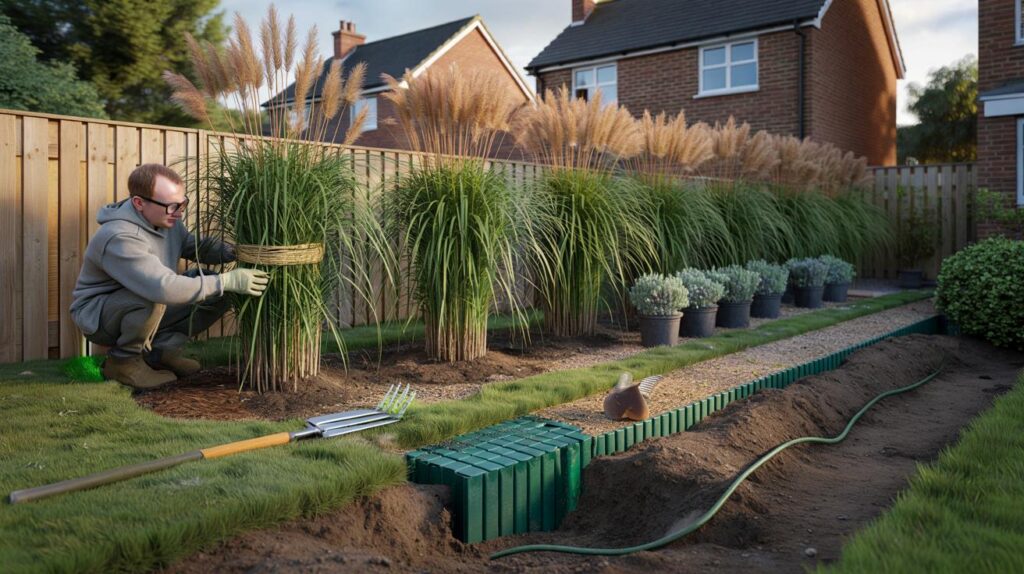
A towering Asian grass is reshaping small British plots into living screens, stirring hope, curiosity and a flicker of doubt.
As autumn fades and planting plans take shape, one question keeps cropping up in garden centres and on forums: should you use miscanthus as a hedge? Its drama and speed tempt many, yet its size and spread make even seasoned gardeners pause.
Why miscanthus tempts gardeners
Miscanthus brings movement, privacy and drama. Narrow leaves sway in the wind. Plumes catch low sun from September to November. The clumps reach 2–3 metres, creating a soft screen that filters wind and breaks sightlines without feeling heavy.
It suits modern borders and country plots alike. Once settled, it needs little water. Bees and overwintering insects use the base for shelter. Birds pick over spent seedheads. You cut it once a year, then let it perform.
Choose it for seasonal theatre: fresh green in spring, tall screens by summer, silver plumes in autumn, sculptural straw in winter.
The snags you shouldn’t ignore
Miscanthus is not evergreen. Privacy dips in winter after you cut it down. Clumps expand and can swallow narrow beds. Some species run by rhizomes and will push under edging if you give them rich soil and regular irrigation.
- Space and scale: mature clumps can spread to 1–1.2 m across; paths and lawns can vanish.
- Containment: running types need a root barrier; even clump-formers need dividing after several years.
- Dry thatch: old stems can ignite near fire pits or barbecues; keep a clear zone.
For a low‑risk hedge, pick clump‑forming cultivars of Miscanthus sinensis or sterile M. × giganteus; avoid M. sacchariflorus unless you install a 40 cm‑deep barrier.
How to build a hedge with miscanthus
Site and soil
Pick sun to light shade. Aim for a free‑draining but moisture‑retentive soil. On heavy clay, open the top 30–40 cm with compost and grit. Avoid spots where water sits after rain. Keep at least 1 m from drains and paved edges.
Spacing and planting
Plant from late autumn to early spring when soil is workable. Space plants 60–80 cm apart for a quick screen; wider spacing slows the result. Water well at planting and mulch 5 cm deep to hold moisture and suppress weeds.
- Young plants: 1‑litre pots establish fast and keep costs down.
- Watering year one: 10–15 litres per plant weekly in dry spells.
- Feeding: a light compost mulch each spring; skip high‑nitrogen feeds that force floppy growth.
Care and containment
Tie clumps with twine in late winter and cut to 10–20 cm with shears or a hedge trimmer. Wear gloves and eye protection; leaves can cut skin. Leave some hollow stems as insect shelters until temperatures rise.
If you plant a running selection, fit a recycled‑plastic or steel barrier 40 cm deep with a 5 cm lip above soil. For clump‑formers, slice off and replant the outer ring every 4–5 years to hold width.
Expect 2–3 years to full height: year one roots, year two bulk, year three the theatre you imagined.
What growth looks like over three seasons
| Year | Typical height | Clump width | Privacy window | Main tasks |
|---|---|---|---|---|
| 1 | 0.8–1.2 m | 40–60 cm | July–October | Watering in dry spells, weeding, spring mulch |
| 2 | 1.5–2.2 m | 60–90 cm | June–November | Late‑winter cut, occasional staking in windy sites |
| 3 | 2–3 m | 80–120 cm | May–December | Late‑winter cut, edge control or division if needed |
Costs, timelines and a real‑world plan
Take an 8 m boundary. At 70 cm spacing, you need 12 plants. Using young 1‑litre pots at £6–£8 each, planting can start from about £120. Step up to 3‑litre plants at £12–£18 and the bill lands near £180–£215. Add £40–£70 if you fit a root barrier along the run.
Labour is modest: two hours to plant and mulch 12 pots, plus 30–40 minutes each late winter for cutting. Watering in a dry first summer adds roughly 10–15 minutes a week with a hose or a drip line.
Eight metres of hedge can start near £120 with small pots; budget £250–£320 for larger plants and a barrier.
When miscanthus fits, and when it doesn’t
Pick it if you want a tall summer screen that dances in the wind, and you can spare at least 80 cm of bed depth. It suits windy coasts, newbuild plots with poor soil, and water‑restricted gardens once established. It pairs well with late‑summer perennials.
Skip it if you need winter‑long privacy, rigid lines, or narrow beds beside paths. In small front gardens, one bold clump as a focal point may work better than a continuous hedge.
Simple rules that keep you in control
- Choose clump‑forming cultivars such as ‘Gracillimus’, ‘Morning Light’, ‘Malepartus’ or sterile M. × giganteus.
- Avoid rich irrigation zones that turbocharge spread; keep drip lines targeted.
- Mulch annually, then divide clumps every 4–5 years to reset width.
- Keep 1 m clear of fire pits and barbecues; remove dead thatch by March.
- Protect hands and eyes when cutting; blades can be abrasive.
Alternatives that behave well
- Feather reed grass (Calamagrostis × acutiflora ‘Karl Foerster’): 1.5–1.8 m, upright, tidy, early plumes.
- Switchgrass (Panicum virgatum ‘Northwind’): 1.5–1.8 m, vertical habit, good in poor soils.
- Pheasant grass (Anemanthele lessoniana): 0.8–1.2 m, bronze tones, softer edges for small plots.
Neighbour, planning and safety notes
Miscanthus dies back in winter, so it may not fall under local “high hedge” rules that focus on evergreen screens. A quick chat with your neighbour about height and winter appearance prevents friction. Avoid planting where dry stems could become a fire hazard.
Design ideas that make it sing
For year‑round cover, blend a miscanthus run with evergreen anchors: yew pillars at 3–4 m intervals, or a backdrop of holly in deep shade. Underplant with spring bulbs to carry interest before the new shoots rise.
If wind exposure is severe, stagger plants in a zigzag 50 cm apart across a 1 m strip. The double row filters gusts better than a single line and looks fuller by year two.
Extra guidance for confident results
Water smarter by using collected rainwater: a 200‑litre butt covers three weeks of establishment watering for 12 plants. In drought, let older clumps pause; new growth resumes with rain. Skip heavy feeds, which only flop tall stems.
Need a quick privacy boost in year one? Slot in temporary hazel hurdles between young plants, then remove them once the hedge hits 1.8 m. If cats or foxes flatten new shoots, ring each clump with low hoops until stems harden.
Think of miscanthus as a summer‑heavy screen with winter texture. Plan for that rhythm, and it rewards you for years.



Briliant breakdown—never knew miscanthus could hit 2–3 m and still feel airy. Cheers for the pragmatic £120 start and the 3 risks—super useful for planning.
Is the £120 figure still realistic this year? My garden centre wants £9.50–£11 for 1‑litre pots, so 12 plants looks more like £140–£160 before mulch, tbh.