
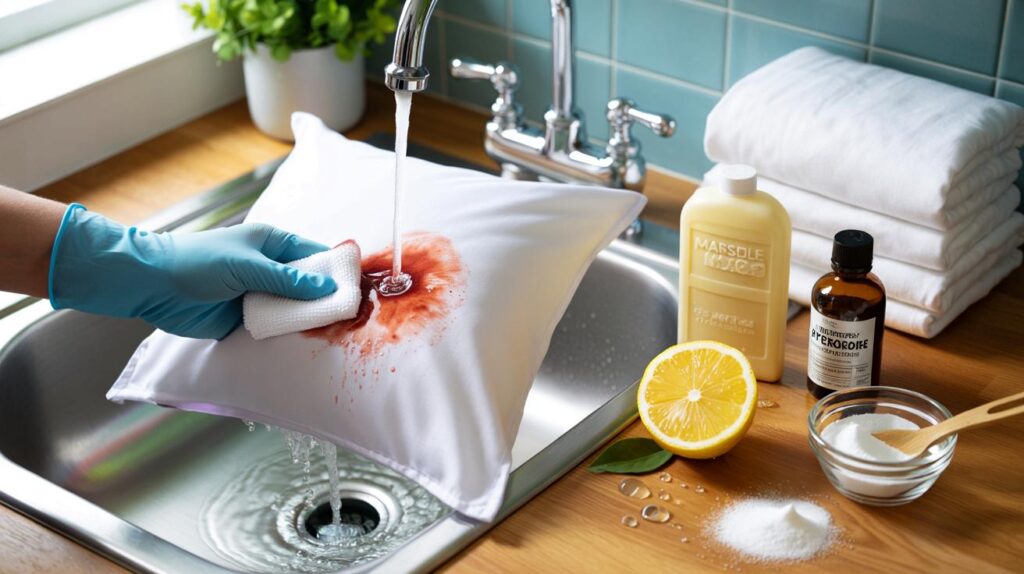
A sudden nick in the kitchen or a nosebleed on crisp sheets can derail your evening and your laundry plans.
Across busy homes, autumn brings drier air, sport scrapes and more laundry risks. Families chasing savings want safe, quick answers. A clutch of humble, natural standbys offers control without harsh chemicals, helping you keep favourite shirts and duvet covers in circulation rather than in the bin.
Why blood clings to fibres
Blood is a protein stain. As it dries, the proteins coagulate and grip fibres. Heat speeds this reaction. Waiting turns an easy fix into a stubborn patch that needs far more work. Early action changes the odds in your favour.
Two simple moves work immediately. Blot, do not rub. Then flood the area with cold water. The temperature matters. Cold water, around 10–20°C, slows protein setting and lifts fresh pigment before it locks in.
Go cold, go quick: blot first, rinse straight away, and keep heat out until the mark has vanished.
Cold water: the small habit that saves fabric
Caught it fast? Cold water alone often clears most of the stain. Hold the fabric under a running tap. Work from the back of the mark to push blood out of the fibres. Keep the flow gentle. Aggressive jets can drive pigment deeper.
- Blot the fresh spill with a clean, white cloth or kitchen towel.
- Rinse with cold water from behind the stain for 60–120 seconds.
- Repeat blotting and rinsing until the water runs mostly clear.
- Only then try a targeted cleaner if a shadow remains.
This quick routine becomes second nature. You protect the weave, save dye vibrancy, and avoid stretching delicate knits or bedding.
Four low-cost fixes in your cupboard
When a halo remains, reach for everyday allies. They are cheap, effective and kinder to fabrics than many chemical cocktails.
| Method | Best for | How to use | Risks |
|---|---|---|---|
| Marseille soap (pure soap bar) | Fresh to lightly set stains on most fabrics | Wet with cold water. Rub soap gently into fibres. Leave 5–10 minutes. Rinse cold. Repeat if needed. | Minimal. Patch test on silk or wool. |
| Lemon juice | Light colours and natural fibres | Dab fresh lemon on the mark. Sit 5 minutes. Rinse cold. Follow with soap if required. | Mild bleaching on dark or unstable dyes. Test first. |
| Hydrogen peroxide 3% | White cottons, towels, bedding | Apply a few drops. Wait for fizz. Blot and rinse cold. Repeat carefully. | Can lighten colours. Avoid on darks and silk. Ventilate. |
| Sodium percarbonate | Old, set-in stains on washable fabrics | Mix to a paste with lukewarm water. Spread thinly. Leave up to 30 minutes. Rinse cold, then launder. | Colour fade if overused. Do not use on wool or silk. |
What about old, set-in stains?
Older marks respond to patience and oxygen. Start with a cold rinse. Then use a thin percarbonate paste and let it sit for 20–30 minutes. Rinse and check in daylight. If a shadow remains, repeat once. For sturdy white cotton, a short soak in diluted 3% hydrogen peroxide can lift the final tint. Always test hidden seams for colourfastness before treating the front.
Never tumble dry a stained item. Heat fixes protein stains permanently and makes later treatment near-impossible.
Common mistakes that destroy fibres
Panic invites heavy hands and harsher chemicals. That damages fabrics and bakes stains in. A few traps to avoid will save you money and grief.
- Skipping the cold rinse and pouring on hot water, which sets the proteins.
- Scrubbing with a stiff brush, which frays fibres and spreads pigment.
- Reaching for chlorine bleach on colours, which lifts dye before it lifts blood.
- Running a hot wash cycle as a first step, locking in the mark across the load.
- Drying in the sun too soon, as UV can fix remaining pigment.
Quick checklist for the next mishap
Build a small kit near the laundry basket. It speeds your response and cuts the risk of permanent marks.
- A pure soap bar such as Marseille or any unperfumed laundry soap.
- 3% hydrogen peroxide for white cotton only, kept in an opaque bottle.
- Sodium percarbonate for set-in stains on colourfast, machine-washable textiles.
- A small spray bottle filled with cold water for instant rinsing.
- White microfibre cloths for blotting without dye transfer.
- Nitrile gloves for handling peroxide and to keep oils off delicate fabrics.
- Paper tape to label items “treat again” so they do not reach the dryer.
The science behind the routine
Protein stains behave differently from oils or tannins. Heat encourages coagulation, similar to cooking an egg. Once set, the network grips threads. Cold water keeps the proteins suspended and mobile. Oxygen-based agents break them down into smaller pieces that lift away. That is why a calm, staged approach beats a hot wash every time.
Fabric-by-fabric tips you can trust
Denim tolerates repeated cold rinses and soap. Viscose swells when wet; minimise rubbing and support its weight. Wool and silk need gentle dabbing and quick rinses. Avoid percarbonate and peroxide on animal fibres. For deep colours, test lemon on a hidden hem before moving to the main area. Printed bedding can bleed. Press, do not rub, and treat the reverse.
When to escalate
If a dark halo persists after two careful cycles, switch tactics. For whites, try a fresh peroxide dab and leave for 2–3 minutes only. For colours, return to soap and time. A second cold rinse and an overnight air-dry often reveal improvement you cannot see when the fabric is wet. If the item is valuable or labelled dry clean only, pause and seek a professional cleaner with experience in protein stains.
Practical extras for busy households
Set a phone timer for dwell periods. That prevents overexposure to lemon or percarbonate. Photograph the stain before and after each step. This record helps you decide when to stop. Keep a laminated card in the laundry area with the simple sequence: blot, cold rinse, soap, oxygen, air-dry, inspect.
Small, repeatable steps beat harsh shortcuts. You save garments, reduce waste and keep costs under control.
Sustainability and savings
Natural methods reduce reliance on solvent-heavy stain removers and cut accidental dye ruin. You buy fewer replacements and run fewer high-temperature cycles, trimming energy bills. A £3 soap bar and a £4 tub of percarbonate treat dozens of mishaps across a season. That makes sense for families managing tight budgets and a steady flow of kit, towels and bedding.
Useful edge cases and risks
Dried blood on mattresses needs surface care only. Lightly mist cold water, blot, then foam a little soap on a damp sponge. Do not soak the interior. For trainers, remove laces and insoles. Treat the fabric upper with cold water and soap, then air-dry away from radiators. On carpets, work from the outside in to stop spreading. Finish with a cold-water-only rinse to lift residues that attract dirt.
Finally, check after drying in shade. Some marks hide in damp fibres. If you can still see a tint, repeat the mild step you last used. Patience preserves weave strength and colour, which keeps prized pieces in your wardrobe and on your bed for many seasons.



Tried the cold rinse + Marseille soap on fresh drops and it worked shockingly well. The tip to push water from the back was the missing piece—I used to scrub and made it worse. I also like the “don’t dry until it’s gone” rule; saved a £45 duvet cover last night. This guide feels pratical, not salesy. Bookmarked for the next chaos evening.