
The lid clicks, you tug, and a warm puff of “what is that?” breathes out. Inside, your faithful washer looks innocent enough—stainless drum, glass door, a forgotten coin winking from the seal. Then you spot it. A grey line along the rubber, lint clotted like tiny felt, a whiff that hints at pond water and gym bag. You wipe it with your sleeve, because that’s what humans do, and it smudges. A neighbour swears by soda crystals. Your mum says bleach. The internet is fifty tabs of conflicting advice and one alarming video featuring someone with a screwdriver and a head torch. Meanwhile, socks go in, come out, and still don’t smell like a meadow. We’ve all had that moment when the “clean” machine feels like part of the problem, not the fix. The truth is less dramatic than it looks, and more solvable than you think. The culprit is hiding in plain sight.
Why your washing machine smells — and what’s really building up
Washing machines don’t stink because they’re broken. They stink because they’re doing exactly what you ask while collecting the leftovers. Modern detergents are rich, strong, and slow to rinse when we use too much. Low-temp eco cycles don’t melt residue, they lacquer it. Add fabric softener, which is basically perfumed wax, and the drum becomes a spa for biofilm.
In an appliance workshop in Leeds, a technician tipped a detergent drawer and a ribbon of beige slime slid out like icing. He laughed, not unkindly, and said most “mystery smell” call-outs end with a toothbrush and a hot cycle. Landlords, parents with football kits, and flatmates with shared machines—same story. It isn’t your laundry. It’s the leftovers clinging to the places you don’t see.
Think of it like kitchen grease. Cold water doesn’t cut it, it preserves it. Too much liquid detergent leaves surfactants that feed mildew, and softener coats the drum so the next load sticks. Front-loaders tend to trap damp in the rubber gasket. Top-loaders hide residue under the rim. Both stash coins, pet hair, and sock fluff in the filter, where slow water and warmth create a swampy little world.
The step-by-step deep clean (simple, fast, and safe)
Start with a “reset” wash: empty drum, hottest programme, no clothes. Pour two cups of white vinegar straight into the drum, and run it. When it finishes, sprinkle half a cup of bicarbonate of soda and run a short hot cycle again. This dissolves soap scum, neutralises odours, and loosens film without harsh fumes.
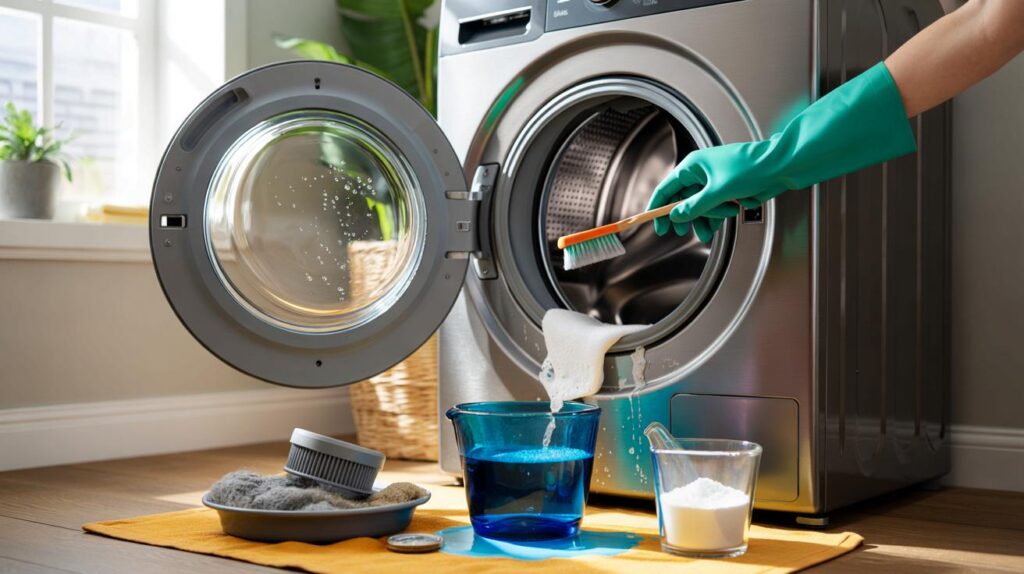
Now tackle the parts that actually smell: pull out the detergent drawer, soak it in hot water with a squeeze of washing-up liquid, and scrub the channels with an old toothbrush. Lift the door seal and wipe the folds; pick out grit, hair, and those peppercorn-sized black spots. If the seal has stubborn mould, dab a cloth in a mild bleach solution, rest it on the area for five minutes, then rinse well. Open the filter hatch, put a tray and towel down, and twist the cap—gunk will come out. Rinse the filter and spin the impeller to check it moves freely.
Here’s where people slip. They mix products, they over-dose detergent, they leave the door shut, they forget the filter. Let’s be honest: nobody really does this every day. Go gentle: vinegar and bicarb are fine together across separate cycles; bleach is effective too, but never combine it with anything acidic. Wipe the glass, door, and rubber dry, then leave the door and detergent drawer ajar. Run one normal load next to clear any lingering scent and call it done.
Small habits keep it sweet. Run a 60°C or hotter “maintenance” wash once a month, especially if you love cold cycles. Choose a quality powder or a sensitive liquid, and use less than the cap suggests—**use less detergent than you think**. Skip the gloopy softener on towels and sportswear; a tablespoon of white vinegar in the softener tray softens without a waxy film. If you live with hard water, add a conditioner tablet monthly to cut chalky scale.
“People think a smelly washer means a doomed washer,” says Mark, a repair pro of 20 years. “Nine times out of ten, it’s residue. Hot water, a brush, and twenty minutes sorts it.”
- What you’ll need: white vinegar, bicarbonate of soda, washing-up liquid
- Tools: old toothbrush, microfibre cloths, a small bowl, rubber gloves, towel
- Optional: machine cleaner tablet or a mild bleach solution for heavy mould
- Fast wins: wipe the seal weekly, leave the door ajar, clean the filter monthly
Keep it fresh without thinking about it
Machines thrive on rhythm. Build a tiny ritual into laundry day: wipe the seal, crack the door, run one hot cycle for the grubby stuff each week, and the rest takes care of itself. **Leave the door ajar after every load** to let the drum exhale. Swap the habit of a softener glug for lighter doses or the vinegar trick, and your towels will actually absorb again. If the filter spooks you, set a calendar alert and treat it like emptying the hoover: a two-minute, no-drama chore that saves a service call. *Your future self will thank you when guests say your place smells like nothing at all.* And when the big clean comes round, it won’t feel like a project. It’ll feel like wiping crumbs off the table.
| Point clé | Détail | Intérêt pour le lecteur |
|---|---|---|
| Hot “reset” cycle | Run hottest wash with vinegar, then a short hot wash with bicarbonate | Breaks down residue and odours without harsh chemicals |
| Gasket, drawer, filter | Scrub hidden zones; lift seal folds, soak the drawer, empty the filter | Targets where smells actually form and linger |
| Light, regular habits | Use less detergent, avoid heavy softener, door ajar after loads | Prevents buildup so deep cleans stay easy and rare |
FAQ :
- How often should I deep clean the washing machine?Monthly if you mostly wash cold or use liquid/softener, every 2–3 months if you run regular hot cycles.
- Vinegar or bleach — which works best?Vinegar dissolves soap scum and neutralises smells; bleach kills tough mould. Use one or the other, not both, and rinse well.
- Do front-loaders and top-loaders need different steps?Front-loaders: focus on the door seal and drawer. Top-loaders: scrub under the rim and the agitator. Both need a hot reset and a clean filter.
- Why does it still smell like rotten eggs?That sulphur note points to stagnant water in the filter or drain hose. Clean the filter, then run a hot cycle. If it persists, the waste trap may need attention.
- Can I throw in a dishwasher tablet to clean it?It can foam too much and isn’t made for laundry residues. Use a washing-machine cleaner, or the vinegar-then-bicarb method instead.



Just did the hot “reset” with two cups of white vinegar and a short bicarb cycle, then scrubbed the detergent draw and gasket—wow. The grey gunk in the filter was like a tiny swamp, exactly as you said. Towels finally don’t smell like gym bag anymore. I was over-dosing detergent big time. Bookmarked the monthly 60°C habit; feels doable and not scarry.