
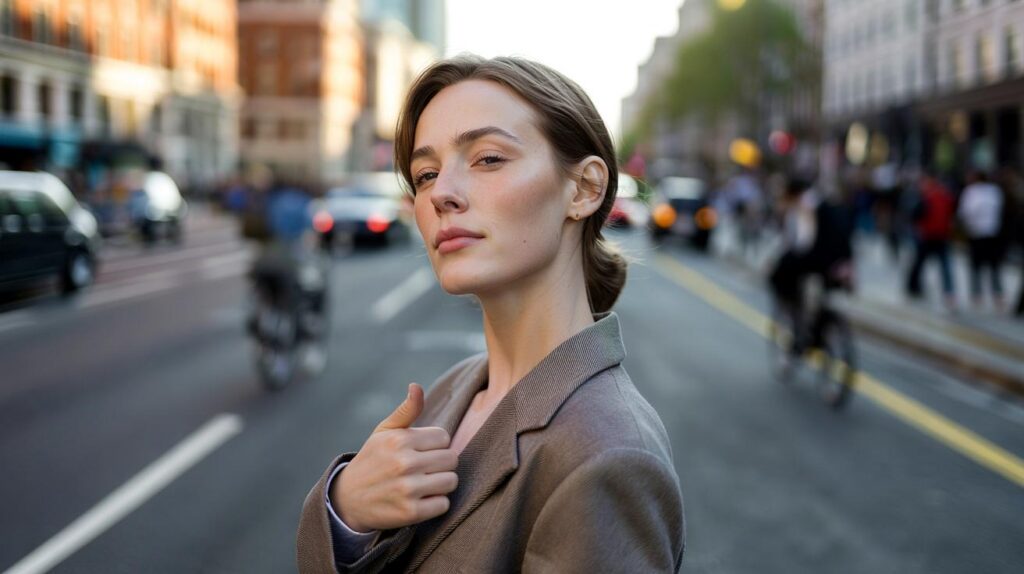
You see a camera, you feel your shoulders creep up and your smile get tight. The body does that when it senses scrutiny. We’ve all had that moment when the lens feels like a truth serum and you suddenly forget how to stand like yourself. The fix isn’t a better filter. It’s posture. Tiny shifts that models use every day to look grounded, open, and ready. No gym membership. No contortions. Just a few moves you can learn in a minute and use for life.
It’s a birthday dinner in a loud, warm room. Someone says “Group photo!” and chairs screech back. A friend at my side whispers that she hates pictures, then tries to shrink herself smaller than the candlelight. The photographer raises the phone, counts to three, and in those beats I watch a stranger adjust a stranger: shoulders slide down, chin nudges forward and slightly lower, weight shifts to the back hip. The energy changes before the shutter. Confidence shows up in your body before it lands in your head. You can borrow that.
The three-second posture reset
There’s a reason certain frames feel “wow” and others feel like a passport queue. Stand tall, yes, but that’s not the whole story. Length matters, angles matter, and space matters. Length is your spine stretching up as if a string lifts the crown of your head. Angles come from turning your body a touch away from square-on. Space is the little daylight you create between arms and torso. Stack those three and the picture reads calm, assured, present.
I watched a London model step in front of a street-style lens with a queue of cyclists rattling past. She didn’t pose. She reset. Weight onto the back leg, front toe pointing out, ribs softened, shoulders drawn down as if tucking them into back pockets. Then a micro-lean from the ankles towards the camera, barely a whisper. The result looked effortless because it was rehearsed. Eighty per cent of a flattering frame is posture, not the lens. Photographers repeat that line like a family recipe because it holds up in chaos.
This works for reasons your brain already gets. When you angle your body at 30 to 45 degrees, you create lines that lead the eye. When you separate arms from your sides, you add negative space that stops the torso reading as a block. When you drop your shoulders and lengthen the neck, the jawline is clearer and the chest looks open, which people read as confident. The camera is a translator. You feed it length, angles, and space. It returns energy.
Posture tricks models actually use (and you can too)
Try a three-beat setup before any click. One: plant your feet with one slightly ahead, toes a touch out, and send your weight to the back hip. Two: roll your shoulders up-back-down and let the shoulder tips melt away from your ears, creating air between your arms and waist. Three: grow tall through the crown while you glide your chin forward and a breath lower. Chin forward and slightly down is the unsexy trick that saves every jawline. Finish with a soft bend in the front knee and a micro-lean from the ankles towards the lens.
Hands panic in photos. Give them jobs. Lightly hook a thumb in a pocket or belt loop, graze a jacket lapel, hold a glass near waist level, or place fingertips at the collarbone. Avoid pressing palms hard against your body, which flattens lines. If you freeze straight-on, turn a quarter, drop one shoulder a whisper, and think of length from ear to shoulder to elbow. Let’s be honest: nobody really practises poses in the mirror every day. You don’t need a portfolio. You need one calm exhale and three tiny adjustments.
There are small pitfalls. Locked knees make you look tense. Lifting the chin “to avoid a double” backfires; you want length, not altitude. Arms glued to your sides flatten your silhouette, and dead-straight symmetry can look stiff. Think triangles and soft curves. You don’t need to earn the right to look good in photos.
“I tell clients to breathe out on the click,” a fashion photographer in Shoreditch said to me. “The exhale drops the shoulders and brings honesty into the face.”
- Make space: float elbows a finger-width from your torso.
- Angle smart: 30–45 degrees to camera, weight on back leg.
- Lengthen: crown up, neck long, chin forward-and-down.
- Shape hands: light touch, soft wrists, create triangles.
- Micro-lean: from ankles towards lens, like meeting a friend.
Let the camera meet your energy, not the other way round
Every frame is a tiny story. When your body tells “I’m braced for impact,” the lens writes it down. When your body says “I’m here, grounded, open,” people feel it before they notice the clothes. Posture is the fastest way to change the story without changing who you are. Try it at the next brunch table snap or the lift-mirror selfie after a long day. Reset the feet. Drop the shoulders. Create space. Breathe out.
The point isn’t perfection. It’s signal. You’re signalling to the camera, and to yourself, that you take up space on purpose. The click becomes less about fixing flaws and more about capturing presence. Share this with the friend who always ducks out of frame, or save it for the wedding season ahead. You’ll start noticing the tricks everywhere—on billboards, in candid street shots, in your own gallery. The shift from “posed” to “poised” happens in seconds.
| Point clé | Détail | Intérêt pour le lecteur |
|---|---|---|
| Weight and angle | Back leg bears weight; body at 30–45° | Instantly slims lines and reads as relaxed |
| Chin and neck | Neck long; chin forward then slightly down | Sharper jawline without strain or shadows |
| Space and hands | Create daylight by floating elbows; give hands a job | Avoids blocky torso and awkward limbs |
FAQ :
- How do I stop the “double-chin” effect without looking rigid?Think length first: stand tall, glide the chin forward, then tilt a touch down. Lift the camera a little above eye line and press the tongue lightly to the roof of your mouth for a cleaner under-chin line.
- What do I do with my hands so they don’t look awkward?Create triangles. Touch a jacket lapel, graze the collarbone, hold a cup near the waist, or tuck thumbs into pockets with fingers relaxed. Keep the touch light to avoid flattening.
- Is there a “best” side or angle?Turn your body 30–45 degrees to the lens, weight on the back leg, front knee soft. Tilt your face minutely towards your favourite side and use the chin-forward-and-down cue.
- How can I look taller in photos?Lengthen through the crown of the head, drop the shoulders, and point the front toe slightly out. A micro-lean towards the camera and a clear gap at the waistline add vertical lines.
- How do I make my smile look real?Breathe out on the click, think of a tiny laugh, and let the eyes do a gentle “squinch.” Look away, then back to the lens for a fresh moment rather than a held grin.



Tried the chin-forward-and-down trick on my lunch break and wow—instant jawline 🙂 Thanks for making this so doable!