
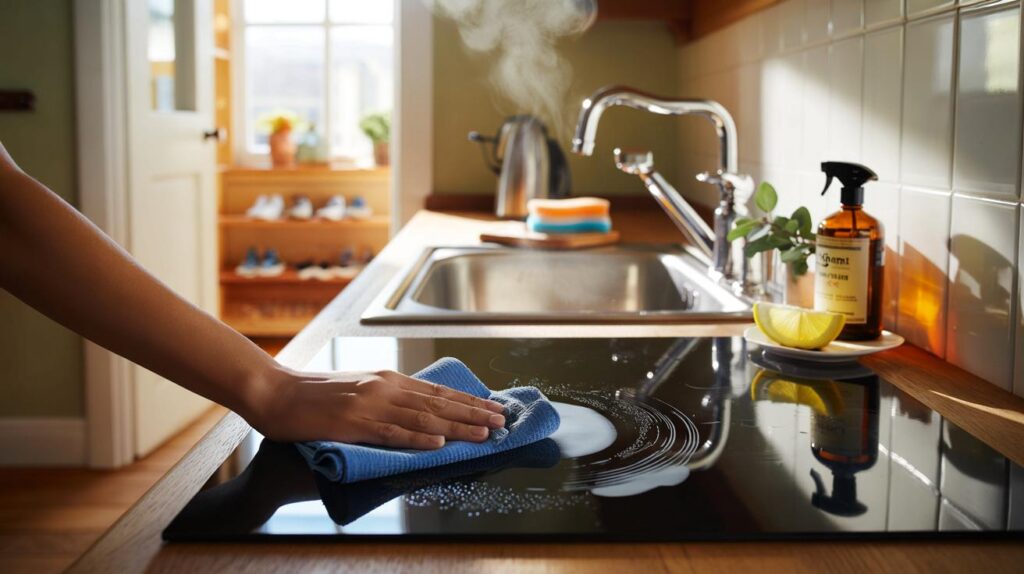
You know that odd, restless feeling when your home is “fine” but nothing feels finished? The mug ring on the table. The shoes half turned toward the door. The bin lid not quite closed. It’s not mess, exactly. It’s the hum of unresolved things. What if five tiny rituals could quiet that hum — and lift your mood — before lunch?
The kettle clicked off as the morning light caught a smear on the hob. No mess, just that faint line your eye lands on every time. I pulled a cloth from the warm radiator, swiped in slow circles, and felt the surface go from drag to glide. The sound changed first, then the look. A quick spritz, a folded tea towel, and the corner of the kitchen started behaving like a finished sentence. I took a breath I didn’t know I was holding. The whole room felt brighter, though nothing dramatic happened. Then something small happened.
Why tiny cleaning rituals beat the big blitz
Your brain loves closure more than it loves spotless. That’s why small cleaning rituals can feel wildly satisfying on ordinary days. They create **micro-wins** that your senses can register: a shine, a scent, a straight line of folded towels. Two minutes, one focussed action, a visible result. Every pass lowers the visual noise and raises your sense of control. It’s not about chasing perfection. It’s about giving your day better punctuation.
Take Mia in Manchester. She set one non-negotiable: every evening the sink must “smile”. It takes 90 seconds — hot water, a dab of cream cleaner, rinse, dry with a glass cloth. The tap gleams, the bowl is bone-dry, and the sponge goes on a little saucer like a trophy. UK time-use diaries often show more than an hour of unpaid housework a day; most of that isn’t the deep scrub we picture. No wonder the “all-or-nothing” clean feels impossible. Mia’s tiny script gives her a win she can feel after a long shift.
Rituals work because they bind a cue to a reward. Boil the kettle, wipe the hob. Hang up your coat, clear the hall table. Same time, same order, same finish. You’re training attention, not forcing willpower. Cues reduce decision fatigue; rewards give your brain a small dopamine wink. Stack them onto habits you already do, and you slide into motion without the mental negotiation that drains your day.
Rituals to try today (that actually feel good)
Start with a **two-minute tidy** anchor. Choose three touchpoints you hit daily and tie a tiny clean to each. After your morning brew: five slow breaths, then clear and wipe just the prep zone. After dinner: 60 seconds to reset cushions and fold the throw. Before bed: line up shoes by the door. Keep the tools at arm’s reach — cloth on the radiator, spray under the sink, mini caddy for the loo. Make it sensory so you notice the finish.
Don’t overload the list. One ritual per “anchor” habit is plenty. We’ve all had that moment when the list itself becomes the mess. If you miss a round, you’re not “behind”; you’re just between cycles. Let’s be honest: nobody really does this every day. The trick is writing scripts that survive an off week and still feel gentle when you return. Keep decluttering separate from cleaning so the job stays bite-sized and your mood stays buoyant.
Rituals gain power when they signal, “You’re done now.” That’s what a **closing ritual** is for — a deliberate flourish that tells your brain to rest.
“Endings matter to mood. A short, sensory finish — a drying swipe, a spritz, a folded edge — gives the brain evidence of progress,” says a London organiser I spoke to. “It’s less housework, more narrative.”
- Hob glow: wipe, dry, then trace a neat circle with the cloth in the centre. Stop.
- Bathroom blink: squeegee the screen, hang it on its hook, place the soap on a dry dish.
- Hall reset: shoes lined, post stacked, keys in the bowl. Switch off the lamp with a tap.
- Desk break: close tabs, wipe, put pen on notebook, push chair in. Breathe out.
Make it yours — then let it evolve
There’s no single “right” ritual; there’s only the one you’ll actually do with a light heart. Pick zones that annoy you daily and give them short, kind scripts. If the loo brush makes you sigh, that’s a vote against. Swap it for a 30-second mirror wipe after brushing your teeth. Keep your expectations human. *You’re allowed to enjoy this.*
Personal cues trump generic advice. If mornings are chaos, move the soothing stuff to evening. If music boosts you, pair your reset with one song and stop when it ends. A fluffy cloth that dries fast will get used more than a fancy spray hidden in a cupboard. Tiny gear tweaks change behaviour. Visible homes for tools make everything easier. The goal isn’t a magazine sheen. It’s that low, steady hum of “okay, I’m in charge.”
Share your scripts. Borrow your neighbour’s trick for the muddy pram wheels. Teach your kids the 30-second table sweep before pudding. Revisit your rituals each season — spring windows, school-run hallway, winter boot tray — and retire the ones that no longer serve you. This is living space, not a showroom. If a ritual starts to nag, cut it in half or make it fun again. A home that adapts will always feel more alive than one that poses.
| Point clé | Détail | Intérêt pour le lecteur |
|---|---|---|
| Anchor rituals to existing habits | Pair a tiny clean with something you already do (brew tea, brush teeth, hang coat) | Reduces decision fatigue and keeps routines effortless |
| Finish with a sensory “full stop” | Dry, spritz, fold, or align so the brain registers “done” | Boosts satisfaction and makes the win feel real |
| Keep rituals tiny and visible | Tools within reach, one job per anchor, two minutes max | Makes consistency likely, even on busy days |
FAQ :
- What’s the difference between a ritual and a routine?A routine is a sequence of tasks; a ritual adds meaning and a clear finish. It’s the same wipe, but with a satisfying “full stop”.
- How many rituals should I have in a day?Start with two or three anchored to moments you never miss. Add more only when the first ones feel automatic.
- Can this replace a weekly deep clean?No, it complements it. Daily rituals keep surfaces pleasant and your mood steady, so big cleans feel lighter and quicker.
- What if I live with messy people?Make your rituals small and personal so you can win without waiting for others. Share one easy script the household can copy, like the 60-second sink dry.
- Will this help my mental health?It won’t solve everything, yet short, sensory wins often reduce stress and noise. Many people report feeling calmer and more in control.



Loved the “closing ritual” idea — my brain really does need a full stop. Tried the hob circle and felt wierdly proud.
Isn’t this just procrastination disguised as productivity? What about households with kids and real mess — do 2-minute rituals actually hold up?