
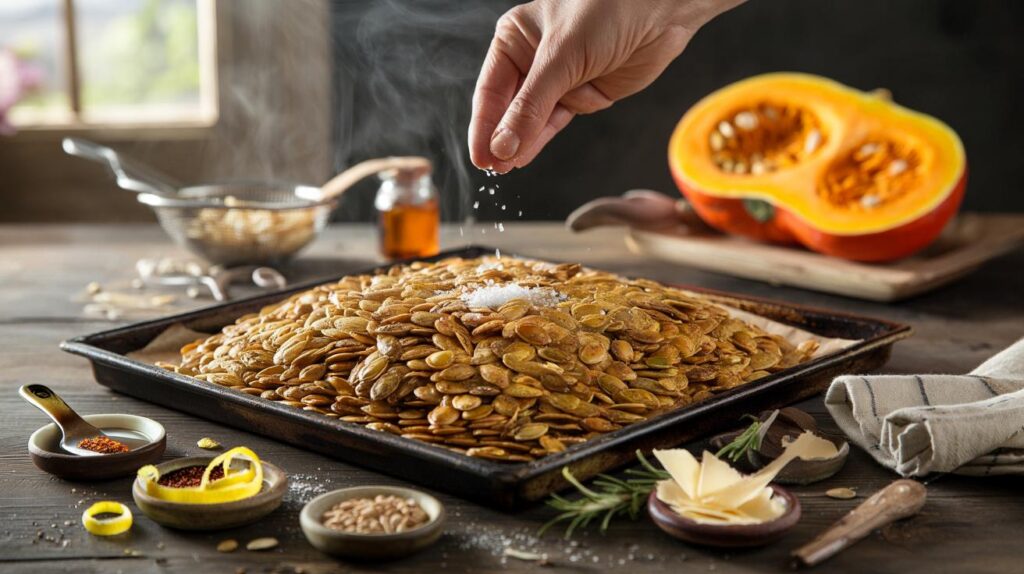
Every October, kitchens fill with orange string and good intentions. The pumpkin gets sculpted, the lantern glows, and a small mountain of slick seeds sits in a bowl, waiting to become something worthy. Most of the time, they end up in the bin or roasted into leathery, uneven bits that taste vaguely of effort and not much else. There’s a better way to turn those humble seeds into a snack you’ll actually crave, and it doesn’t demand chef-level kit or saintly patience.
The bowl was still warm from the pumpkin’s belly when I tipped the seeds into a colander and let the tap run, quiet as rain on a tent. My neighbour, sleeves dusted in flour, wandered over with a grin and said, “Treat them like pasta—not popcorn.” I laughed, then tried it. Boil, dry, roast low. The kitchen filled with a toasty, nutty smell that felt like a hug after a cold walk. *I nearly binned them.* Instead, we ate the lot from a sheet pan, standing by the oven, salt on our fingers and no regrets. The trick wasn’t salt.
Why pumpkin seeds deserve a second life
Call them pepitas if you like, but the British truth is we carve millions of pumpkins and waste most of the seeds. That’s a pity, because those seeds are a natural triangle of pleasure: crunch, savour, satisfaction. They carry plant protein, fibre and minerals in a package that’s snack-friendly and oddly elegant, like finding a cashmere jumper at a car boot. We’ve all had that moment when a snack pretends to be healthy and tastes of punishment. Pumpkin seeds, done right, don’t pretend. They deliver a crisp bite and a roasted depth that plays beautifully with both heat and sweet. **Dry seeds crisp; wet seeds steam.** That’s the line between addictive and average.
Estimates suggest Brits waste tens of thousands of tonnes of pumpkin around Halloween, and a fair slice of that is the seed. One rainy half-term, I watched a family pour their seeds straight into the food caddy, then spend £3.50 on a bag of mixed nuts. The maths felt off. I went home, boiled my seeds in salted water for ten minutes, dried them by the window, and roasted them on a quiet heat. The next day, I took a jar to the school gate and it emptied faster than a biscuit tin at tea break. A simple, almost free snack turned into a small neighbourhood habit.
Crunch is a physics story told by food. Moisture trapped in the seed’s hull turns to steam, and if it can’t escape, you get chew, not crackle. Salted water seasons from the inside while loosening stubborn gunk, but the real magic is drying: surface moisture gone, the oven heat can drive the Maillard reactions that taste like “golden”. A slick of oil conducts that heat evenly, kissing every ridge. Moderate temperature lets the core dry without blistering the outside to bitterness. Think about crisps versus toast: both are simple, yet one wrong nudge and the texture tips. Seeds are the same—gentle heat, patient drying, balanced fat.
From stringy seeds to shatter-crisp: the method that works
Start by scooping seeds into a bowl and teasing away large strands. Rinse briefly—not a bath, just a shower—until most strings are gone. Bring a pan of salted water to a lively simmer: 1 litre water to 40 g salt works a charm. Tip in the seeds, simmer 10 minutes, then drain. Spread on a tea towel and pat dry, then air-dry 20–30 minutes until the skins feel tacky, not wet. Toss with 1–2 tsp neutral oil per cup of seeds. Spread in a single layer on a lined tray. Roast at 160°C fan (180°C conventional, 350°F) for 18–25 minutes, stirring once or twice, until deep blonde going on brown. Season while warm.
Most misfires start with haste. Seeds go sticky when they skip the dry; they go tough when the oven runs too hot too soon. Overcrowding traps steam, turning your tray into a sauna. Aim for one calm layer and let heat find every seed. Spices scorch when added too early, sugar even faster, leaving bitter spots that shout louder than the seed. Add delicate flavours at the end, or toss seeds in a bowl with a teaspoon of oil and your spice mix after roasting. Let’s be honest: nobody does this every day. That’s fine—make a generous batch and stash it in a jar for the week.
There’s a line I wrote on a sticky note and kept above the hob: keep the water salty, the tray roomy, the heat modest. It never fails when I remember it. **Salt your water, not just your seeds.** The seasoning travels further, and the crunch rings clearer, like tightening a drum skin.
“Dryness is destiny for crunch. Season from within, then let time in the oven finish the job.”
- Smoky paprika + lemon zest + black pepper
- Maple + sea salt + chilli flakes (toss maple after roasting, warm 3 minutes)
- Garlic powder + rosemary + parmesan (add cheese for the last 3 minutes)
- Tamari + sesame + ginger (quick stir on a hot tray post-roast)
Make it yours, share the bowl
Once you’ve cracked the base method, the rest is play. Swap oils—rapeseed for clean, olive for character. Fold warm seeds through a salad for crunch that refuses to wilt, or scatter them over soup like edible confetti. Blitz a cup with herbs and a squeeze of lemon for a quick pesto, then swirl it through yoghurt for a dip that’s oddly posh on a Tuesday. **Low heat, longer time equals thorough crunch.** The rhythm suits slower evenings, or a Sunday when the oven’s already on for a roast. It’s not just about thrift or health points; it’s about learning the small domestic trick that quietly upgrades a week.
| Key points | Details | Interest for reader |
|---|---|---|
| Boil in salted water | 1 litre water + 40 g salt, 10 minutes at a simmer | Deep seasoning without oversalting the surface |
| Dry thoroughly | Pat dry, then air-dry 20–30 minutes before oil | Guarantees crispness by reducing steam |
| Moderate roast | 160°C fan, 18–25 minutes, stir once or twice | Even browning, nutty flavour, zero bitterness |
FAQ :
- Can I skip the boiling step?You can, though you’ll lose the inside-out seasoning and risk uneven texture. The simmer softens tough hulls and sets you up for a clean crunch.
- Do I need to peel the seeds?No. The hull roasts to a satisfying crisp when dried and cooked properly. If your pumpkin has very thick hulls, roast a touch longer until golden-brown.
- What oil works best?Neutral oils like rapeseed or sunflower give clean flavour and great conduction. Extra-virgin olive oil adds character—lovely with rosemary or lemon.
- How long do roasted seeds stay crunchy?Stored in an airtight jar at room temperature, they keep their snap for 1–2 weeks. If they soften, re-crisp on a tray at 150°C for 5–7 minutes.
- How do I make a sweet version without burning?Roast the seeds plain with oil and salt, then toss in maple or honey and return to the oven for 3 minutes. Add spices like cinnamon right at the end.



Loved the “treat them like pasta” tip. Boiling in salty water + patient drying changed my usual leathery seeds into golden, shattery goodness. I added rosemary and lemon zest at the end—chef’s kiss. Also, thank you for the science on moisture and Maillard; it finally clicked.
Quick question: does the salted simmer add a lot of sodiom, or is most of it poured off with the water? I’m trying to keep things heart‑friendly and wondering if a lighter brine would still season from the inside.