
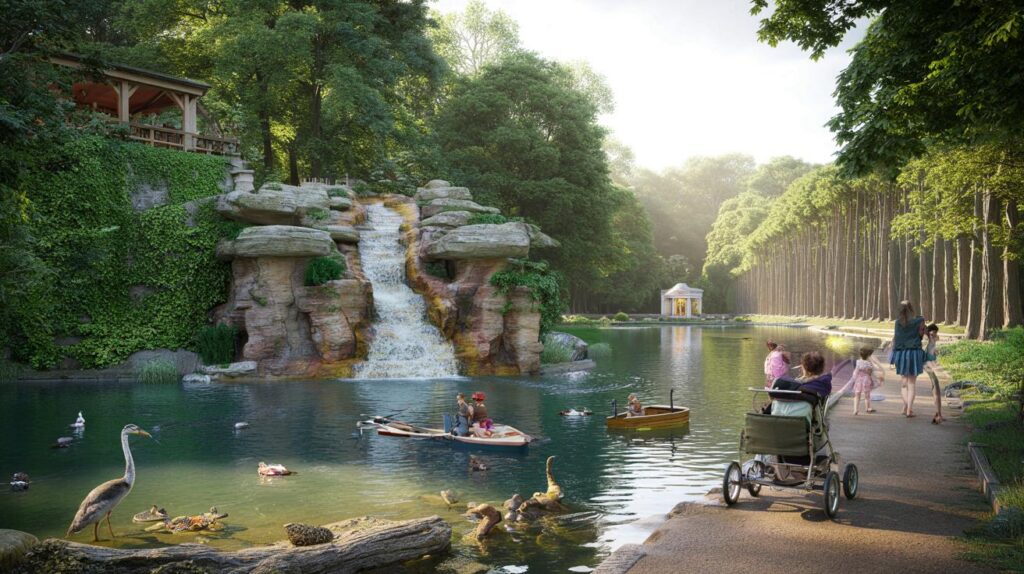
A Kent green space is drawing families with woodland drama, lake views and a cosy café, promising surprises without pricey tickets.
Set on the edge of Tunbridge Wells, this park blends ornamental planting with big-sky meadows, a lake and a hush of birdsong. It hands you hours outside without complicated planning. You get room for children to charge about, coffee that won’t sting your wallet and a centrepiece that looks lifted from storybooks.
A cascade with a nineteenth-century twist
The waterfall, known locally as the cascade, sits between a formal water garden and the main lake. It looks natural at first glance. It isn’t. Craftsmen built it in the 1800s from Pulhamite and sandstone, shaped to resemble a Kentish outcrop. The result charms photographers and day-trippers in equal measure.
The cascade forms part of a Victorian garden restored with £2.8 million in funding around twenty years ago, and its design remains remarkably faithful to the original vision.
Water does not tumble every day. That unpredictability adds a little theatre to a walk. Children drift towards the railings to listen for the rush, then spot terrapins warming on logs and herons stalking the shallows. Both make slow, precise movements, which turns wildlife watching into a patient game.
Value without cutting corners
A timber-framed café, perched above the lake, sets out tea, coffee, sandwiches and hot plates from 9am to 5pm daily. People rate its cooked breakfasts. Families appreciate prices that sit below many town-centre cafés. A sunny terrace soaks up warmth on good days, and indoor tables shelter in winter.
Feed for ducks, geese and moorhens is sold at the counter; the park asks visitors to avoid bread.
Paths roll from the café to the water in wide loops. You can push a buggy, use a wheelchair or ride a mobility scooter without fretting about cambers or gravel traps. Benches appear often. The lake circuit stays flat, which helps older relatives keep pace.
Paths that welcome everyone
The site collects Green Flag recognition each year, which reflects tidy grounds, safe routes and thoughtful maintenance. Grounds teams keep surfaces in good order, even after rain. Signage strikes a simple tone, nudging you between formal borders and open meadows without fuss.
- Green Flag standard awarded annually
- Flat loop around the lake for step-free walks
- Toilets beside the café plus a separate accessible block
- Open fields for kites, ball games and picnics
Dogs, ducks and the park dragon
Dog walkers use the broad top field to let pets stretch their legs off lead. The formal areas ask for leads, which keeps wildlife calm and lawns tidy. Dispensers for waste bags appear at intervals, reducing the chance of unwelcome surprises on the grass.
Down in the natural adventure play area, children clamber over wooden structures, ring chimes and meet a carved ‘dragon’ that has become a local rite of passage. The space channels energy while adults catch their breath under mature trees.
Boats, statues and a quiet corner
From April to the end of September, boat hire returns at weekends and daily in school holidays. Rowing boats, canoes and pedalos set out into the lake, watched by mallards that assume snacks are coming. Staff adjust opening hours with the weather, and updates appear on local channels.
Follow the path to a shaded avenue of 48 cedars. It drops to a handsome fountain and a small Grecian-style temple sheltering a bronze ‘dancing girl’. The mood feels removed from the bustle above. It suits a slow circuit with a coffee in hand.
Memory and place
Near the Bayhall Road entrance, a circular bench encloses a grove that honours ten recipients of the Victoria Cross with ties to the borough. An information board gives context to each name. The setting invites reflection before you rejoin the livelier paths.
How to get there and what you’ll pay
The park sits on the A264, around fifteen minutes on foot from the centre of Tunbridge Wells. Two car parks serve the site at Pembury Road and Hall’s Hole Road, with spaces signed for Blue Badge holders at both entrances.
| Charge | Where | When | How to pay |
|---|---|---|---|
| From £1 for 1 hour | Pembury Road and Hall’s Hole Road | 8am–6pm daily, bank holidays included | Card machines or RingGo; no cash |
Parking starts at £1 for the first hour. Arrive early on sunny days, as spaces fill fast.
Bus routes on the A264 offer another option if weekend traffic looks heavy. The main entrance postcode is TN2 3QA for sat navs. Cyclists find plenty of quiet residential approaches from town, then lock up at visible spots near the café.
Who built it and why it works
Nineteenth-century designer Robert Marnock shaped the original garden for a grand house that no longer stands. He favoured sweeping lawns, informal groups of trees and framed views. Craftsmen used Pulhamite, a Victorian artificial rock mix, to form realistic crags that age well among real sandstone.
The restoration kept that intent. Long sightlines run from high ground to water. Planting shifts from bold, clipped shapes near paths to looser meadows beyond. You feel a gentle change with each turn, which keeps children interested and adults relaxed.
When to go and what to try
Best timings for families
Mornings bring calm paths and easier parking. Late afternoons add golden light on the water. In summer, shade sits under the cedars when the top field heats up. In autumn, leaves frame the cascade for photographs that look far from town.
Simple challenges for children
- Count how many herons you can spot on a full lap of the lake.
- Listen for a woodpecker’s rattle in the mature trees near the water garden.
- Find the ‘dragon’, the temple and the fountain in one hour without using a phone.
Practical tips you can use today
Bring a small tub for duck feed from the café and skip bread, which harms birds. Pack a lightweight picnic blanket for the meadows. Shoes with grip help on damp grass near the cascade. If you’re pushing a buggy, try the lake loop first, then decide whether to add the cedar avenue, which includes a short, steeper section on the return.
For dogs, carry a long line if recall wobbles; the open events field suits controlled freedom, while lead zones keep wildlife safe. If your group includes a wheelchair user, plan breaks at benches with level approaches near the café and the water garden. A full circuit at a steady pace takes around 40 minutes without stops.
This is a rare mix: an award-winning park with a storybook waterfall, a playground that earns squeals and a café that keeps change in your pocket.
If Pulhamite piques your curiosity, look for the colour and texture differences between cast rock and natural sandstone. You’ll spot subtle seams where craftsmen layered the material, then scored and stained it to mimic geology. Turning this observation into a family game sharpens young eyes and adds a dash of science to the day out.
Thinking ahead to a rainy weekend? The café’s wintery snug feel makes a gentle base, and the park’s hard paths hold up well under showers. A short itinerary still works: feed the birds, walk the flat lakeside, test the chimes in the play area, then warm hands around hot chocolate. Low cost, high return, and no booking required.



Took the kids last month and it was a gem. For £1 parking we got a whole morning of paths they could actually scooter on, decent coffee, and that storybook cascade (even dry, it looks magical). Love that prams and wheelchairs aren’t fighting gravel the whole way. The cedar avenue was a suprise treat and the carved dragon was the clincher. Tunbridge Wells needed exactly this kind of low-stress outing.
£2.8m on a Victorian garden revival sounds… a lot. Is the Pulhamite rockwork genuinely maintained, or are we paying to keep a fake cliff looking fresh? Not being snarky, just curious where the money actualy went and how it’s audited.