
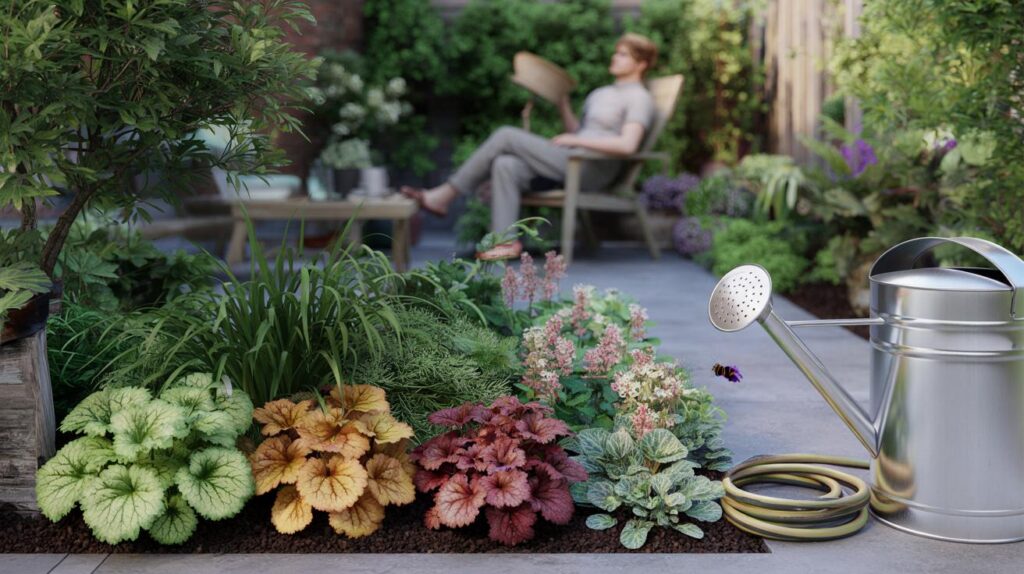
Your beds could work harder while you rest. As nights lengthen, a quiet shift in planting can change everything.
Across small patios and long borders, gardeners are swapping thirsty lawns and annuals for resilient, low-care planting. The trend is clear. Fewer chores, more colour, and a layout that keeps its shape through heat, wind and short winter days.
The quiet rise of low-work borders
Energy bills bite. Hosepipe bans lurk. Weekends vanish. This is where three shade-tolerant, drought-aware perennials step in. Heucheras, epimediums and pulmonarias build a living carpet, suppress weeds and hold moisture at the soil line. Plant once. Tweak lightly. Watch them knit into a border that looks deliberate rather than dutiful.
Plant in November while the ground stays mild and damp. Roots settle fast, and rain does the heavy lifting for you.
The trio that does the graft
- Heucheras (alumroot): evergreen rosettes in lime, caramel, and deep burgundy. Strong edges for paths and pots.
- Epimediums (barrenwort): wiry stems, heart-shaped leaves, and spring flowers like tiny spurs. Built for shade and dry roots.
- Pulmonarias (lungwort): silver-flecked leaves and late winter blooms in pinks and blues. Nectar before spring truly starts.
Heucheras shine where you want a crisp outline. They offer persistent foliage and modest flower wands. Grow them at 30–40 cm spacing along the front of a bed or in generous containers. Keep crowns slightly proud of the soil to avoid rot on heavy clay. Replace tired plants after five or six years, or lift and divide to refresh the stand.
Epimediums spread by short rhizomes and form a dense, weed-beating mat. They suit dry shade under shrubs and along north walls. Trim old foliage in late winter to reveal new flowers. Once established, they shrug off a missed watering and hold their patch with quiet confidence.
Pulmonarias bring action when little else moves. They bloom from late February into April in many regions, feeding early bees on mild days. Their speckled leaves bridge the gap to summer. Keep airflow good. If mildew strikes in a heatwave, shear leaves low after flowering and water once. Fresh growth follows quickly.
Why these plants cut work and bills
Less watering, better soil
Dense foliage shades bare ground. Shade slows evaporation. Leaf litter and mulch build structure and feed soil life. All three plants respond well to one deep drink in a dry week rather than frequent sips. In real gardens, that often halves the time at the tap. In a hot spell the saving grows further.
A simple switch to groundcover perennials in a 20 m² bed can trim watering time by 12–18 hours a month in peak summer.
Root systems hold slopes and help rain soak in. That reduces run-off and splashback on paths. Your water butt lasts longer. Your meter spins slower.
Shade tolerance and awkward ground
Many urban plots live in partial shade. Nearby fences, trees and walls steal light. Heucheras take dappled sun and afternoon shade well. Epimediums and pulmonarias handle deeper shade, especially with a spring top-up of leaf mould. All three cope with poor, stony soils once settled. Improve only the planting hole. Then mulch. That keeps growth balanced and low-fuss.
Weed control built in
Close spacing and spreading crowns block light to weed seedlings. That means fewer knees-on-gravel sessions and fewer bin bags. If bindweed or brambles lurk, remove the worst roots first. The trio then locks down the space.
Plant now, reap all year
Timing and spacing that work in the UK
November is ideal. Soil stays warm enough for roots. Rain is regular. Lift surface weeds, fork lightly, and add a bucket of compost per square metre. Water plants in, then mulch 5 cm deep with shredded leaves or chipped bark. Leave a small gap around each crown to prevent rot.
| Plant | Ideal light | Spacing | Top task late winter |
|---|---|---|---|
| Heuchera | Morning sun, afternoon shade | 30–40 cm | Tidy tatty leaves, top up mulch |
| Epimedium | Light to deep shade | 35–45 cm | Shear old foliage before bloom |
| Pulmonaria | Shade to partial shade | 35–45 cm | Clip after flowering if mildewed |
Layouts for small plots and balconies
Front line with heucheras for colour and a neat edge. Fill the mid-zone with epimediums to stitch the bed together. Drop pulmonarias in small clusters, so their flowers read as bright islands in late winter. In containers, use a 40–50 cm pot with a peat-free mix and 20% grit. One heuchera, one pulmonaria, and a trailing fern give a full, year-round set.
What to watch and how to fix it
Pests, diseases and weather spikes
Vine weevil grubs love heuchera roots. In spring and late summer, water in biological nematodes if you see sudden collapse. Check pots in winter and knock out loose compost to spot grubs. Pulmonarias can mark under drought and heat. Mulch thickly and give a single deep soak. Powdery mildew looks worse than it is. Shear and let regrowth mask the damage. Epimediums dislike waterlogged sites. Add grit and raise planting slightly if your soil sits wet.
Keep chemicals on the shelf. Good spacing, sharp shears and mulch solve most problems with this trio.
Cold snaps rarely bother any of them. Heucheras may lift from frost heave on very light soils. Press crowns back down on a mild day. Add more mulch. Slugs show interest in soft spring growth. Trap or hand-pick when evenings warm.
Bonus gains for wildlife and your calendar
Pulmonaria blooms feed early queen bumblebees. Heuchera flowers offer nectar to hoverflies and small bees in late spring. Epimediums shelter ground beetles that patrol for pests. Mixed planting extends nectar across seasons without extra effort. That steadies your small ecosystem and reduces the need for interventions.
There is a money angle too. Fewer fertilisers. Fewer replacement plants. Less water. A light tidy in March and a five-minute once-over in July replace weekly chores. Many gardeners report putting the mower away for good when groundcover expands and the lawn shrinks.
A quick shopping list
- 5 heucheras for a 2–3 m front edge
- 5 epimediums for a 2 m² mid-border patch
- 3 pulmonarias for early colour and pollinators
- 3 x 40 L bags peat-free compost for soil improvement
- 2 sacks of leaf mould or shredded bark for mulch
Practical extras that make the shift painless
A worked example for time and water
Say you currently water a 20 m² mixed bed for 40 minutes, four evenings a week in summer. That is roughly 10–12 hours every month. Switch the bed to dense heuchera–epimedium–pulmonaria planting with 5 cm mulch. Move to one deep soak per week in hot spells. That drops to about 2–4 hours. Your meter and diary both calm down.
Finding the right cultivars
For heucheras, look for lime or amber tones where shade is heavy. Caramel, ginger and lime-coloured leaves brighten dull corners. Deep burgundy reads best against pale gravel. For epimediums, choose long-lived forms such as Epimedium x perralchicum ‘Frohnleiten’ for robust cover. For pulmonarias, pick mildew-resistant types with bold silver leaves if your summers run hot.
If your soil is heavy clay, test drainage with a bucket of water. If it sits for more than an hour, raise beds by 5–8 cm with compost and grit. If your balcony bakes, use larger containers and water in the morning only. A simple drip spike on a reused bottle can keep pots ticking over during holidays.



70% less watering and 15 hours saved—what climate are you measuring in? In my hot, windy Midlands garden, deep weekly soaks still dont cut it for new plants. Do you have data for year one vs year three, and containers vs ground? Also, are heucheras really evergreen after a hard frost, or do they sulk and look tatty until spring?