
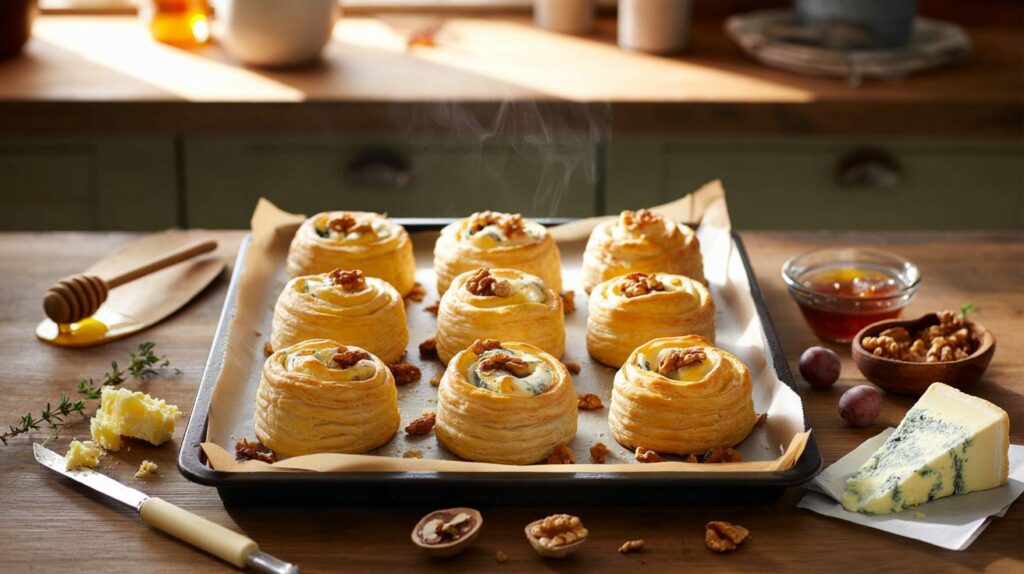
Colder afternoons nudge many of us toward small comforts. The best ones feel quick, a little luxurious, and surprisingly frugal.
Across Britain, home cooks are raiding the fridge at teatime and finding a familiar orphan: a roll of puff pastry. The current hack turning that afterthought into something shareable pairs creamy blue cheese with crunchy walnuts, baked into bite-sized spirals that look pub‑smart yet take barely any effort.
A quiet 4pm trend in British kitchens
Shoppers have been leaning hard into seasonal flavours that punch above their weight. Blue cheese supplies depth without fuss. Walnuts bring texture and a toasty aroma that travels through the house in minutes. Together, they transform a neglected pastry sheet into a tray of warm, flaky bites that suit an after‑work glass of red, a no‑fuss starter, or an impromptu neighbour drop‑in.
From forgotten pastry to a dozen golden spirals in 20 minutes at 200°C: speed, thrift and theatre in one bake.
Crucially, this is a zero‑drama method. You need one tray, a sharp knife and a steady hand. The payoff looks far more ambitious than the process, which is why the bake has crossed from foodie circles to ordinary weeknights.
What you need and what it costs
Most kitchens can field the staples. One sheet feeds four comfortably; six if you’re grazing with sides. Prices vary by region, but a typical high‑street basket lands here:
- 1 all‑butter puff pastry sheet (about 260 g) – £1.30–£1.80
- 100 g blue cheese (Fourme d’Ambert, Roquefort or a British blue) – £1.20–£2.00
- 50 g walnut halves – £0.80–£1.20
- 1 egg yolk beaten with 1 tbsp milk – pantry
- Freshly ground pepper – optional
That puts 12 spirals at roughly £0.25–£0.40 each, depending on the cheese you choose.
| Yield | Active time | Oven temp | Bake time | Approx. energy cost |
|---|---|---|---|---|
| 12 spirals | 8 minutes | 200°C fan | 20 minutes | £0.12–£0.20 (typical UK electric oven) |
How the 20‑minute method works
Prepare the pastry without flattening the layers
Take the pastry out of the fridge five minutes early. Unroll it onto baking paper. Give it the gentlest roll to even the thickness, keeping the lamination intact for lift.
Add blue and walnuts with a light hand
Crumble the blue in a fine, even layer, stopping 1 cm short of one long edge. Scatter walnuts that you’ve broken by hand or with a quick chop; aim for small nuggets. A twist of pepper adds lift without overpowering the cheese.
Roll tight, slice clean, and space well
Roll towards the clean edge to seal. Moisten that seam with a fingertip of cold water. Chill the log for five minutes if your kitchen is warm. Slice into 1 cm rounds with a sharp knife, wiping the blade between cuts. Arrange flat on a lined tray, leaving gaps for puff.
Glaze and bake to a deep, even gold
Brush each spiral with the egg‑milk mix for gloss. Bake at 200°C fan for about 20 minutes, or until the pastry is fully risen and the cheese bubbles gently at the edges.
Keep the filling thin. Too much cheese leaks; too few walnuts dull the crunch. Aim for balance, not overload.
Why blue and walnuts win now
Blue cheese brings salt, tang and umami in one ingredient. Even a modest 100 g batch perfumes a whole tray. Walnuts bring bite and aromatic oils that bloom in the oven. The pairing suits October’s palette: earthy, warming, and robust enough for cooler evenings.
Cheese choice steers the mood. Fourme d’Ambert reads soft and creamy, ideal for cautious palates. Roquefort tilts sharper and saltier, happy with a thread of honey at serving. A British blue slots neatly between the two, often at a friendlier price.
Serving ideas that feel pub‑smart
- Set out a jar‑style ramekin of onion confit or fig chutney.
- Add a drizzle of acacia honey over hot spirals for contrast.
- Plate with red grapes, whole walnuts and a few thyme sprigs.
- For freshness, add thin pear slices or a quick watercress salad.
Small tweaks change the profile fast. Poppy seeds on top give extra crunch. A few crushed pink peppercorns lend mild warmth and colour. Pear dice tucked under the cheese turns the bake fruit‑forward without becoming sweet.
Make‑ahead, freezing and smart storage
Once cooled, spirals hold well in a tin for 24 hours. Reheat at 180°C for three minutes to re‑crisp the edges. For batch prep, freeze the raw slices flat on a tray, then bag. Bake from frozen at 200°C, adding 2–3 minutes. The pastry puffs reliably and the centres stay creamy.
For clean slicing days ahead, chill the filled log until firm, then portion and freeze. Label with date and temperature to keep rotation simple.
Variations and dietary tweaks
- Goat’s cheese, walnuts and a thread of honey for a milder bite.
- Feta and pistachio with lemon zest for a brighter, saline finish.
- Brie and chopped dried apricot for a soft, autumn‑friendly richness.
- Nut‑free: swap walnuts for toasted pumpkin or sunflower seeds.
- Vegetarian‑safe: check that your blue uses vegetarian rennet.
- Gluten‑free: use a gluten‑free puff pastry and reduce the filling slightly to prevent tearing.
Practical notes for better results
Toast damp walnuts for three minutes in a dry pan before chopping. The aroma intensifies and the texture resists sogginess. If the cheese feels very soft, chill it for ten minutes to make crumbling easier. A cool filling behaves better inside warm pastry.
Mind oven hotspots. Rotate the tray at 12 minutes if your oven browns one side faster. If leaks appear, they usually signal heavy filling. The next batch, reduce cheese by a tablespoon and chop the nuts finer.
Cost, pairing and a quick flavour exercise
On a per‑piece basis, this sits close to supermarket party food but eats fresher and bakes on your schedule. A £6 bottle of Côtes du Rhône or a chilled dry cider sits comfortably alongside. If you prefer non‑alcoholic, try strong black tea or a light tonic over ice with a lemon wheel to cut the richness.
For a palate check, bake two small test spirals first: one with a touch more cheese, one with a touch more nut. Taste side by side. Adjust the balance before you load the tray. That two‑minute experiment prevents a flat batch and sharpens your sense of seasoning.
Risks, advantages and easy add‑ons
Allergy note: walnuts are tree nuts, so label the platter if guests are uncertain. Seed swaps keep the crunch for mixed crowds. As for advantages, the method absorbs leftovers neatly: stray blue from a weekend board, half a pear, the end of a walnut bag. Nothing fancy, nothing wasted.
Want a five‑minute activity for children? Let them place walnut bits on the cheese layer and brush the glaze. You handle the oven and the knife work. The result feels collaborative, and the tray cools just in time for homework breaks.



Love the zero-drama method. I took the pastry out early, chilled the filled log for 5 mins like you said, and got tidy spirals with almost no leak. Walnuts toasted first = game-changer. Definately making again with pear dice next time.
Twelve in 20 minutes at 200°C? My oven runs hot and still needs 23–24 to get deep gold. Are you using all-butter pastry, and are your slices truly 1 cm?